White House Devices Exposed: Federal Network Vulnerabilities Linked to Russian-Affiliated Residential Proxy Services

Security researchers have identified a significant cybersecurity lapse within the Executive Office of the President, revealing that devices connected to the official White House network have been unknowingly participating in residential proxy networks. These services, which effectively rent out a user’s internet connection to third parties, have turned parts of the most secure network in the United States into exit nodes for anonymous web traffic. Perhaps most concerning to intelligence officials is the discovery that at least one of these services is operated by a Russian national with documented historical ties to state-sponsored election interference.
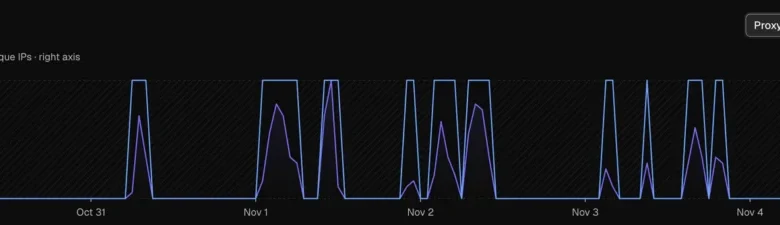
The breach was first brought to light by Layer3 Intel, a cybersecurity firm that monitors global network traffic. According to their findings, the network address space reserved for the Executive Office of the President (AS2650) has been beaconing out to various proxy services with alarming regularity. Between October 5 and November 3, investigators recorded 236 instances where traffic originating from within the White House network was redirected through these proxy nodes.
The Mechanism of Exposure: How Proxy Services Work
Residential proxy services function by aggregating the internet connections of individual devices—ranging from mobile phones to desktop computers—and pooling them into a network. Users of these services pay a fee to route their internet traffic through these devices, masking their true IP address behind the identity of the "residential" host.
While these services are often marketed as tools for legitimate market research or ad verification, they are frequently integrated into free software applications, browser extensions, and mobile apps through Software Development Kits (SDKs). When a user installs an application containing these SDKs, they unwittingly grant the proxy provider permission to use their device’s internet bandwidth.
In the case of the White House, the traffic was linked to installations of Infatica, a service known for integrating its code into various consumer-grade software. The company’s founder, Vladimir Fomenko, is a central figure in this investigation due to his past association with King Servers. King Servers gained international notoriety in 2016 when the company’s infrastructure was identified as the staging ground for cyberattacks against election databases in Illinois and Arizona, an operation widely attributed to Russian state security services.
A Chronology of Observed Activity
The investigation by Layer3 Intel provides a stark look at the persistence of this exposure. Between October 5 and November 3, proxy exit nodes were detected from six distinct internet addresses within the White House network. The activity followed a distinct pattern, with the majority of connections occurring during off-hours, specifically between 5:00 p.m. and midnight.
This timing suggests that the proxy services are primarily active on employee devices during periods when the devices are left connected to the network but are not under active, high-level surveillance. The presence of these proxies across 26 of the 30 days monitored indicates a systemic rather than isolated issue, likely resulting from the installation of unauthorized or "shadow" software on government-issued or employee-owned hardware connected to the network.
Synthient, a firm specializing in proxy tracking, further corroborated these findings, noting that the White House network is not only being utilized by Infatica but is currently being exploited by at least 28 separate residential proxy providers. As the team at Layer3 Intel noted in their report, the barrier to entry for accessing this network is dangerously low. "This is public access," the researchers stated. "Anybody can obtain it by signing up to a public residential proxy service, paying a few dollars, and sending requests through it."
The Broader Ecosystem of Network Risk
The incident at the White House is not an isolated anomaly but rather a symptom of a massive, under-regulated industry. The residential proxy market has grown exponentially, often operating in a legal gray area that prioritizes monetization over security. Because many of these services operate without stringent "Know Your Customer" (KYC) protocols, they provide a cloak of anonymity for malicious actors engaged in account takeovers, advertising fraud, and large-scale data scraping.
The security implications are profound. In early 2026, industry experts identified a wave of attacks where cybercriminals exploited vulnerabilities in the proxy services themselves. By probing the local networks to which these proxies are connected, attackers were able to move laterally from a compromised device to sensitive systems on the same local network.
Ben Brundage, founder of the security firm Synthient, has been a vocal critic of the proxy industry’s lack of oversight. "Some of these resellers sell bandwidth for as low as 60 cents a Gigabyte; that means for less than a dollar you can gain access into some of the most confidential and trusted networks," Brundage stated. The ability for a criminal to bypass traditional security perimeters via a residential proxy represents a significant shift in how government and corporate networks are being compromised.
Industry-Wide Prevalence
The vulnerability of government networks to proxy services appears to be widespread. In a January 2026 industry webinar, the tracking service Spur revealed that it had identified active residential proxies within nearly 300 government-operated networks. Beyond the public sector, the threat is equally pervasive in the private sector:
- 318 utility companies were found to have residential proxy exit nodes on their networks.
- 166 healthcare organizations were identified as having similar vulnerabilities.
- 141 companies in the banking and finance sector were found to be exposed.
Furthermore, Infoblox, a network security firm, reported that approximately 65% of its entire customer base had recently queried domains associated with residential proxy services, suggesting that the vast majority of organizations are either unaware of or unable to effectively mitigate the presence of these services on their premises.
Strategic and Security Implications
The infiltration of the White House network by proxy services raises urgent questions regarding the efficacy of current Endpoint Detection and Response (EDR) and Data Loss Prevention (DLP) protocols within federal agencies. If devices within the Executive Office of the President can communicate with foreign-linked proxy services, it indicates a failure in network traffic filtering and application whitelisting.
From a geopolitical perspective, the involvement of a service founded by an individual linked to the 2016 election interference operations adds a layer of intelligence concern. While the current activity appears to be related to the commercial use of residential bandwidth, the infrastructure could easily be repurposed for more targeted espionage or data exfiltration.
The White House has yet to provide an official comment on the findings. However, the revelation will likely trigger a massive audit of all devices connected to the AS2650 network and a tightening of the policies surrounding software installation on government-connected hardware.
Conclusion: The Need for Stricter Governance
As the digital landscape evolves, the line between consumer convenience and institutional security continues to blur. The commodification of internet bandwidth through residential proxy networks has turned the average internet user—and, as demonstrated here, the average government employee—into a potential vector for cybercrime.
Addressing this vulnerability requires a multi-pronged approach. First, organizations must implement more robust traffic monitoring to identify and block traffic originating from known proxy provider IP ranges. Second, there must be a shift in the culture of device management, where the installation of third-party software, browser extensions, and mobile applications is strictly controlled.
The exposure of the White House network serves as a wake-up call for both the public and private sectors. If a network as protected as that of the Executive Office of the President can be compromised by the simple act of installing a seemingly benign application, the security assumptions held by most organizations are likely fundamentally flawed. Moving forward, the mandate for cybersecurity professionals will be to treat residential proxy connectivity not as a nuisance, but as a critical infrastructure vulnerability that requires immediate and sustained attention.