Fake Travel Reservations Are Exacting More Pain From The Travel Weary Already Dealing With The Misery Of Canceled Flights And Overbooked Hotels


The global travel and hospitality sectors, currently struggling to navigate the complexities of post-pandemic logistics, are facing a sophisticated and resurgent cybersecurity threat. A notorious, long-standing threat group identified by security researchers as TA558 has significantly ramped up its malicious operations. After a period of relative dormancy—largely attributed to the drastic global reduction in travel during the height of the COVID-19 pandemic—the group is capitalizing on the current surge in airline and hotel bookings to launch highly targeted phishing campaigns.
These cybercriminals are weaponizing the very documents that travelers and industry professionals rely on daily: reservation confirmations. By deploying emails that mimic legitimate booking requests, TA558 is tricking victims into clicking links or downloading attachments that execute a wide array of malware, placing both corporate infrastructure and individual financial data at severe risk.
The Evolution of the TA558 Threat Actor
Since at least 2018, TA558 has maintained a persistent focus on the hospitality and travel industries. Historically, the group’s methodology relied heavily on social engineering, specifically targeting individuals with emails written in Portuguese or Spanish. These communications frequently centered on hotel reservations, often using simple subject lines like "reserva" (the Portuguese and Spanish word for "reservation") to entice employees or customers into engaging with the malicious content.
In the early stages of their operations, the group’s technical approach was characterized by the exploitation of known vulnerabilities in Microsoft Office products. Specifically, they frequently targeted CVE-2017-11882, a remote code execution vulnerability found in the Microsoft Office Equation Editor. By crafting malicious Word documents that leveraged this flaw, attackers could force a victim’s computer to download and install various Remote Access Trojans (RATs), such as Loda or Revenge RAT.
By 2019, the group began to diversify its arsenal. They introduced macro-laden PowerPoint attachments and utilized template injection techniques within Office documents to bypass basic security filters. This period also marked a strategic shift in their target demographic, as the group began incorporating English-language phishing lures to expand their reach beyond Latin America and into North American and Western European markets.
The 2022 Pivot: Adapting to Modern Security Controls
The most significant change in TA558’s operations has occurred in the last two years, driven largely by Microsoft’s decision to disable Visual Basic for Applications (VBA) macros and XL4 macros by default in Office products. This change effectively neutralized many of the group’s previous infection vectors, forcing the actors to evolve their delivery mechanisms.
According to research published by Proofpoint, TA558 has moved away from document-based macro exploits and toward the use of container files. In 2022, the group conducted 27 distinct campaigns utilizing URLs—a massive increase compared to the total of five campaigns recorded between 2018 and 2021.
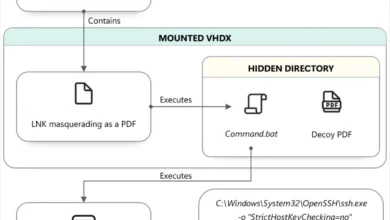
These URLs now typically direct victims to download ISO (disk image) or RAR (compressed archive) files. When a user is tricked into decompressing these files, they often find an embedded batch (.bat) file. Executing this file triggers a PowerShell helper script, which then silently downloads and installs the primary payload: AsyncRAT. This remote access tool allows attackers to conduct reconnaissance, steal credentials, exfiltrate sensitive data, and install further malware variants, effectively granting them full control over the compromised machine.
A Chronology of Malicious Campaigns
The history of TA558 is a study in consistent, adaptive criminal enterprise. The following timeline outlines the group’s trajectory and evolution:
- 2018: Initial detection of campaigns targeting Latin American hospitality and travel entities, utilizing Microsoft Office vulnerabilities to deploy Loda and Revenge RAT.
- 2019: Expansion of tactics to include malicious PowerPoint attachments and the introduction of English-language phishing lures.
- 2020: The group’s most prolific period to date, recording 25 malicious campaigns in the month of January alone. During this time, they solidified their use of document-based exploits to target global travel infrastructure.
- 2021: Continued reliance on remote template URLs and macro-based attacks, coinciding with increased scrutiny from cybersecurity firms like Cisco Talos and Uptycs.
- 2022: A strategic pivot away from Office macros in response to Microsoft’s security updates. The group dramatically increased its use of ISO and RAR container files as the primary delivery vehicle for AsyncRAT and other malware.
The Mechanics of the Modern Phishing Attack
The effectiveness of these campaigns lies in their ability to blend in with the high volume of automated traffic handled by travel and hospitality businesses. A typical attack begins with a phishing email that appears to be an automated booking confirmation. When the recipient interacts with the message, they are directed to a URL that hosts a container file.
The danger of ISO and RAR files is that they are often perceived by users as benign, common file formats. Once the user opens the container, they are often prompted to run an executable file hidden within. The subsequent chain reaction—from the batch file to the PowerShell script and finally to the RAT payload—is designed to be inconspicuous. By the time the user realizes something is amiss, the malware is often already running in the background with sufficient privileges to facilitate data theft.
Implications for Organizations and Consumers
The risk posed by TA558 is not limited to the internal networks of hotels and airlines. Because these organizations handle vast amounts of sensitive customer data—including credit card numbers, passport details, and travel itineraries—a breach at the corporate level can have direct consequences for the end consumer.
Sherrod DeGrippo, Vice President of Threat Research and Detection at Proofpoint, has emphasized that the group is unequivocally financially motivated. "It’s possible compromises could impact both organizations in the travel industry as well as potentially customers who have used them for vacations," DeGrippo stated. The primary objective is the scaling of "credit card businesses" and the exfiltration of personally identifiable information (PII) that can be sold on dark web forums or used for identity theft.
For the travel industry, the implications are profound. Beyond the direct costs of remediating a malware infection—which can include forensic investigations, system downtime, and potential regulatory fines—there is the intangible, yet significant, cost of reputational damage. In an industry where trust is the primary currency, a successful breach involving customer data can lead to a long-term loss of patronage.
Defensive Strategies and Industry Recommendations
Security experts urge organizations within the travel and hospitality sectors to adopt a layered defense strategy to mitigate the risks posed by actors like TA558. Recommendations include:
- Email Filtering and Sandboxing: Deploy advanced email security solutions that can analyze incoming attachments and URLs in a sandbox environment before they reach the end user.
- Endpoint Protection: Utilize Endpoint Detection and Response (EDR) tools that are capable of identifying and blocking the execution of suspicious PowerShell scripts or unauthorized batch files.
- User Awareness Training: Employees should be trained to recognize the signs of phishing, particularly those involving unusual reservation requests or unexpected email attachments.
- Network Segmentation: By segmenting networks, organizations can limit the "blast radius" of a potential infection, preventing attackers from moving laterally from a compromised workstation to a server containing sensitive customer databases.
- Strict Policy Enforcement: Disable the ability to mount ISO files or execute unauthorized scripts via Group Policy Objects (GPOs) where business requirements allow.
The Broader Cybersecurity Landscape
The resurgence of TA558 serves as a reminder that cybercriminals are highly adept at monitoring industry trends and security updates. As organizations harden their defenses, attackers shift their focus to the weakest link in the chain: the human user. The transition from macro-based attacks to container files highlights a broader trend in the threat landscape where actors are abandoning traditional document exploits in favor of more flexible, less scrutinized delivery methods.
As travel continues to rebound toward pre-pandemic levels, the volume of reservation-related traffic will likely remain high, providing a perfect cover for these malicious campaigns. The travel and hospitality industries, which often operate on thin margins and high turnover, must prioritize cybersecurity as a fundamental component of their operational strategy. Failure to do so will likely lead to continued exploitation by groups like TA558, further complicating the experience for the already travel-weary public.
In conclusion, the activities of TA558 underscore the necessity of a proactive, intelligence-led approach to security. By understanding the tactics, techniques, and procedures (TTPs) of such groups, organizations can better prepare themselves to defend against these evolving threats, ensuring that the only thing travelers need to worry about is their flight schedule, not the integrity of their personal information.