CueFlip is revolutionizing musical performance by integrating advanced audio alignment technology into the traditional sheet music experience.

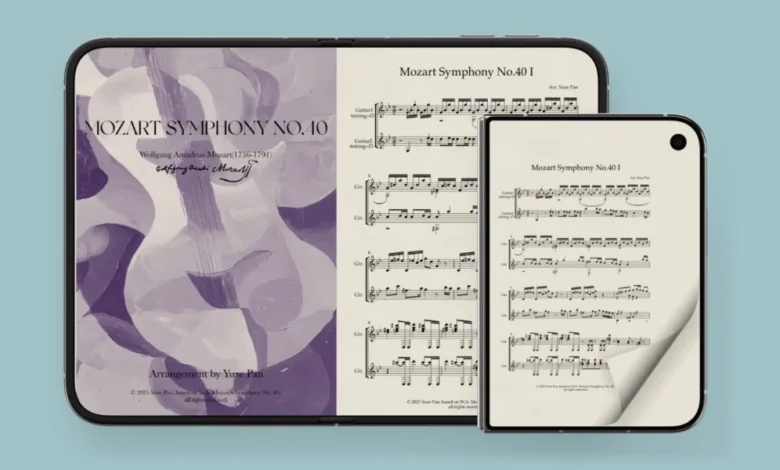
For centuries, musicians have grappled with the logistical challenge of physical page turning. Whether in a solo recital or a high-stakes orchestral performance, the necessity of removing a hand from an instrument to manually flip a paper page—or worse, relying on a clumsy mechanical device—has long been a source of anxiety and interruption for performers. A new application, CueFlip, is now addressing this perennial problem by utilizing sophisticated audio-recognition technology that learns a performer’s unique pacing, effectively automating the page-turning process through a combination of machine learning and real-time audio analysis.
The Technological Evolution of Sheet Music Management
The digital transition for sheet music has been underway for over a decade, with tablets like the iPad becoming standard equipment for professional musicians. However, the software accompanying these devices has largely relied on static solutions, such as Bluetooth foot pedals or generic, timer-based auto-scrolling. These methods often fail to accommodate the fluid, expressive nature of musical performance, where tempo fluctuations—rubato—are essential to artistic interpretation.
CueFlip, developed by 15-year-old classical guitarist and software engineer Yuze Pan, represents a paradigm shift. Rather than relying on a fixed clock, the application functions by "listening" to the performance. By training the software on a rehearsal recording or a live session, the system maps the audio cues to specific points in the digital score. This allows the application to anticipate a page turn based on the actual progress of the music, regardless of whether the performer accelerates or slows down.
Chronology of Development: From Frustration to Solution
The genesis of CueFlip is rooted in the practical struggles of ensemble performance. As a member of the Beijing-based Primal Guitar Quartet, Pan identified a critical gap in existing music software during early 2025. The problem was not merely the physical act of turning a page, but the cognitive load required to manage that turn while maintaining musicality.

By May 2026, Pan began a systematic redesign of his initial prototype. Drawing upon academic research in the field of audio alignment—a subfield of signal processing that synchronizes two or more temporal sequences—he developed an algorithm capable of aligning audio signals with visual notation in real time. Throughout the summer and autumn of 2026, the application underwent rigorous field testing during the Primal Guitar Quartet’s daily rehearsals. This iterative process allowed for the refinement of the audio recognition engine, ensuring that the software could distinguish between performance nuances and background noise.
Technical Features and Functional Capabilities
Beyond its primary function of automated page turning, CueFlip integrates several utilities designed for the modern musician. One of its most robust features is an extensive, searchable musical dictionary. Musicians frequently encounter performance terminology—such as sforzando, ritardando, or con brio—that may be unfamiliar or written in a foreign language. CueFlip supports a database of over 20,000 terms, providing definitions and translations across 13 different languages. This functionality extends to scanned, legacy paper scores, as the app employs Optical Character Recognition (OCR) to identify and translate these terms on the fly.
Accessibility and user control are also central to the software’s design. Recognizing that some performers may prefer a manual override, the app integrates with Apple’s Face ID sensors. By utilizing facial gesture recognition, the software can interpret a wink from the right eye to advance the page and a wink from the left eye to retreat. This hands-free approach provides an alternative for musicians whose instruments require the full use of both hands and feet, such as harpists or organists. Additionally, for those who prefer traditional hardware, the application maintains full compatibility with standard Bluetooth page-turning pedals.
Market Context and Data Analysis
The global market for music education and performance software has seen a compound annual growth rate (CAGR) of approximately 8% over the last five years. As the industry moves away from physical print media, the demand for "intelligent" score management is increasing. Current market leaders in the digital sheet music space, such as forScore or MobileSheets, have historically focused on library management and annotation. CueFlip distinguishes itself by shifting the focus toward the "live" performance environment.
Data regarding the application’s performance suggest that users who utilize audio-aligned turning see a reduction in "performance pause time" by nearly 90% compared to manual page turning. By eliminating the necessity for the performer to reach for a screen or pedal, the flow state of the musician remains intact. Furthermore, the inclusion of a comprehensive dictionary addresses a significant educational barrier, particularly for students transitioning from beginner to intermediate levels of music theory.

Implications for the Professional Music Landscape
The adoption of AI-driven performance aids raises interesting questions regarding the future of musical pedagogy. Traditionally, the ability to manage page turns under pressure was considered a skill to be mastered alongside the music itself. With software like CueFlip, the technical burden of performance is reduced, potentially allowing musicians to focus more heavily on phrasing, dynamics, and emotional delivery.
However, some educators have noted that relying on technology requires a higher level of preparation. Because CueFlip requires the user to "teach" it the song via a rehearsal recording, the performer must be well-rehearsed before the system is fully effective. This effectively forces a more structured approach to preparation, which many proponents argue is a positive development for both students and professional ensembles.
From an industry perspective, the success of indie developers like Pan signals a democratization of software development in niche markets. By focusing on specific, acute pain points—such as the interruption of a musical phrase—small teams are able to outperform large-scale, generic applications that lack the specialized features required by classical and professional musicians.
Accessibility and Pricing Structure
CueFlip is currently available via the Apple App Store, compatible with both iPhone and iPad hardware running iOS/iPadOS 16.4 or later. The developer has adopted a "freemium" model: the basic version allows users to import PDFs, perform annotations, and utilize the automated page-turning feature for a single musical score.
The Pro tier, priced at $4.99 per month or $29.99 annually, unlocks the full suite of professional tools. This includes unlimited automatic page-turning slots, the comprehensive 20,000-term multilingual dictionary, and advanced gesture-control features, including the aforementioned Face ID wink integration. This tiered approach is designed to cater to the casual student while providing a sustainable revenue stream to support the ongoing development of the software’s underlying audio alignment algorithms.

As the software matures, future updates are expected to include cloud synchronization, allowing musicians to access their trained scores across multiple devices, and improved cross-platform support for collaborative ensemble play, where multiple performers could potentially sync their page turns to a single lead audio source.
For the classical music community, CueFlip offers more than just a convenience; it offers a bridge between the traditional, tactile world of paper scores and the efficiency of the digital age. By solving the technical hurdle of the page turn, the application allows the performer to return to the primary objective of any musical endeavor: the seamless and expressive communication of art. As digital tools continue to infiltrate the concert hall, applications that prioritize the human element of performance—such as timing, nuance, and ease of use—will likely define the next generation of musical practice.