Primate Labs Launches Geekbench 7 with Enhanced AI Workloads and Revised Multi-Core Testing Standards

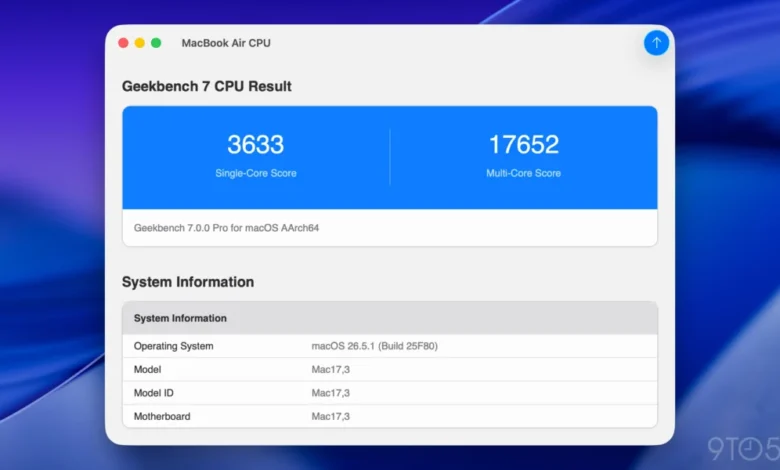
The technology industry has witnessed a paradigm shift in how computing power is utilized, moving away from purely synthetic speed tests toward a more nuanced evaluation of real-world application performance. In response to this evolution, Primate Labs has officially released Geekbench 7, the latest iteration of its cross-platform benchmarking suite. This new version is designed to provide a more accurate reflection of how modern devices—ranging from smartphones and tablets to high-end workstations—handle contemporary tasks such as generative artificial intelligence, complex image processing, and sophisticated gaming physics.
The release of Geekbench 7 comes at a critical juncture in the hardware landscape. With the rise of dedicated Neural Processing Units (NPUs) and the integration of machine learning (ML) accelerators into consumer-grade silicon, traditional benchmarking methods have struggled to capture the full utility of modern hardware. Primate Labs has addressed this by overhauling its testing methodology, introducing a series of updated workloads that prioritize the types of tasks users perform daily in an increasingly AI-driven digital environment.
A New Era of Benchmarking: Context and Chronology
The trajectory of Geekbench has historically mirrored the broader trends of the semiconductor industry. When Geekbench 5 was released in 2019, the focus was on leveraging modern CPU features and memory latency to reflect the demands of that era’s software. In early 2023, Primate Labs launched Geekbench 6, which introduced foundational AI and ML tests, acknowledging the growing ubiquity of mobile-based image recognition and voice processing.
However, the three-year gap between Geekbench 6 and the newly launched Geekbench 7 has seen an explosion in the complexity of on-device AI. From Large Language Models (LLMs) running locally to real-time video upscaling and generative art tools, the requirements for both Central Processing Units (CPUs) and Graphics Processing Units (GPUs) have intensified. Geekbench 7 represents a comprehensive effort to modernize these metrics, ensuring that the scores generated today remain relevant for the hardware of tomorrow.

Comprehensive GPU Benchmark Overhaul
One of the most significant updates in Geekbench 7 is the total revitalization of the GPU Benchmark. Historically, GPU tests focused heavily on gaming-centric rasterization. While gaming remains a vital metric, Primate Labs has recognized that GPUs are now essential for machine learning and professional content creation.
The new GPU suite places a heavy emphasis on machine learning workloads, specifically targeting tasks like object detection, background removal in video conferencing, and on-device inference. To provide a more complete picture of a system’s capabilities, Geekbench 7 introduces support for NVIDIA’s CUDA API. This addition allows the benchmark to measure performance on NVIDIA hardware more natively, sitting alongside existing support for OpenCL, Vulkan (Android and Windows), and Metal (macOS and iOS).
Furthermore, the GPU tests now include advanced image synthesis and editing workloads. These include RAW image processing, which mimics the workflow of professional photographers, and LUT-based video color grading, a staple in modern cinematography. Perhaps most notably for hardware enthusiasts, Geekbench 7 introduces path tracing and fluid simulation workloads. These tests challenge the GPU’s ability to calculate complex light interactions and physical dynamics, providing a benchmark for the next generation of visual fidelity in both professional software and high-end gaming.
Refined Multi-Core Performance Logic
For years, the industry standard for multi-core benchmarking was to push every available thread to its maximum capacity, regardless of the task. Primate Labs has moved away from this approach in Geekbench 7, opting for a more "intelligent" threading model. The software now only runs workloads across multiple threads when the real-world application it is simulating would typically do so.
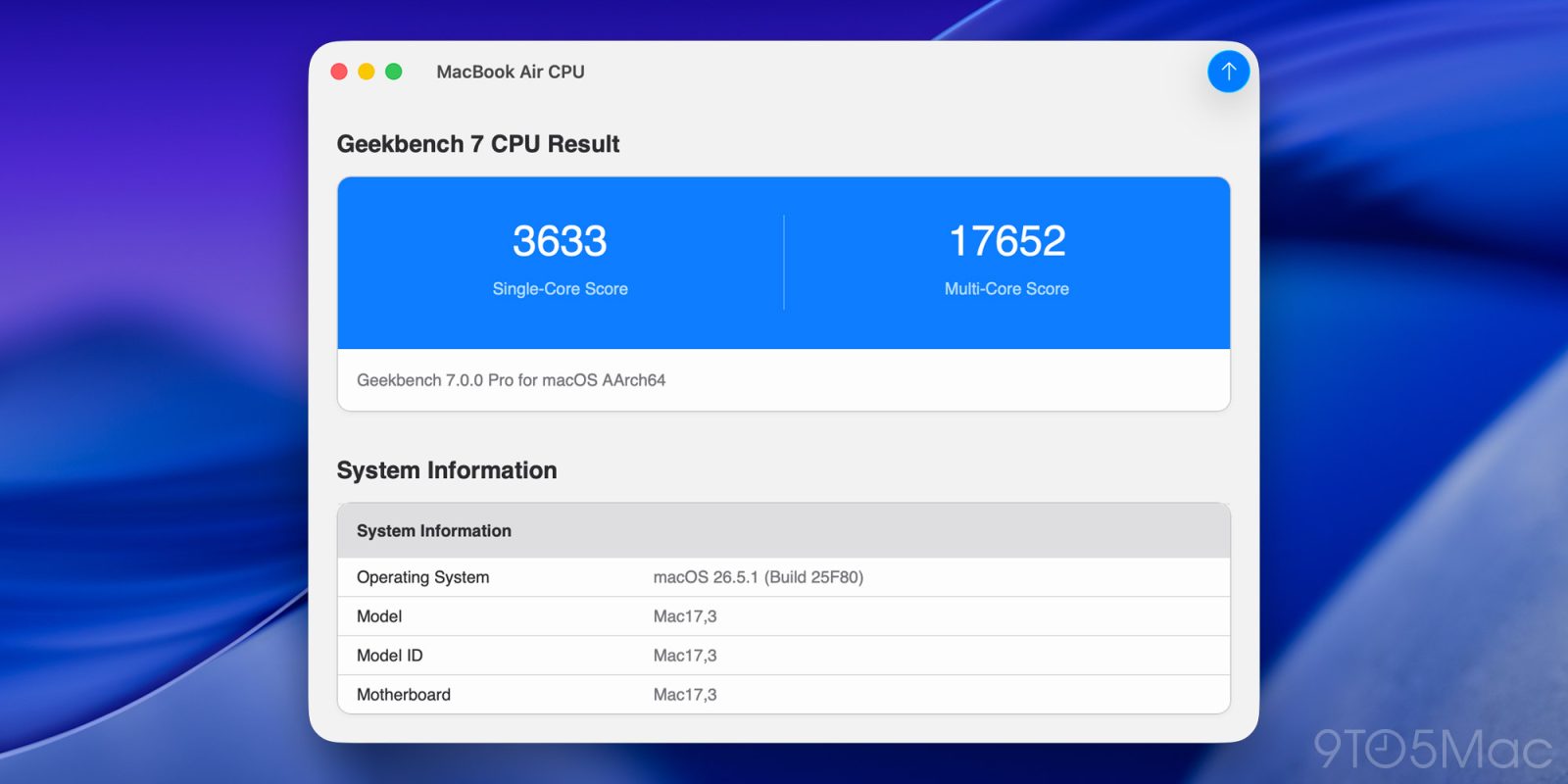
A prime example of this shift is the handling of web browsing benchmarks. In previous versions, the HTML5 Browser test contributed to the multi-core score. However, Primate Labs’ research indicated that most modern web browsers are either single-threaded or only lightly threaded during page rendering and script execution. Consequently, in Geekbench 7, the HTML5 Browser test is no longer part of the multi-core suite. This change ensures that multi-core scores are not artificially inflated by tasks that do not benefit from high core counts in actual use, providing a more honest assessment of a processor’s multitasking efficiency.
Expansion of Data Sets and Media Processing
Accuracy in benchmarking is often a function of the data sets used. If a data set is too small or too uniform, modern processors can use caching tricks to produce results that do not reflect sustained performance. To combat this, Geekbench 7 has significantly increased the size and variety of its data sets.
The File Compression workload, a standard measure of integer performance, now utilizes a broader array of archives, including complex source code repositories, compiled object code, and massive text documents. Similarly, the PDF Viewer test has been expanded to include diverse file types such as intricate park maps, technical schematics, and dense academic papers with embedded graphics.
In the realm of media performance, Geekbench 7 adds specific workloads to measure how CPUs handle modern audio and video codecs. This includes dedicated tests for encoding and decoding, reflecting the needs of video editors and streamers. By incorporating more assets and additional image formats into the developer and image-processing workloads, Primate Labs ensures that the benchmark remains resistant to "optimizations" that might skew results on specific hardware architectures.
Industry Implications and Market Reaction
The launch of Geekbench 7 is expected to have a ripple effect across the technology sector. For hardware manufacturers like Apple, Intel, AMD, and Qualcomm, these updated benchmarks provide a new yardstick for marketing their latest silicon. As these companies increasingly tout the "AI TOPS" (Trillions of Operations Per Second) of their processors, Geekbench 7 offers an independent, third-party validation of those claims in a consumer-facing context.
Early reactions from the developer community suggest a positive reception to the inclusion of CUDA and the refinement of multi-core logic. Independent hardware reviewers have noted that the shift toward real-world threading may lead to a realignment of leaderboard standings, particularly for chips that rely on high thread counts but lack strong single-core performance.

Analysts suggest that Geekbench 7 will become the primary tool for evaluating the "AI PC"—a new category of computers defined by their ability to handle local AI workloads without relying on the cloud. By providing a standardized score for machine learning tasks, Primate Labs is essentially defining the performance tiers of this new era of computing.
Pricing, Availability, and Launch Promotion
Primate Labs has maintained its accessible model for the software. Geekbench 7 remains free for personal use, allowing enthusiasts to test their own hardware and upload results to the Geekbench Browser, a massive public database of hardware performance.
For professional users who require advanced features—such as command-line automation, offline result management, and commercial licensing—Geekbench 7 Pro is available. To celebrate the launch, Primate Labs is offering a 20% discount on the Pro version through August 6, 2026. This promotional period is intended to encourage rapid adoption among corporate IT departments and hardware testing labs.
Conclusion: The Future of Performance Measurement
Geekbench 7 is more than just an incremental update; it is a recalibration of what it means for a device to be "fast" in the mid-2020s. By de-emphasizing synthetic peaks and focusing on the complexities of AI inference, professional media creation, and intelligent threading, Primate Labs has created a tool that reflects the sophisticated nature of modern software.
As the industry moves toward more specialized hardware and heterogeneous computing—where the CPU, GPU, and NPU work in concert—benchmarks must continue to adapt. Geekbench 7 sets a new standard for this transparency, providing a clear window into how the devices in our pockets and on our desks truly perform when faced with the challenges of a modern digital workflow. Whether for a consumer looking to buy a new smartphone or an engineer designing the next great processor, Geekbench 7 provides the data necessary to navigate an increasingly complex technological landscape.