White House Network Compromised by Residential Proxy Services Linked to Foreign Intelligence Risks

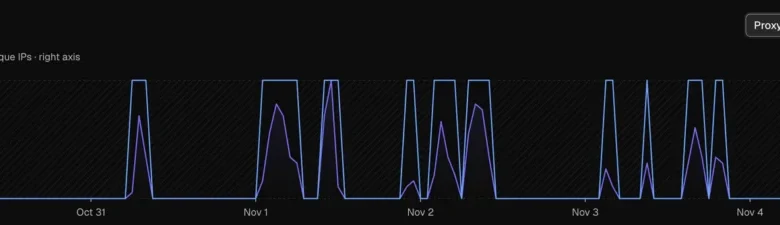
Security researchers have uncovered a significant digital vulnerability emanating from the Executive Office of the President, revealing that devices connected to the White House network have been unknowingly participating in global residential proxy networks. According to findings from the security firm Layer3 Intel, multiple internet addresses assigned to the White House (AS2650) have been acting as exit nodes for residential proxy services, essentially turning government-issued or employee-owned devices into conduits for external web traffic. This development raises urgent questions regarding the operational security protocols within the most sensitive federal environment in the United States, particularly as some of these services maintain direct historical ties to Russian entities previously implicated in election interference.
The discovery was not the result of a targeted infiltration, but rather a byproduct of the pervasive, indiscriminate nature of the modern proxy economy. Layer3 Intel reported that during the period between October 5 and November 3, it detected 236 instances of outgoing traffic originating from the White House network via these proxy services. This traffic was not a one-time anomaly; it occurred consistently across 26 of the 30 days analyzed, with the vast majority of the beaconing activity concentrated during evening hours, typically between 5 p.m. and midnight.
The Mechanism of the Breach: How Residential Proxies Function
Residential proxy services operate by routing a customer’s internet traffic through the home or office IP addresses of unsuspecting users. These users often unknowingly grant access to their local networks by installing "free" mobile applications, browser extensions, or desktop software that contain hidden software development kits (SDKs). Once installed, these applications monetize the user’s bandwidth by allowing the proxy service to sell that IP address to third parties.
For an entity like the White House, the risks are profound. When an employee connects a device—whether it is a government-issued laptop or a personal mobile device—to the internal network while an active proxy agent is running in the background, the White House network effectively becomes a "residential" exit node. This allows any individual who pays a nominal fee to a proxy provider to route their own web traffic through the White House’s digital footprint. From the perspective of any website visited by these third-party users, the traffic appears to originate from the Executive Office of the President, rather than from the actual source.
Connections to Russian Cyber Operations
Perhaps most concerning is the identification of Infatica, one of the proxy providers detected on the White House network. Synthient, a firm specializing in proxy tracking, confirmed that several Windows 11 installations were running Infatica software. The company is led by Vladimir Fomenko, a Russian national whose former hosting firm, King Servers, was identified by U.S. intelligence and cybersecurity analysts as the infrastructure hub for the 2016 cyberattacks against election databases in Arizona and Illinois.
The fact that software with such a provenance is beaconing out from the White House network highlights a critical failure in endpoint management and network egress filtering. While there is no current evidence suggesting that the White House infrastructure itself was "hacked" in the traditional sense, the presence of these nodes creates a massive, uncontrolled aperture. A malicious actor could theoretically use these nodes to perform reconnaissance, bypass IP-based security filters, or launch attacks while masquerading under the IP address of the United States government.
The Industrialization of "Public Access"
Layer3 Intel noted that the problem is far broader than just one provider. Their analysis identified at least 28 separate residential proxy services that were capable of exiting through the White House network. The ease with which this can be achieved is staggering; as the researchers noted, anyone with a few dollars can sign up for a public residential proxy service and begin routing requests through these nodes.
"This is public access," the Layer3 Intel team stated in their report. "Anybody can obtain it by signing up to a public residential proxy service, paying a few dollars and sending requests through it. We did not selectively target this network or try to make our probes exit from it. We caught this by chance, simply by requesting global rotating access through these services."
The economics of this ecosystem make it particularly dangerous. Some resellers offer bandwidth for as low as 60 cents per gigabyte. This low barrier to entry, combined with a lack of robust "Know Your Customer" (KYC) processes among many proxy providers, allows cybercriminals to purchase access to high-value, trusted networks with near-total anonymity.
A Growing Trend of Network Infiltration
The White House is far from an isolated case. The proliferation of residential proxy services has created a systemic risk that permeates both the public and private sectors. In January 2026, the proxy-tracking firm Spur conducted a comprehensive analysis that identified residential proxy nodes in the networks of 300 government-owned or operated entities, 318 utility companies, 166 healthcare organizations, and 141 firms within the banking and finance sector.
Furthermore, the security firm Infoblox reported earlier this year that approximately 65% of its corporate client base was actively querying domains associated with residential proxy services. This suggests that the "proxy-as-a-service" model has become deeply embedded in the modern workforce, often brought into the office by employees who are unaware that their devices are being used as part of a global botnet-like infrastructure.
Escalating Security Risks: From Traffic Spoofing to Local Network Exploitation
Beyond the issue of traffic anonymization, the vulnerabilities within these proxy services themselves represent a significant threat. In late 2025, security researchers discovered that cybercriminals were mass-exploiting vulnerabilities in proxy software that allowed them to move laterally from a proxy node into the user’s local network.
By sending specially crafted requests, an attacker could probe the local network for vulnerable systems, potentially gaining control over devices that were never intended to be exposed to the public internet. In January 2026, Ben Brundage, founder of Synthient, demonstrated how these vulnerabilities were being used by the "Kimwolf" botnet to seize control of devices within the local networks of unsuspecting users. This forced a massive, emergency patching effort across dozens of proxy providers, yet the persistence of these nodes on secure networks like the White House remains a critical point of failure.
Implications and the Path Forward
The presence of residential proxies on White House networks poses a multifaceted challenge to national security. Firstly, it facilitates the bypass of geographical and IP-based security controls, allowing foreign actors to appear as if they are operating from within the United States government. Secondly, it provides a persistent, low-cost mechanism for intelligence gathering and network probing. Thirdly, it exposes internal government networks to potential malware injection and lateral movement if the proxy software itself is compromised.
While the White House has not yet provided an official comment, the implications of these findings suggest an urgent need for revised "Bring Your Own Device" (BYOD) policies and stricter network egress monitoring. Cybersecurity experts emphasize that current perimeter defenses—such as firewalls and intrusion detection systems—are often designed to stop unauthorized incoming traffic, but are less effective at identifying and blocking the unauthorized "beaconing" behavior of installed applications that have legitimate (albeit misused) permissions.
To mitigate these risks, organizations must move toward a "Zero Trust" architecture, where device health and application legitimacy are continuously verified. This includes the implementation of endpoint detection and response (EDR) solutions that can flag and terminate unauthorized proxy software. Furthermore, the reliance on free or low-cost software that uses bandwidth-sharing models must be strictly prohibited on any device that touches sensitive government or corporate networks.
As the digital landscape continues to evolve, the case of the White House proxy nodes serves as a stark reminder of the "shadow" infrastructure that operates in the background of our daily lives. When the boundaries between residential networks and the most sensitive government systems blur, the security of the entire nation is placed at risk. The task ahead for federal IT security officials is not merely to plug these specific leaks, but to fundamentally alter how devices are managed in an era where every smartphone and laptop can, if compromised, become a gateway for global cyber espionage.
Related posts: