Signal Blocks AI Assistants and Screenshots to Protect User Privacy Amid Growing Surveillance Concerns

The modern smartphone ecosystem relies heavily on seamless integration, automated screen captures, and artificial intelligence assistants designed to anticipate user needs. From scheduling dinner reservations to parsing tracking numbers out of incoming notifications, tools like Meta’s Muse and Apple’s Siri AI have become deeply embedded in the daily user experience. These systems constantly ingest visual and textual data from phone displays to execute helpful commands. However, this convenience introduces a profound friction point for privacy-focused platforms.
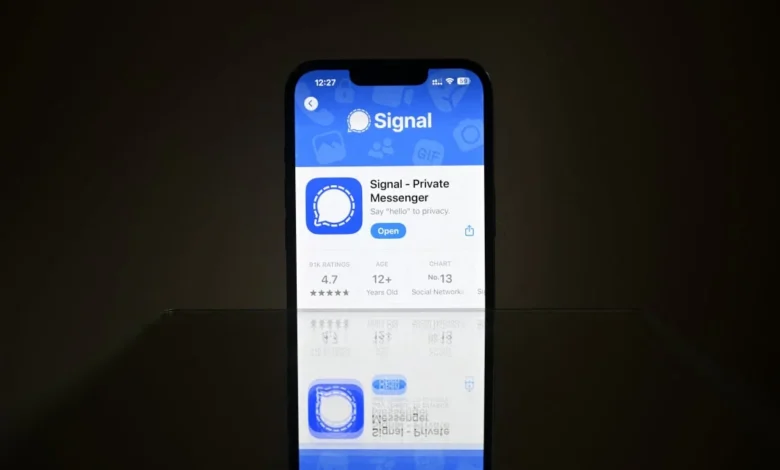
Signal, the prominent non-profit messaging application renowned for its end-to-end encryption protocols, has formally drawn a hard line against this pervasive data harvesting. In an official announcement released on Friday, November 20, Signal confirmed the rollout of robust new security features designed to block screenshots on iPhones running iOS 27 and aggressively restrict AI screen-capture capabilities across supported Android devices.
By default, the platform’s new update enables a "Block Siri AI" setting on compatible Apple devices, while Android versions automatically trigger "Screen security" measures the moment an automated assistant attempts to scan the device display. While users retain the manual option to disable these protections within their application settings, Signal has issued stern warnings regarding the security trade-offs, emphasizing that granting an AI assistant open visual access strips away the foundational confidentiality of an encrypted conversation.
The Vulnerability of End-to-End Encryption in the Age of AI
To understand the urgency behind Signal’s new safeguards, one must examine how modern artificial intelligence interacts with secure messaging. End-to-end encryption ensures that a message remains securely scrambled while in transit between sender and recipient. Once the data packet reaches the destination device, however, the recipient’s operating system must decrypt the payload to render the text legible to the human eye.
This decryption process creates a critical vulnerability. Once the message appears on a user’s screen—or flashes across the interface as an incoming notification—it exists in plaintext form. Modern AI agents running at the operating system level possess the architectural clearance to read everything displayed on the screen or intercept notification banners. Consequently, an AI assistant can harvest conversation contents before the user even has a chance to read them, completely bypassing the cryptographic integrity of the application itself.
According to Signal’s official security advisory, once an AI agent extracts text from a device display, developers lose all control over how that data is handled. The system can process the information locally or transmit it securely to remote servers for advanced analysis, leaving the user completely unaware that their private correspondence has been indexed by a third-party intelligence engine.
Real-World Incidents and Collaborative Investigations
The theoretical risks of background AI harvesting transformed into a tangible public controversy shortly before Signal’s announcement. An investigative report published by Reuters revealed a glaring privacy oversight involving Meta’s newly launched Muse AI agent. A Meta employee received an automated reminder from the company’s AI assistant instructing her to reply to a message sent by her sister—a conversation that had taken place entirely within Signal.

Disturbed by the cross-application surveillance, the employee published an internal post noting that the interaction felt like an extreme privacy violation, adding that she had never knowingly granted the assistant permission to access external messaging apps.
To uncover the mechanics behind this data leak, Reuters collaborated with security researchers from Signal and the AI Now Institute. Testing the behavior on an Android smartphone paired with a macOS environment, the investigative team discovered precisely how the breach occurred. On the mobile device, the Muse assistant captured message text directly from system-level notifications. On the desktop setup, the tool utilized built-in accessibility frameworks and automated screen-capture mechanisms to read active chat windows.
While Meta defended the system by stating that Muse only operates within parameters explicitly authorized by user permissions during initial setup, privacy advocates argue that the permission structures are dangerously opaque. Signal President Meredith Whittaker pointed directly to accessibility tools—operating systems features originally engineered to assist users with visual or motor impairments—as the primary culprit. Whittaker characterized broad accessibility permissions as a "skeleton key" that inadvertently hands unrestricted access to autonomous AI agents.
The Chronology of the Conflict
The friction between privacy-centric application developers and operating system manufacturers has escalated rapidly throughout the year:
- Early 2026: Major tech conglomerates including Apple, Google, and Meta aggressively integrate deeply embedded generative AI assistants into their core operating system architectures, granting these tools broad system-wide viewing capabilities.
- November 18, 2026: Investigative journalists reveal that Meta’s Muse AI agent successfully parsed private messages originating from third-party encrypted applications like Signal, triggering widespread industry alarm.
- November 20, 2026: Signal responds decisively by releasing an emergency privacy update, implementing default blocks against Siri AI on iOS 27 and introducing automated screen security protocols on Android devices.
- Late November 2026: Signal leadership formally petitions Apple, Google, and Microsoft to clarify the exact data-reading boundaries of their native AI tools and demand the creation of robust developer APIs to block unwanted screen indexing.
Industry Implications and the Call for Regulatory Clarity
Signal’s defensive posture highlights a broader philosophical battleground in the technology sector: the perpetual tension between ambient convenience and absolute data sovereignty. As artificial intelligence evolves from a passive search tool into an autonomous agent capable of executing complex workflows across different software environments, the boundaries of digital privacy are redrawn daily.
By forcing a default block on system-level screenshotting and assistant scanning, Signal is challenging the presumption that operating system developers have an inherent right to index all on-screen content. Whittaker’s public appeal directs accountability upward, placing pressure on platform giants like Apple, Google, and Microsoft to establish transparent data-governance standards.
Specifically, privacy advocates are demanding that tech ecosystems provide granular developer controls, allowing individual applications to opt out of system-wide AI ingestion without degrading core functionality. Until such frameworks are universally adopted, software developers committed to absolute confidentiality are forced to build proprietary barriers, turning everyday smartphones into digital battlegrounds where user privacy must be actively defended against the very devices consumers carry in their pockets.
Related posts: