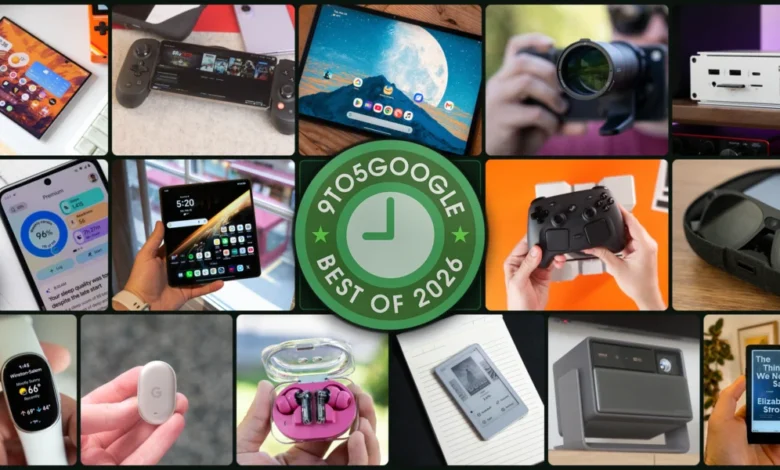
The technology landscape of 2026 will long be remembered as a definitive crucible for consumer electronics, defined heavily by macroeconomic pressures, component scarcity colloquially dubbed "RAMageddon," and a broader industry pivot toward meaningful, iterative refinement over hollow gimmicks. Across dozens of exhaustive hardware evaluations conducted throughout the year, the overarching thread binding nearly every product category was cost. Escalating component prices forced manufacturers to justify their valuations, making it exceptionally straightforward for reviewers and consumers alike to separate devices that excelled purely due to aggressive discounting from those that delivered exceptional value and performance at any price point.

Rather than chasing unproven paradigms, the vast majority of standout releases in 2026 relied on years of cumulative engineering. From optimized form factors and extended battery architectures to thermal efficiency and weight reduction, the year underscored that the most resilient technology is forged through careful, deliberate iteration. Only a select few product categories, such as emerging augmented reality form factors, pushed entirely unchartered boundaries. The rest represented the absolute apex of their respective industries, balancing rigorous performance metrics with practical everyday utility.

Economic Pressures and the Shift Toward Iterative Design
The narrative of 2026 hardware development cannot be divorced from supply chain realities. The persistent memory shortages—widely referenced across the industry as RAMageddon—forced component costs upward, compelling manufacturers to re-evaluate profit margins and consumer pricing strategies. Budget and mid-range tiers experienced unprecedented scrutiny, while flagship devices were tasked with demonstrating generational leaps substantial enough to command premium pricing.

This environment acted as a natural filter for the consumer electronics market. Products that survived the scrutiny were those that solved genuine friction points for users rather than introducing superfluous features. Throughout the year, tech journalists and reviewers identified specific devices that transcended these market constraints, establishing new benchmarks for design, functionality, and consumer satisfaction across mobile, audio, home entertainment, and desktop computing sectors.

Breakthroughs in Mobile Computing and Form Factors
Mobile technology in 2026 saw significant maturation, particularly within the foldable smartphone segment and non-traditional computing platforms. Devices like the Samsung Galaxy Z Fold 8 and the Honor Magic V6 demonstrated that foldable screens have transitioned from experimental novelties to reliable daily drivers.

The Samsung Galaxy Z Fold 8, released in August 2026 with a starting price of $1,899.99, captured attention through a refinement of proportions. By shifting away from rigid square inner displays toward more flexible, ergonomically sound aspect ratios, Samsung addressed long-standing usability criticisms regarding outer screen utility and inner canvas navigation. Similarly, the Honor Magic V6, priced at approximately $1,720 following its March debut, pushed durability and imaging standards forward. Incorporating a large 1/2-inch telephoto sensor, the device rivaled dedicated mirrorless cameras for quick-capture professional work while surviving rigorous durability tests, including structural resistance to mud and liquid submersion.

In the ultra-premium slab phone market, the Oppo Find X9 Ultra—retailing near $1,999—reigned supreme as a device entirely unwilling to compromise on camera hardware, display fidelity, or the nuanced software optimization of ColorOS. Despite regional availability hurdles requiring importation for North American enthusiasts, the Find X9 Ultra remained a masterclass in mobile engineering.

Wearables, Health Tracking, and Smart Accessories
The wearable technology sector experienced a philosophical split in 2026, dividing consumers between screen-free minimalism and fully realized smart ecosystems. Google’s entry into the minimalist fitness segment with the Fitbit Air, priced at $99.99 upon its May release, resonated strongly with users seeking passive health tracking free from notification fatigue. Eschewing a display entirely, the lightweight band prioritized battery longevity and unobtrusive wearability while keeping core health data accessible without paywalls.

Conversely, users demanding traditional timekeeping and glanceable telemetry gravitated toward the Fitbit Edge, released in late October for $179.99. Featuring an always-on display and a Pixel Watch-inspired software aesthetic, the Edge bridged the gap between basic health tracking and smart notification management.

In the tracking tag market, Google’s long-awaited Pixel Tag debuted in November at $29.99, deeply integrating with the expanded Find Hub ecosystem. Offering practical features such as left-behind alerts and bi-directional phone-ringing capabilities, the pill-shaped tracker demonstrated the distinct advantages of first-party hardware optimization over fragmented third-party implementations.

Home Entertainment and Immersive Audio
Home entertainment technology saw dramatic leaps in projection and spatial audio capabilities. The XGIMI Horizon 30 Pro projector, launching in November at $2,499, redefined bedroom and living room cinema setups. By integrating variable refresh rate (VRR) support, Google TV, a physical swiveling base with automated keystone correction, and robust onboard acoustics, the device successfully blurred the line between a massive gaming display and a traditional home theater projector.

Audio enthusiasts saw continued innovation from brands like Nothing, whose audio ecosystem—anchored by the $179 Ear (3) and the $99 Ear (3a)—delivered clean sound profiles, transparent industrial design, and cross-platform compatibility throughout 2026. The accessibility of these audio products, further amplified by end-of-year promotional pricing, solidified Nothing’s footprint in the competitive personal audio space.

Desktop Productivity, Gaming Peripherals, and E-Paper Evolution
Desktop productivity and gaming setups also reached new milestones. Keychron’s entry into the high-bandwidth connectivity space with the Thunderbolt 5 Dock (14-in-1), priced at $349.99, provided a machined aluminum hub capable of seamlessly managing multi-monitor workflows across disparate operating systems, including Windows PCs, Macs, and emerging portable workstations.

In the gaming peripheral market, the revitalized Steam Controller, launched in May for $99, offered Windows and PC gamers an advanced input method heavily inspired by the ergonomic and customization triumphs of the Steam Deck. Powered by Steam Input, the controller delivered deep macro customization and tactile feedback that resonated strongly with PC enthusiasts.

Concurrently, the e-paper market experienced a renaissance driven by consumer demand for digital detox and reduced eye strain. Devices such as the Onyx Boox Picco and the XTEINK X4 Pro—both priced around the $100 threshold—offered ultra-portable, minimalist reading experiences. Supporting custom firmware and synchronization protocols like KOReader, these pocket-sized e-readers allowed users to decouple long-form reading from traditional, notification-heavy smartphones.

Immersive XR and Mobile Emulation Frontiers
Augmented and extended reality took a pragmatic step forward with the release of the XREAL Aura in November 2026. Priced at $1,099, the device navigated the awkward early adoption phase of Android XR by housing spatial computing capabilities within a lightweight, glasses-style form factor. By allowing users to project resizable, floating application windows via a tethered compute puck, the Aura offered a compelling alternative to bulky virtual reality headsets for remote work and media consumption.

On the software and emulation front, community-driven projects like DroidDeck revolutionized mobile gaming. Utilizing translation layers such as FEX and Proton, DroidDeck enabled Android devices to run native PC gaming libraries with performance metrics occasionally rivaling dedicated handhelds like the Steam Deck. When paired with controllers such as the GameSir G8 Galileo, the platform exemplified the expanding ceiling of mobile hardware capability.

Implications and Industry Outlook
The technological milestones of 2026 illustrate an industry maturing under economic duress. By prioritizing structural durability, repairability, software longevity—such as Honor’s seven-year update commitments—and targeted feature sets, manufacturers successfully navigated component shortages. As the consumer electronics market looks beyond 2026, the blueprint established this year—balancing fiscal pragmatism with deliberate, user-centric engineering—will undoubtedly dictate the trajectory of global hardware development.