Boox Picco Review: A Radical Ultra-Portable E-Reader Redefining Minimalist Reading


The consumer technology landscape has long chased a paradoxical goal: making devices larger and more immersive while simultaneously demanding extreme portability. In the e-reader market, this tension has resulted in a vast spectrum of hardware options. Heavy users can choose expansive 10-inch tablets ideal for skimming PDFs, technical manuals, and graphic-heavy comic books, or pivot toward pocketable alternatives like the Boox Palma. Yet, even pocket-sized e-readers frequently force consumers into a frustrating compromise, requiring them to carry a dedicated secondary device alongside an already heavy smartphone. For everyday carry enthusiasts and mobile minimalists, the smartphone almost invariably wins this contest, particularly as versatile foldable devices and slim flagship slabs dominate modern pockets.

Into this crowded and compromise-laden market steps the Boox Picco, a disruptive ultra-compact e-reader priced at approximately $109. Unveiled to the public during the IFA consumer electronics trade show in Berlin, the Picco strips away the excess features, expansive operating systems, and high price tags that characterize modern smart devices. Measuring a mere 4.15 inches in total height with a 3.97-inch E-Ink display, the Picco is engineered to disappear seamlessly into a daily routine. By embracing a deliberately constrained feature set, a proprietary companion transfer system, and an optional MagSafe-compatible magnetic attachment methodology, Boox has engineered a niche product that challenges how consumers think about portable reading hardware.
Hardware Anatomy and Engineering Specifications
At first glance, the Boox Picco challenges traditional industrial design paradigms for electronic reading devices. Standing at 4.15 inches tall with a screen measuring just under 4 inches diagonally, the device closely mirrors the physical footprint of a standard MagSafe or Qi2-compatible wallet accessory. Its ultra-thin profile measures an impressive 5.5 millimeters on the side, allowing it to slide effortlessly into minimal pockets, internal compartments of compact crossbody bags, or narrow portfolio slots without adding noticeable bulk or weight.

Unlike many competitors that rely on heavy magnesium alloys or reinforced plastics, the Picco is constructed to minimize mass, weighing next to nothing. This featherlight construction directly addresses the primary barrier to carrying a secondary reading device: physical fatigue and pocket real estate.
A notable hardware inclusion on the Picco is its physical front-light integration. While many premium e-readers priced significantly higher omit physical illumination controls or relegate them to software submenus accessed via complex operating systems, the Picco features a dedicated physical switch situated along its chassis. Swiping down from the top surface reveals fundamental screen brightness and color temperature controls, though the physical switch provides immediate tactile adjustment. Opposite the lighting controls, the device incorporates dedicated page-turn buttons rather than traditional volume rockers—a functional design choice tailored exclusively to reading workflows.

The Philosophy of Simplicity: Abandoning Android and App Bloat
The most radical departure from Boox’s established product ecosystem is the Picco’s complete omission of the Android operating system. Historically, Boox has built a strong reputation on manufacturing versatile E-Ink tablets powered by open Android software, granting users unrestricted access to third-party storefronts and applications such as the Google Play Store, Amazon Kindle, and Kobo.
The Picco deliberately discards this paradigm. It does not run Android, meaning users have no native access to third-party app ecosystems, cloud store applications, or web browsers. Instead, the device operates on a closed, minimalist firmware architecture designed around a single core function: reading side-loaded EPUB files.

This design choice initially elicited skepticism from industry analysts and consumers when the device was previewed at IFA. However, prolonged field testing reveals a distinct philosophical coherence. For digital bibliophiles who manage their own local libraries of DRM-free EPUB files stored on personal hard drives or cloud services, the lack of an app store transforms into a virtue. It eliminates push notifications, social media temptations, background battery drain, and cognitive distractions, restoring the single-purpose tranquility of traditional print media.
Connectivity and Content Management
Because the Picco lacks native Wi-Fi storefront integration and direct browser downloads, content management relies entirely on a localized handshake connection with a companion mobile application.

The file-transfer workflow requires users to open the companion app on their smartphone, initiate a connection protocol, and mirror the action on the Picco device via local wireless protocols. Once the handshake is established, transferring EPUB files from physical or cloud storage on the phone to the e-reader takes mere seconds. The homescreen interface presents itself as a clean, unpretentious carousel of the user’s active library, complete with subtle, informative progress bars displayed underneath each book title for visual sorting.
While the primary library interface is clean, the companion software also attempts to incorporate secondary utilities such as reading statistics, focus timers, daily countdowns, and to-do list integrations. Field evaluations suggest that features extending beyond core library management and reading metrics add unnecessary friction, as tools like to-do lists are better managed on primary smartphones. Nevertheless, the core reading management experience remains fast, reliable, and strictly focused.

The Magnetic Ecosystem and Smartphone Integration
One of the most distinctive marketing and functional angles of the Boox Picco is its optional magnetic integration. While the bare e-reader chassis lacks native magnetic properties, the device ships bundled with a specialized protective case that introduces MagSafe-like alignment and retention capabilities.
This inclusion enables a novel, albeit polarizing, hardware configuration: users can physically snap the Picco e-reader directly onto the back of a compatible smartphone equipped with Qi2 or MagSafe magnetic rings. For users carrying standard slab smartphones—such as modern Google Pixel or Apple iPhone models—the footprint of the Picco squares up remarkably well against the rear glass panel.

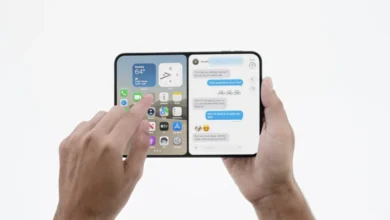
However, this feature presents clear ergonomic trade-offs. Attaching an E-Ink display to the rear of a primary smartphone increases overall thickness and weight. Furthermore, when holding a smartphone with the Picco piggybacked to the rear, the user’s fingers naturally rest against the glass and bezel of a secondary electronic display rather than a traditional phone case backing. While users can adapt to this unconventional form factor over time, it remains a specialized aesthetic and functional choice rather than a mandatory workflow. Unconventional folding devices, such as the Samsung Galaxy Z Fold series, find little practical utility in this specific magnetic sandwich configuration due to their distinct physical proportions, reinforcing the reality that magnets on the Picco remain strictly optional.
Battery Performance and Power Management
Given its diminutive physical dimensions and ultra-thin profile, the Boox Picco houses a significantly smaller battery than what is found in modern smartphones or larger E-Ink tablets. Despite these physical limitations, energy consumption is remarkably efficient, largely due to the passive nature of E-Ink display technology, which draws zero power when static text is displayed on screen.

Real-world usage metrics indicate that the Picco easily sustains approximately one week of continuous operation under normal reading conditions—defined as roughly one to two hours of daily reading with moderate front-light usage. The device excels during periods of prolonged idle time, suffering from negligible standby battery drain. When replenishment is necessary, the compact internal cell charges rapidly via USB-C, ensuring the device spends minimal time tethered to a wall outlet.
Market Implications and Target Audience Analysis
The introduction of the Boox Picco at a price point of approximately $109 occupies a very specific vacuum in the consumer electronics ecosystem. Traditional e-readers have increasingly crept upward in price, often bundling complex note-taking digitizers, expansive software suites, audio playback capabilities, and color E-Ink panels that drive costs past the $300 to $500 threshold.

By aggressively trimming these extraneous components, Boox has targeted a distinct consumer demographic: minimalists, digital detox advocates, and frequent travelers who prioritize uncompromised pocketability and distraction-free reading over technological multifunctionality. The lack of third-party app support will undoubtedly alienate users heavily invested in Amazon Kindle ecosystems or library rental apps like Libby, cementing the Picco as a niche product for enthusiasts who curate their own digital document archives.
Ultimately, the Boox Picco demonstrates that hardware innovation does not always require adding features, processing power, or software complexity. By focusing entirely on form factor optimization, straightforward file transfer protocols, and tactile reading controls, Boox has delivered a specialized device that reintroduces simplicity and genuine enjoyment to the digital reading experience.