BMAX MaxMini B12 Power Review: Re-evaluating Older Flagship Silicon in a Modern Mini PC Market

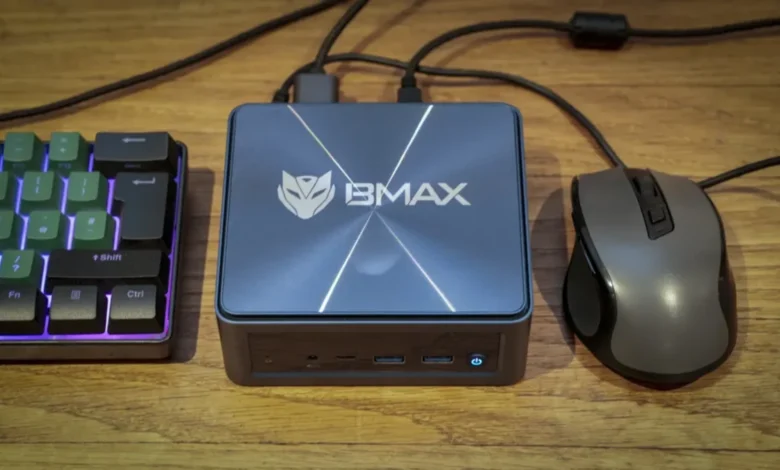
The compact desktop computing landscape has witnessed a dramatic shift toward artificial intelligence integration, with manufacturers racing to pack cutting-edge Neural Processing Units (NPUs) and latest-generation chipsets into diminutive chassis. Amid this relentless pursuit of next-generation AI capabilities, BMAX has adopted a surprisingly pragmatic, counter-current strategy for its latest hardware release. The newly launched BMAX MaxMini B12 Power bypasses contemporary silicon architectures in favor of a processor that debuted nearly three years ago: an Intel Core Ultra flagship laptop CPU. Retailing directly from the manufacturer at $999.99 / £754.99, this machine positions itself as a cost-effective alternative for traditional office productivity, creative applications, and light multimedia workflows, even if its architecture lags behind the bleeding edge of modern AI deployment.
Design, Portability, and Build Specifications
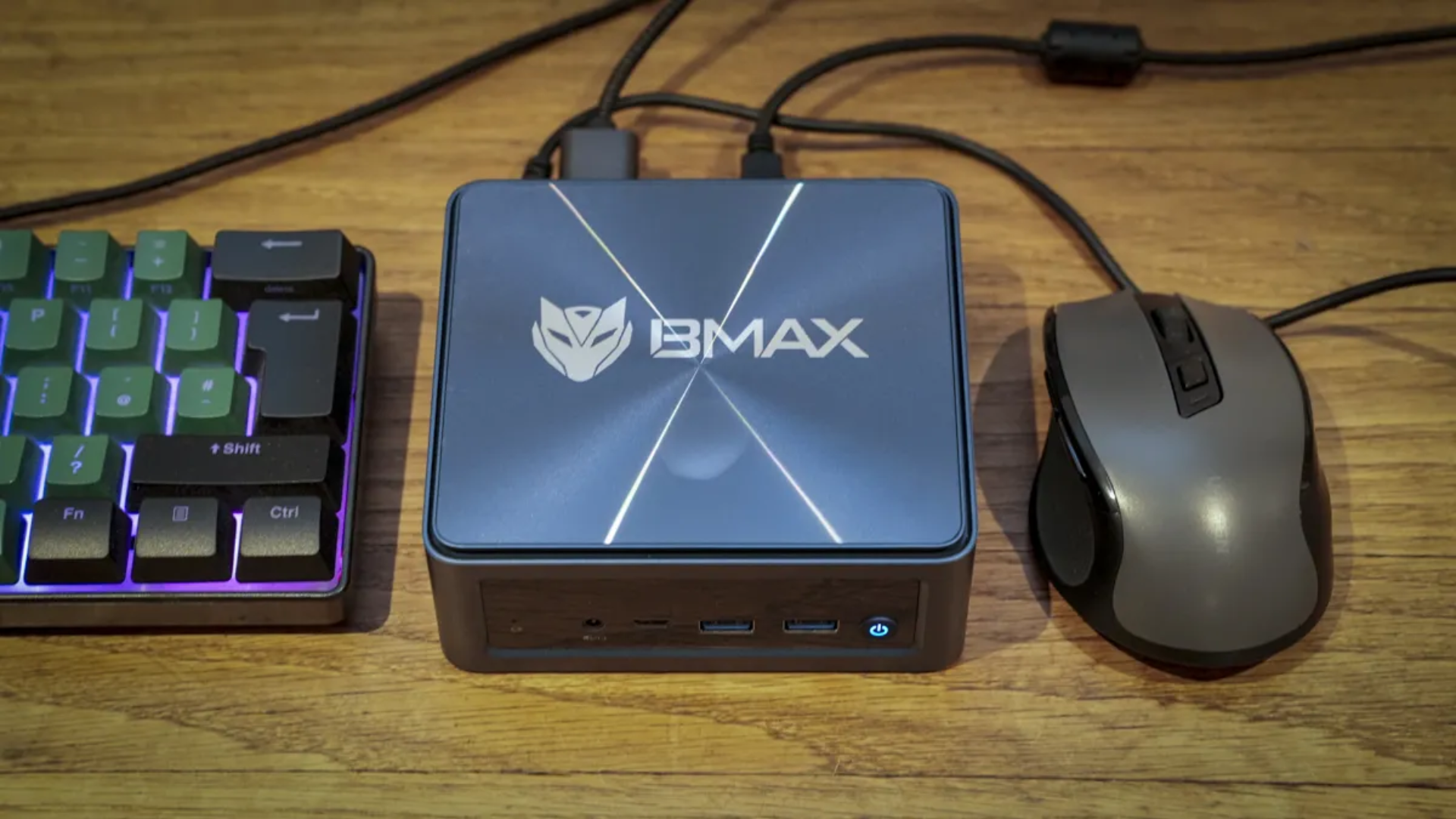
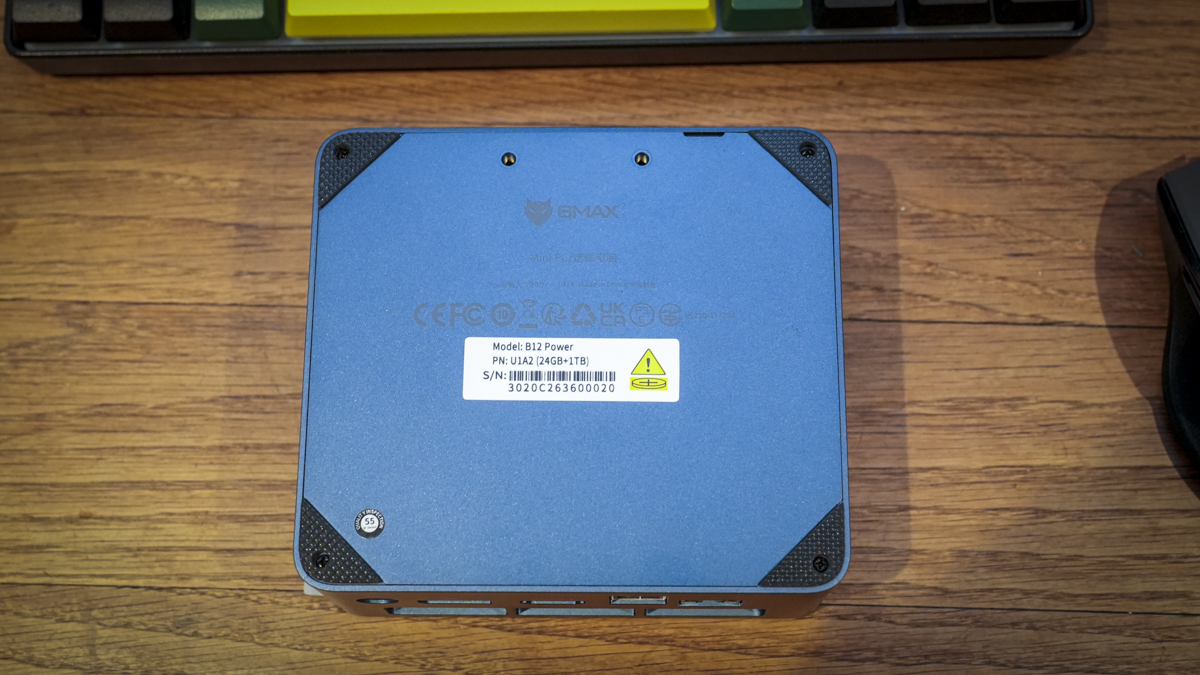
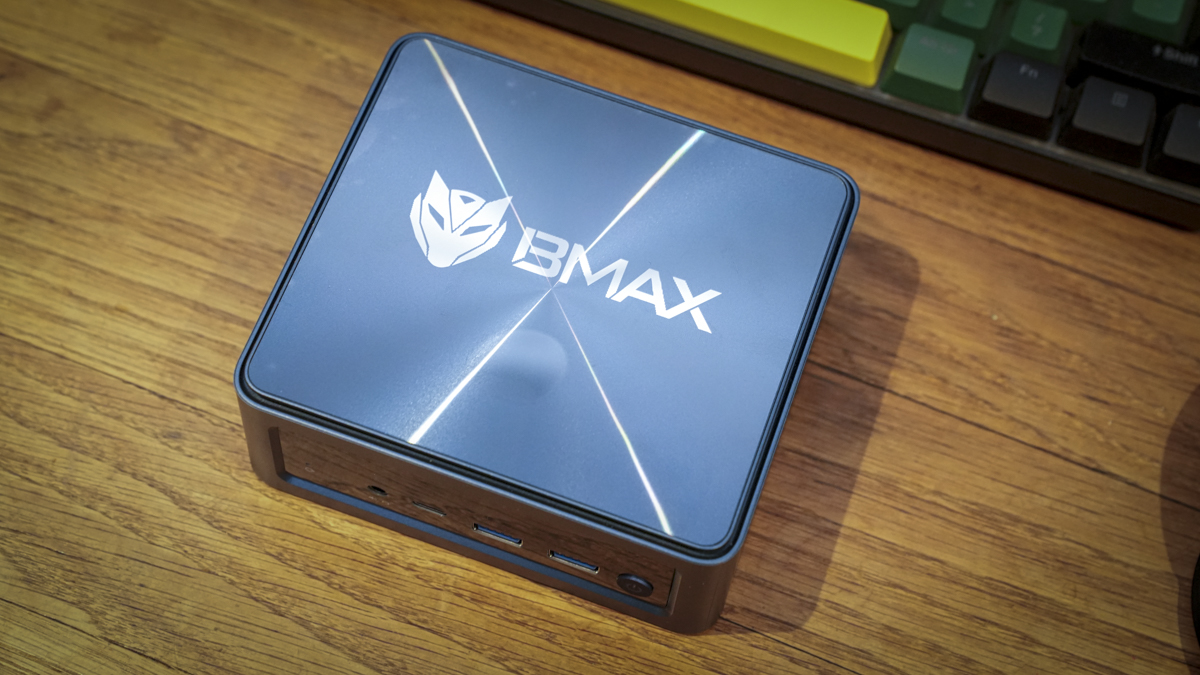
Measuring precisely 126 x 112 x 52mm and tipping the scales at a remarkably lightweight 410 grams, the MaxMini B12 Power is among the most compact and easily concealable desktop systems available. Its aesthetic features a dark blue plastic chassis adorned with the BMAX logo and a subtle geometric motif across its top surface. While the all-plastic construction keeps the overall weight down and facilitates straightforward VESA mounting directly to the rear of a monitor or discreet placement within confined spatial environments such as mobile workstations or recreational vehicles, it inevitably lacks the premium tactile feel of aluminum or magnesium-alloy competitors.
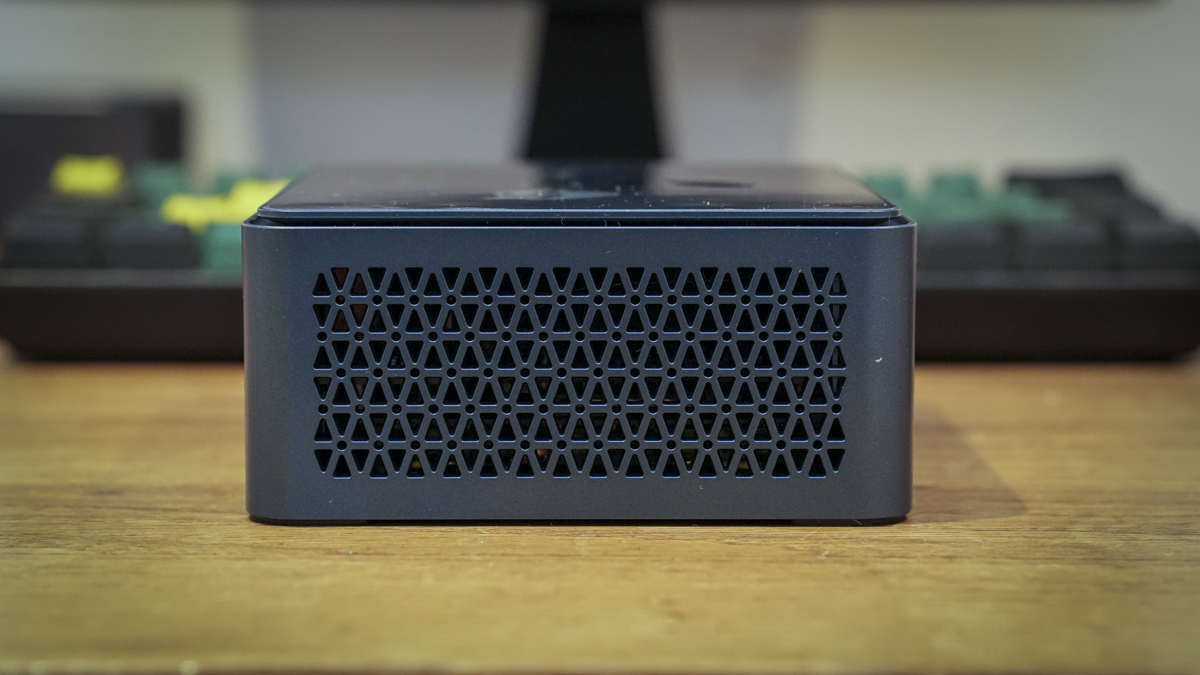
Despite the lightweight build, thermal management has been carefully considered through the implementation of BMAX’s "Space Capsule" cooling system, which pairs copper heat pipes with a dedicated internal fan and extensive chassis ventilation. During standard administrative operations and benchmark testing, the acoustic profile remains exceptionally quiet, though the cooling fans audibly ramp up under sustained, heavy compute loads.
Physical connectivity reflects a balance between spatial constraints and practical utility, though it presents distinct limitations for power users. The front panel incorporates a recessed Clear CMOS button tailored for homelab experimentation, a 3.5mm audio jack, a single USB Type-C port, and two USB 3.2 ports, alongside the physical power button. The inclusion of a front-facing USB-C port is a welcome design choice that many competing mini PCs omit. The rear panel provides two legacy USB 2.0 ports—principally reserved for peripheral connections such as keyboards and mice—alongside an HDMI output, a DisplayPort connector, a 2.5GbE Ethernet port for high-speed local networking, and the main power input. For physical security in public or semi-mobile deployments, a standard Kensington lock slot is built into the side of the chassis.
Hardware Architecture and Internal Componentry
At the core of the BMAX MaxMini B12 Power is the Intel Core Ultra 9 185H processor, belonging to the Meteor Lake-H silicon family. This processor features a heterogeneous core layout comprising six performance-cores, eight efficient-cores, and two low-power efficient-cores, supporting 22 threads via Hyper-Threading with a maximum turbo frequency reaching 5.1GHz. Paired with this processor is an integrated Intel Arc graphics solution featuring eight Xe-LPG graphics cores capable of hardware-accelerated ray tracing and modern video codec encoding and decoding via Intel Quick Sync.
When evaluated against newer processor generations—such as Intel’s Panther Lake architecture introduced in early 2026—the BMAX’s older silicon reveals both distinct advantages and inherent compromises. Interestingly, the Core Ultra 9 185H features six performance-cores compared to the four found on certain newer mid-tier alternatives, alongside a higher thread count. However, contemporary architectures deliver superior energy efficiency and drastically more powerful integrated NPUs. The BMAX unit features an early-generation NPU that supports Intel’s OpenVINO ecosystem, but its compute capacity is modest by modern standards, restricting its utility for demanding local artificial intelligence applications or large Language Model (LLM) execution.
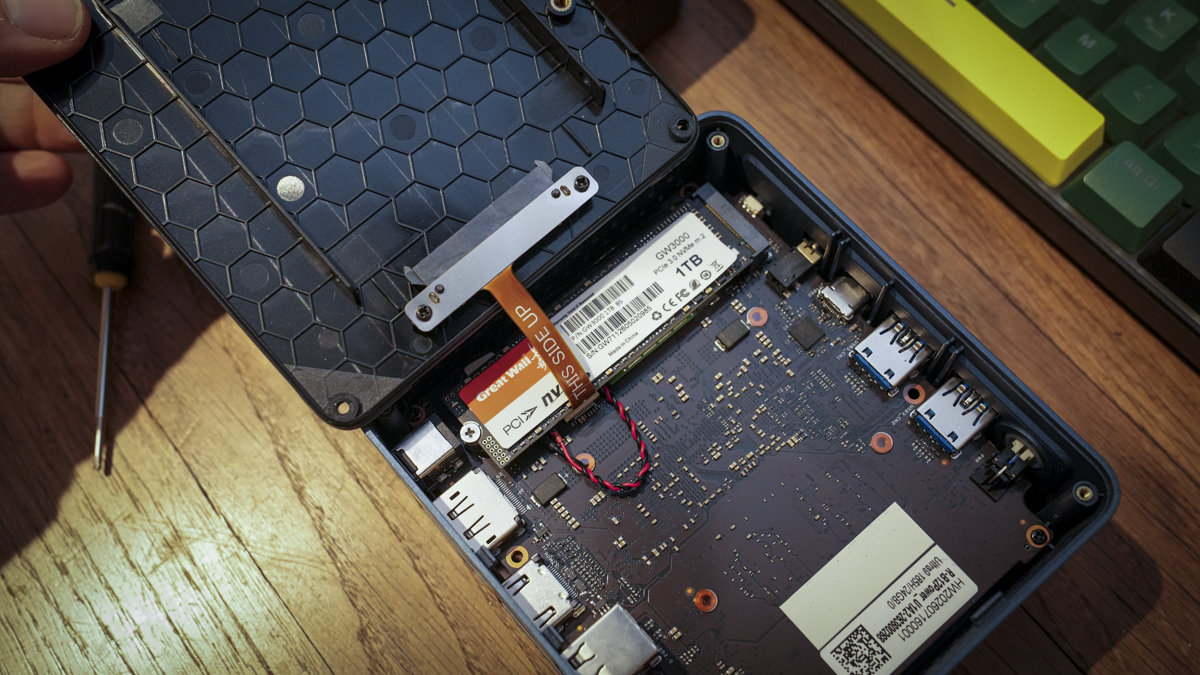
Memory and storage configurations further define the system’s operational boundaries. The unit arrives equipped with 24GB of LPDDR5 RAM operating between 4400MHz and 5600MHz. Because this memory is soldered directly to the motherboard, end-user RAM upgrades are impossible, creating a strict ceiling for memory-intensive multi-application workflows. Storage is anchored by a removable 1TB NVMe M.2 solid-state drive utilizing the PCIe 3.0 interface. While PCIe 3.0 speeds lag significantly behind the PCIe 4.0 and 5.0 drives common in 2026 hardware releases, BMAX includes a notable expansion option: an internal mounting bay for a standard 2.5-inch SATA drive, allowing users to augment system storage capacity affordably, though official manufacturer documentation omits maximum supported drive limits.
Real-World Performance and Benchmark Analysis
Rigorous real-world evaluation demonstrates that the mature silicon inside the BMAX MaxMini B12 Power remains remarkably potent for traditional computing tasks. In benchmark testing, the system yielded robust scores, including a Geekbench 6 CPU multi-core result of 11,777 and a single-core score of 2,419, while Cinebench R23 recorded a multi-core score of 14,729. Storage benchmarks via CrystalDiskMark logged sequential read speeds of approximately 2,033 MB/s and write speeds near 1,647 MB/s, reflecting the performance profile of its PCIe 3.0 NVMe architecture.
For standard office productivity suites—including Microsoft Word, Excel, and PowerPoint—the system operates fluidly, permitting seamless multitasking with multiple browser windows and administrative utilities running concurrently. Adobe Creative Suite applications exhibit solid performance profiles; Photoshop handles complex multi-layered image editing, filters, and neural adjustments efficiently, and Lightroom processes large batches of RAW image files without perceptible lag.
However, system bottlenecks become apparent under heavier professional workloads. When transitioning to video editing in Adobe Premiere Pro utilizing high-bitrate C-Log footage, the 24GB soldered RAM threshold is quickly saturated, pushing Task Manager utilization to 100% and resulting in noticeable timeline stutters unless footage is pre-transcoded via Adobe Media Encoder. Similarly, while the integrated Intel Arc graphics processor permits casual gaming—successfully running demanding titles like Cyberpunk 2077 and Indiana Jones and the Great Circle at reduced resolutions and graphical settings—graphical artifacts and lowered frame rates underscore the limitations of integrated VRAM sharing system memory.
Market Positioning and Strategic Implications
The release of the BMAX MaxMini B12 Power highlights an intriguing pricing and component philosophy within the current PC hardware market. By utilizing a discounted, older flagship processor rather than newly engineered silicon, BMAX has successfully delivered a high-performance compute package at a price point that undercuts many contemporaneous systems lacking equivalent raw processing power.
Nevertheless, the machine occupies a transitional market space. As software developers increasingly migrate computational tasks toward AI-driven frameworks, the limited capacity of the onboard NPU and the fixed 24GB RAM configuration mean the B12 Power’s long-term viability for bleeding-edge software is inherently finite. Furthermore, the exclusion of ultra-fast USB4 connectivity restricts rapid external data transfer capabilities that professional users increasingly demand.
For corporate buyers, remote professionals, and multimedia enthusiasts seeking a compact, reliable Windows 11 Pro desktop dedicated to traditional office administration, web-based workflows, and moderate creative tasks, the BMAX MaxMini B12 Power offers compelling value. It serves as empirical proof that consumers do not strictly require the newest generation of silicon to achieve robust daily desktop performance, provided their computational demands align with the strengths of mature, battle-tested hardware.
Related posts: