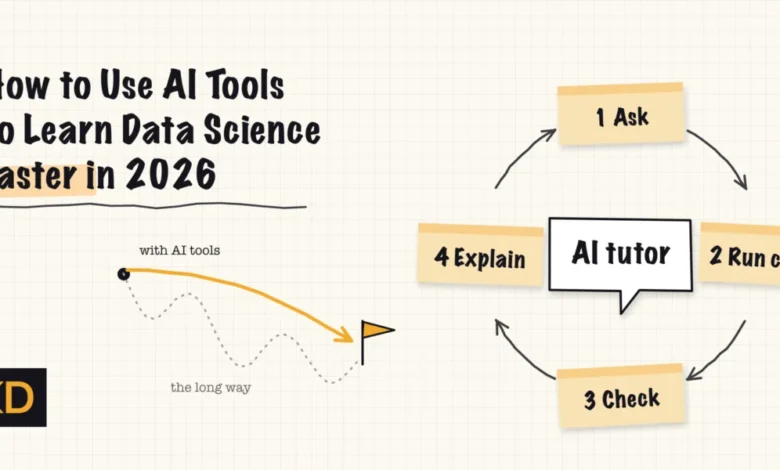
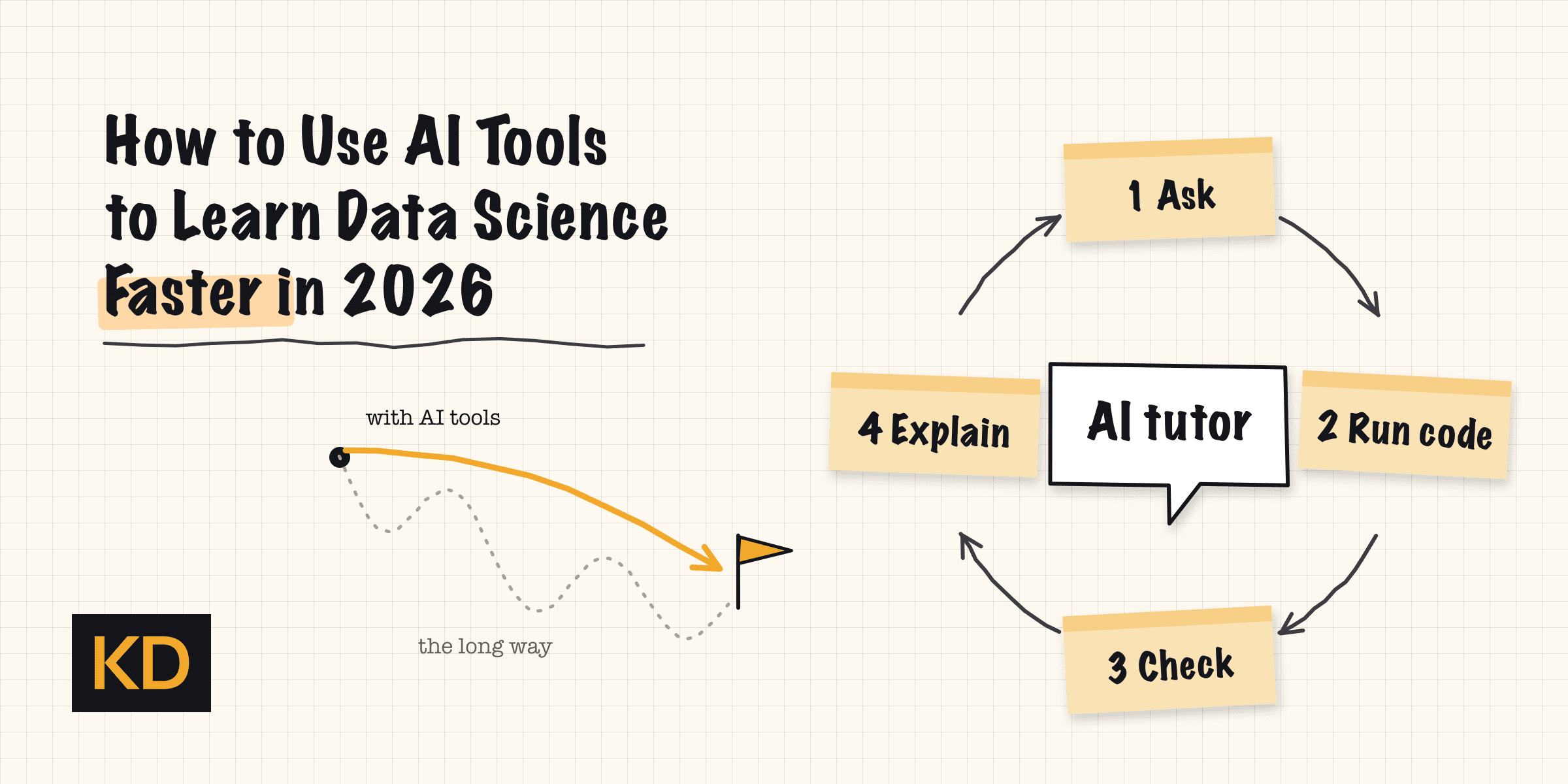
The landscape of professional education has undergone a fundamental transformation, with artificial intelligence redefining how technical competencies are acquired, practiced, and mastered. In the field of data science, where learners have traditionally struggled with the steep learning curve associated with multi-variable calculus, algorithmic logic, and complex syntax debugging, AI-driven assistants have emerged as pivotal accelerators. Industry metrics from early 2026 indicate that students and entry-level professionals utilizing AI-integrated learning environments reduce their initial concept-to-implementation timelines by approximately 35% to 40% compared to traditional self-taught cohorts. However, this unprecedented acceleration introduces a critical pedagogical challenge: balancing the efficiency of automated code generation with the imperative of deep cognitive comprehension.
Evolution of Technical Education: From Static Documentation to Dynamic AI Orchestration
The integration of artificial intelligence into technical training did not happen overnight; it represents the culmination of a decade-long shift in educational technology. In the early 2010s, aspiring data scientists relied heavily on static textbooks, massive open online courses (MOOCs) with delayed peer-graded feedback, and text-based forums like Stack Overflow. By the early 2020s, interactive browser-based platforms such as DataCamp, Dataquest, and Coursera introduced automated code validation, drastically reducing the friction of learning Python, R
, and SQL fundamentals.
By 2026, the paradigm has shifted toward ambient, context-aware AI tutoring. The contemporary data science learner operates in an ecosystem where large language models (LLMs) and integrated development environment (IDE) assistants like GitHub Copilot and Cursor act as real-time collaborators. According to educational technology analysts, the modern data science curriculum has evolved past classical machine learning implementation. Today’s professionals must act as AI orchestrators, understanding large language model architectures, Retrieval-Augmented Generation (RAG) pipelines, and framework-level implementations using libraries like LangChain and LlamaIndex. This structural evolution demands that educational strategies adapt, ensuring that speed does not compromise fundamental analytical reasoning.
Establishing Robust Analytical Foundations Before AI Integration
Industry educators and technical mentors emphasize a foundational prerequisite: learners must master core analytics principles prior to deploying advanced AI systems. Pedagogical research consistently demonstrates that conversational AI assistants are most effective when the user possesses enough domain knowledge to evaluate, question, and refine the generated outputs.
Attempting to leverage machine learning models or complex classification metrics without a grounding in basic statistics, linear algebra, and data manipulation libraries—such as pandas and NumPy—often leads to superficial understanding. When a student prompts an AI to explain a confusion matrix without prior exposure to classification theory, the resulting explanation serves merely as a crutch rather than an educational milestone. Consequently, structured foundational learning remains the mandatory first phase of the modern data science roadmap. Adaptive platforms that utilize real-time skill-level adjustments help bridge this gap, ensuring that foundational misconceptions are corrected before compounding into critical errors.
Deploying Conversational AI as On-Demand Technical Mentors
Once foundational principles are established, conversational agents such as OpenAI’s ChatGPT and Anthropic’s Claude function as accessible, on-demand academic tutors. Traditional office hours and asynchronous forum queries often introduce latency that disrupts the learning flow. Conversational AI eliminates these bottlenecks by providing immediate, context-aware breakdowns of complex algorithms.
To maximize these tools without forfeiting cognitive effort, pedagogical experts advocate for specific interactive techniques:
- Iterative Concept Deep-Dives: Rather than asking for a direct definition, learners are encouraged to request multiple analogies for abstract concepts—such as gradient descent—followed by inquiries into how specific hyperparameters influence model convergence.
- Contextual Code Reviews: Instead of simply asking an AI to debug a broken script, students are advised to outline their intended objective, present their initial attempt, and ask experienced-level practitioners to evaluate structural efficiency and idiomatic correctness.
- Dynamic Study Planning: By providing an AI assistant with exact baseline competencies and targeted career milestones—such as preparing for a machine learning engineering role at a mid-market enterprise—learners can generate customized, milestone-driven weekly curricula.
Accelerating Coding Proficiency Through AI Development Assistants
The transition from theoretical comprehension to clean, production-grade code has historically been a significant productivity barrier for data science novices. Integrated AI coding assistants—most notably GitHub Copilot, Cursor, and various extensions for Visual Studio Code—directly address this implementation gap.
Data from enterprise software development studies indicate that developers utilizing AI coding assistants experience productivity enhancements averaging around 40%. For portfolio-building learners, this efficiency translates directly into a higher volume of completed, deployable projects. However, industry veterans caution against passive code acceptance. True skill acquisition occurs when a learner treats every AI-generated code suggestion as a prompt for inquiry: analyzing why a vectorized pandas operation is preferred over a traditional for-loop, or examining how memory management is handled in large dataset transformations.
Educational workflows now frequently incorporate a multi-step verification process. A student first writes a baseline script to calculate metric aggregates, subsequently prompts an AI assistant for optimized refactoring, and finally compares both iterations to internalize structural improvements. This comparative analysis accelerates algorithmic intuition far more effectively than passive tutorial consumption.
Structuring High-Impact Portfolio Projects with AI Guidance
For prospective data science professionals, portfolio projects remain the definitive metric of employability. Yet, many self-directed learners experience paralysis not from a lack of motivation, but from strategic ambiguity regarding dataset selection, scoping complexity, and analytical framing.
AI tools streamline this phase by acting as project management consultants. By inputting current skill levels and career targets, learners can prompt AI assistants to formulate realistic, industry-relevant project proposals. Furthermore, these assistants can outline comprehensive exploratory data analysis (EDA) pipelines, suggest relevant baseline models, and provide systematic troubleshooting steps when model performance metrics fall below expectations. Integrating these assistants directly into environments like Jupyter Notebooks allows learners to maintain an uninterrupted exploratory workflow while accessing immediate technical support.
Reinforcing Knowledge Through Active Recall and Self-Testing
Cognitive science emphasizes that active recall and spaced repetition are vastly superior to passive review strategies such as re-reading notes or scrolling through documentation. AI tools facilitate this by transforming standard study sessions into interactive examination environments.
Learners can deploy targeted prompts requesting structured quizzes—asking the AI to present complex machine learning concepts, such as the operational differences between bagging and boosting, via sequential, single-question intervals. The AI evaluates each user response in real time, providing diagnostic feedback before advancing. This methodology mirrors the rigor of technical screening interviews, building both technical competence and psychological resilience for real-world hiring processes.
Navigating the Broader Industry Implications and Future Outlook
The rapid integration of generative AI into data science education reflects broader structural changes across the global technology sector. As routine data cleaning, exploratory plotting, and baseline model training become increasingly automated by intelligent systems, the baseline expectations for human data scientists are shifting upward. Employers no longer place primary value on rote memorization of syntax or manual script writing; instead, they prioritize advanced problem formulation, critical evaluation of model outputs, ethical AI governance, and system orchestration.
Industry observers note that while AI-accelerated learning lowers the barrier to entry, it simultaneously raises the bar for professional differentiation. Candidates who rely entirely on automated code generation without cultivating rigorous analytical reasoning risk displacement by the very tools they employ. Conversely, learners who strategically leverage AI as a cognitive multiplier—deepening their foundational understanding while expanding their project output—are positioned to thrive in an increasingly competitive labor market.
Ultimately, artificial intelligence serves as a powerful catalyst in technical education, but the burden of comprehension remains with the individual. By maintaining disciplined foundational studies, engaging in active retrieval practices, and approaching AI outputs with critical scrutiny, aspiring data scientists can successfully navigate the modern technological landscape and build careers characterized by enduring technical expertise.