Consistent Hashing Explained: The Backbone of Modern Distributed Systems and Scalable Architecture

In the rapidly evolving landscape of modern internet infrastructure, the ability of a platform to maintain performance under extreme load is not merely a convenience—it is an existential requirement. As web applications scale from thousands to millions of concurrent users, the traditional methods of managing data storage and caching reach their breaking points. At the heart of solving these complex architectural challenges lies consistent hashing, a sophisticated distributed systems technique that ensures stability, availability, and horizontal scalability for global-scale services like Amazon DynamoDB, Netflix, and Discord.

The Problem of Scale: The Failure of Traditional Caching
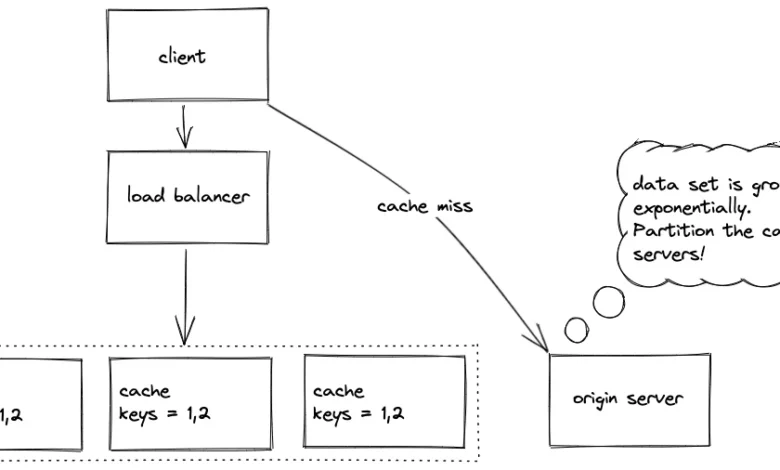
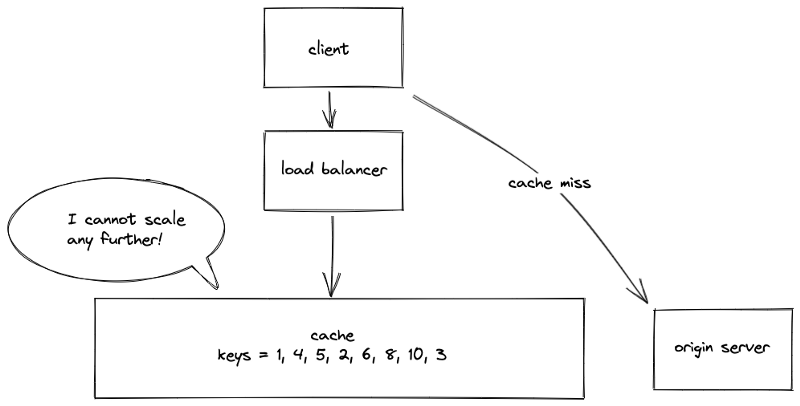
The fundamental challenge in distributed systems is how to distribute a vast, ever-growing dataset across a fleet of cache servers. When a website gains massive popularity, a single server or a fixed cluster becomes a bottleneck. Developers have historically attempted to solve this through cache replication or basic partitioning, yet both approaches carry significant trade-offs.
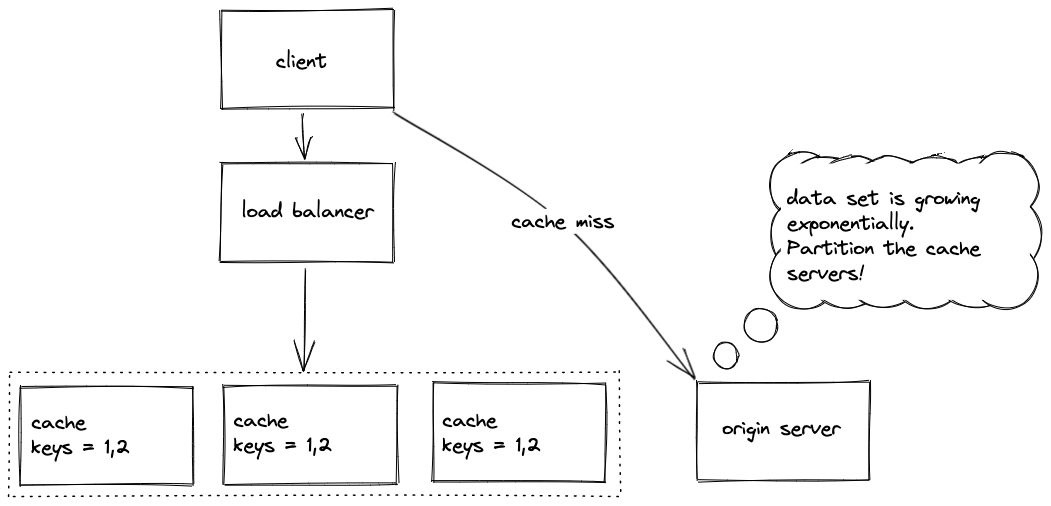
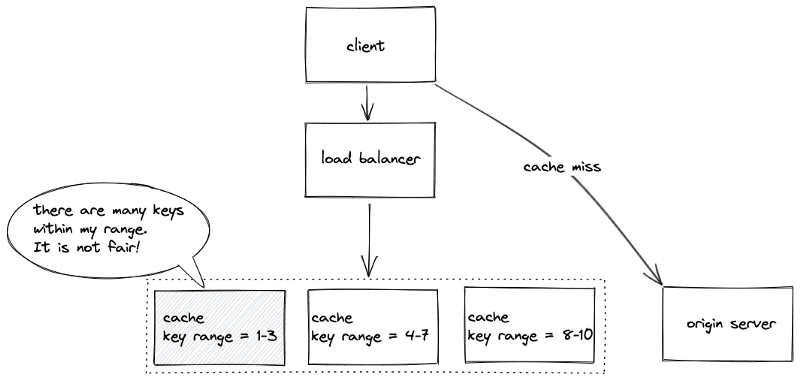
Cache replication improves availability by ensuring that data exists on multiple nodes, but it fails to address the dynamic nature of load. Because storage space on any individual node is finite, replicating the entire dataset across every node is economically and technically unfeasible. Conversely, partitioning the data across multiple nodes—also known as sharding—is necessary for horizontal growth. However, traditional partitioning methods, such as modulo-based hashing, often lead to catastrophic system instability.
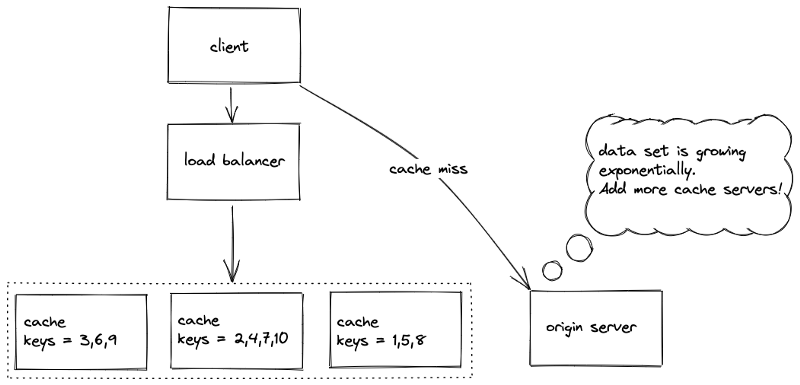
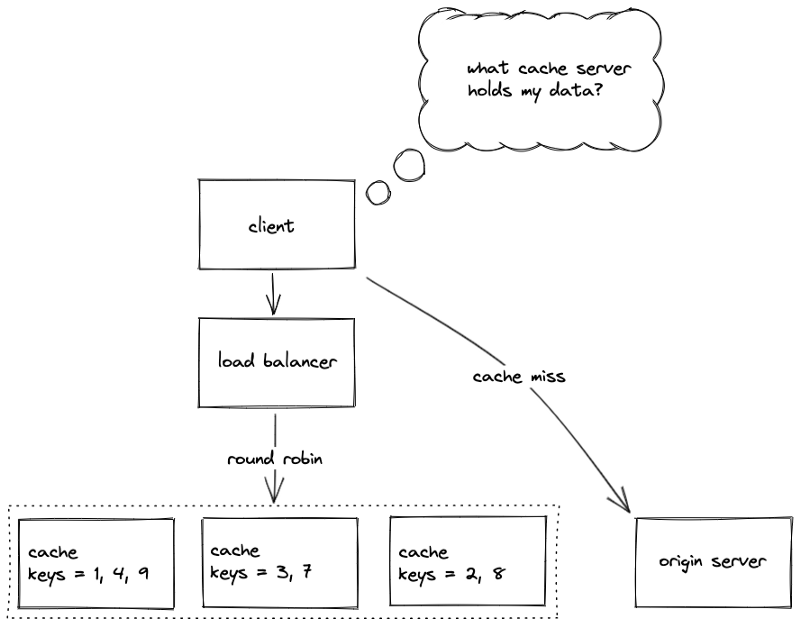
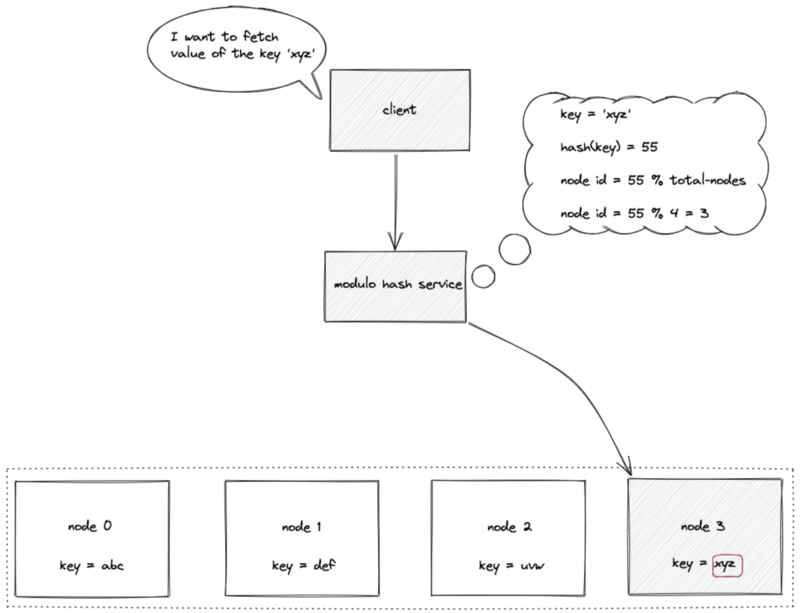
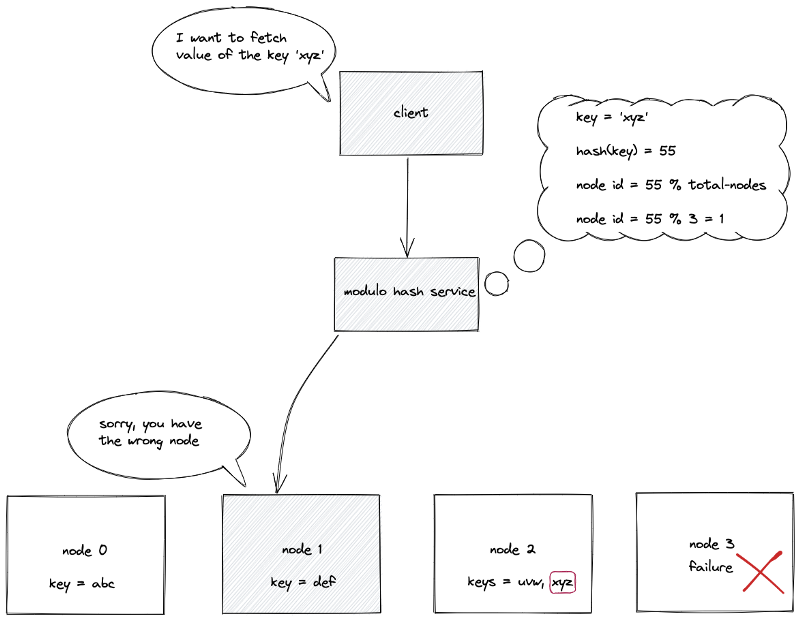
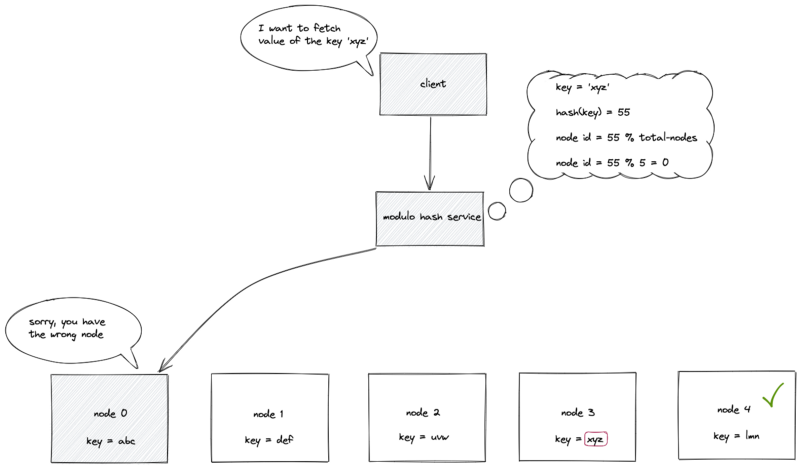
In static hash partitioning, the system assigns a key to a node using the formula node = hash(key) mod N, where N is the number of nodes. While this is simple to implement and offers O(1) time complexity, it is brittle. If a single node fails or if an administrator adds a new node to handle increased traffic, the value of N changes. This shift forces a massive remapping of nearly every key in the system. Consequently, the cache becomes invalid for the majority of requests, causing a "cache miss storm." These misses flood the origin database, potentially triggering a cascading failure that can take down the entire application.
The Evolution of Distributed Hashing
The realization that static methods were insufficient for dynamic environments led to the development of consistent hashing in the late 1990s, pioneered by researchers at MIT. The breakthrough concept was to move away from mapping keys to specific servers via a fixed array and instead map both keys and servers to a logical, circular structure known as a "hash ring."
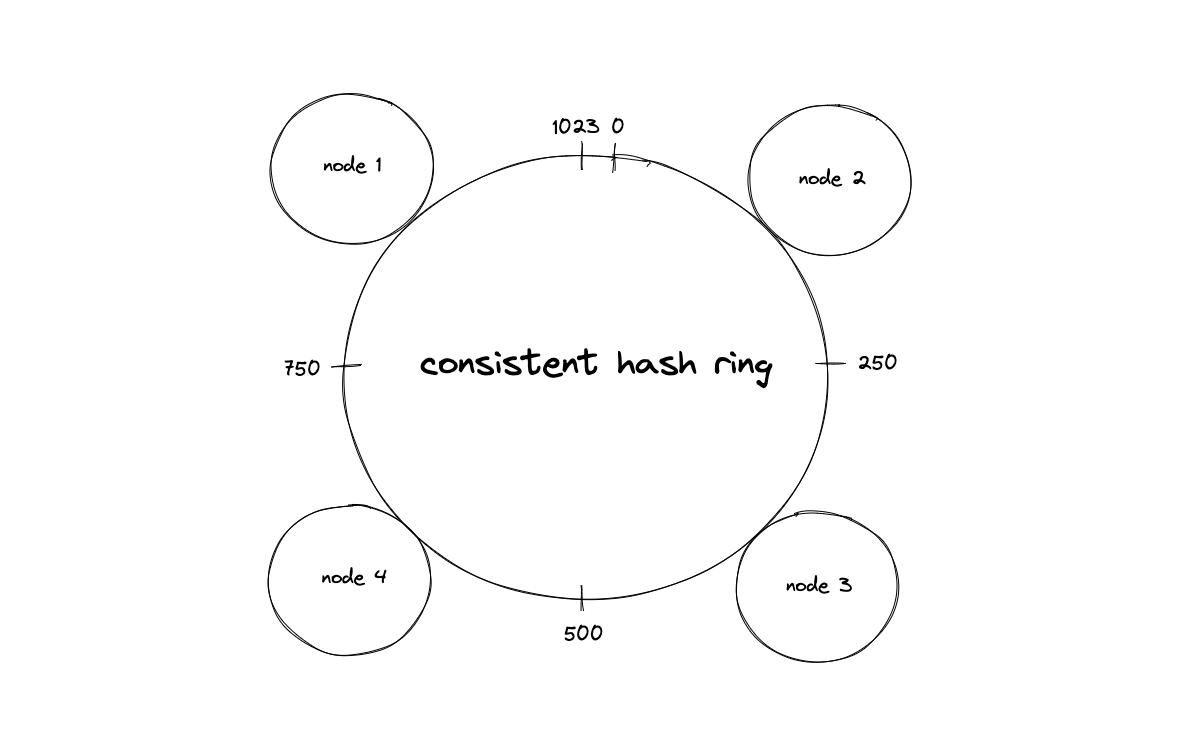
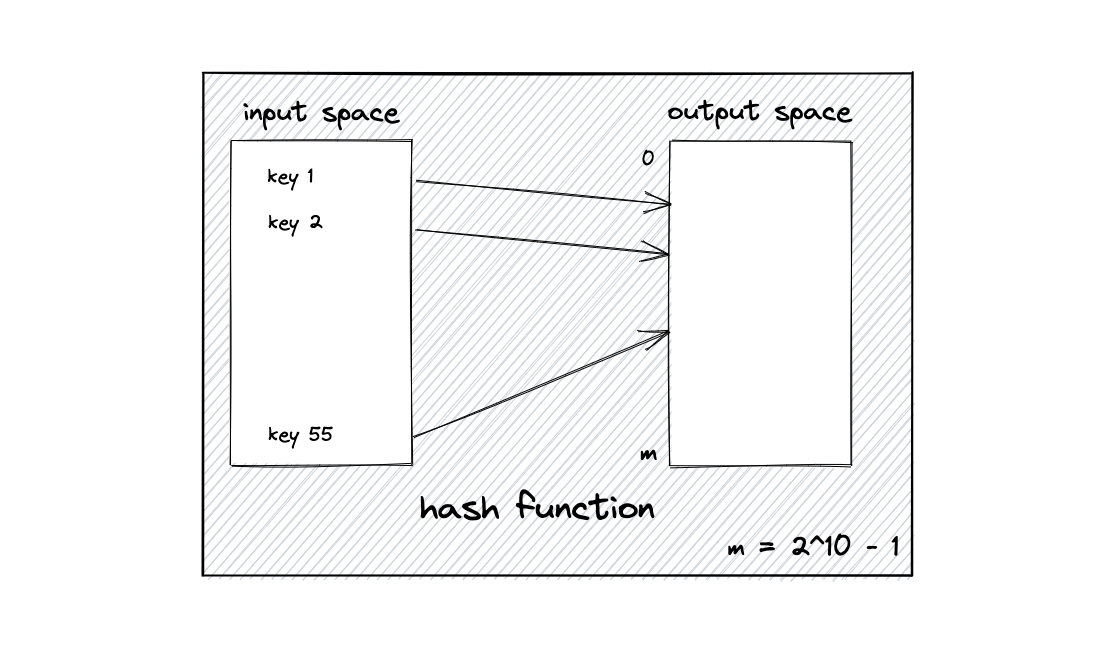
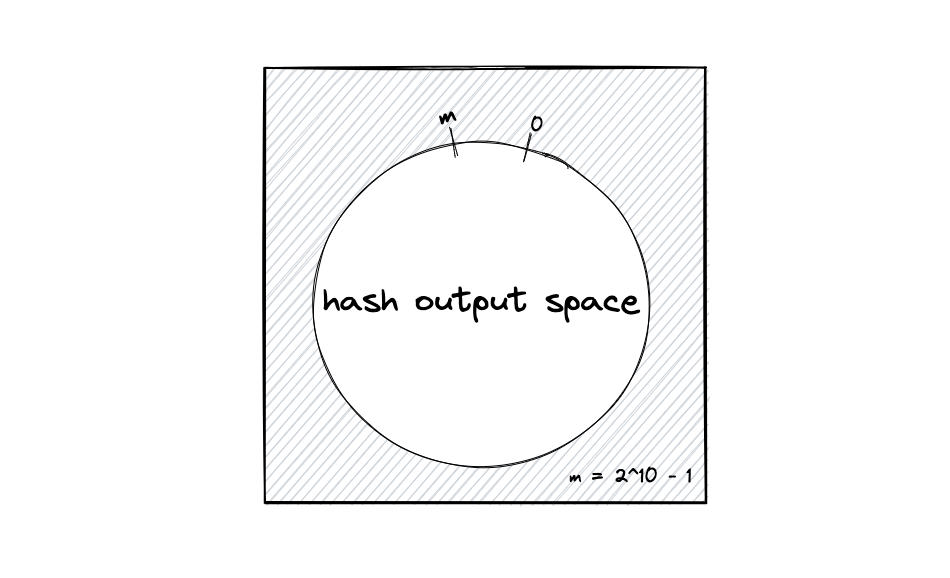
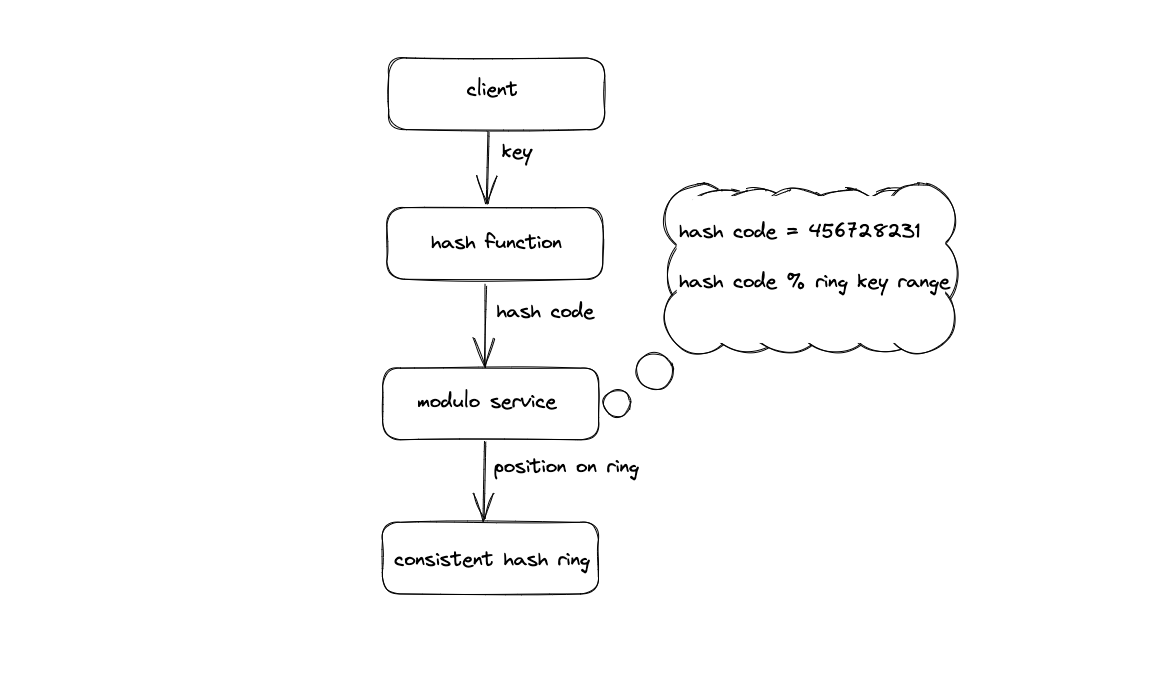
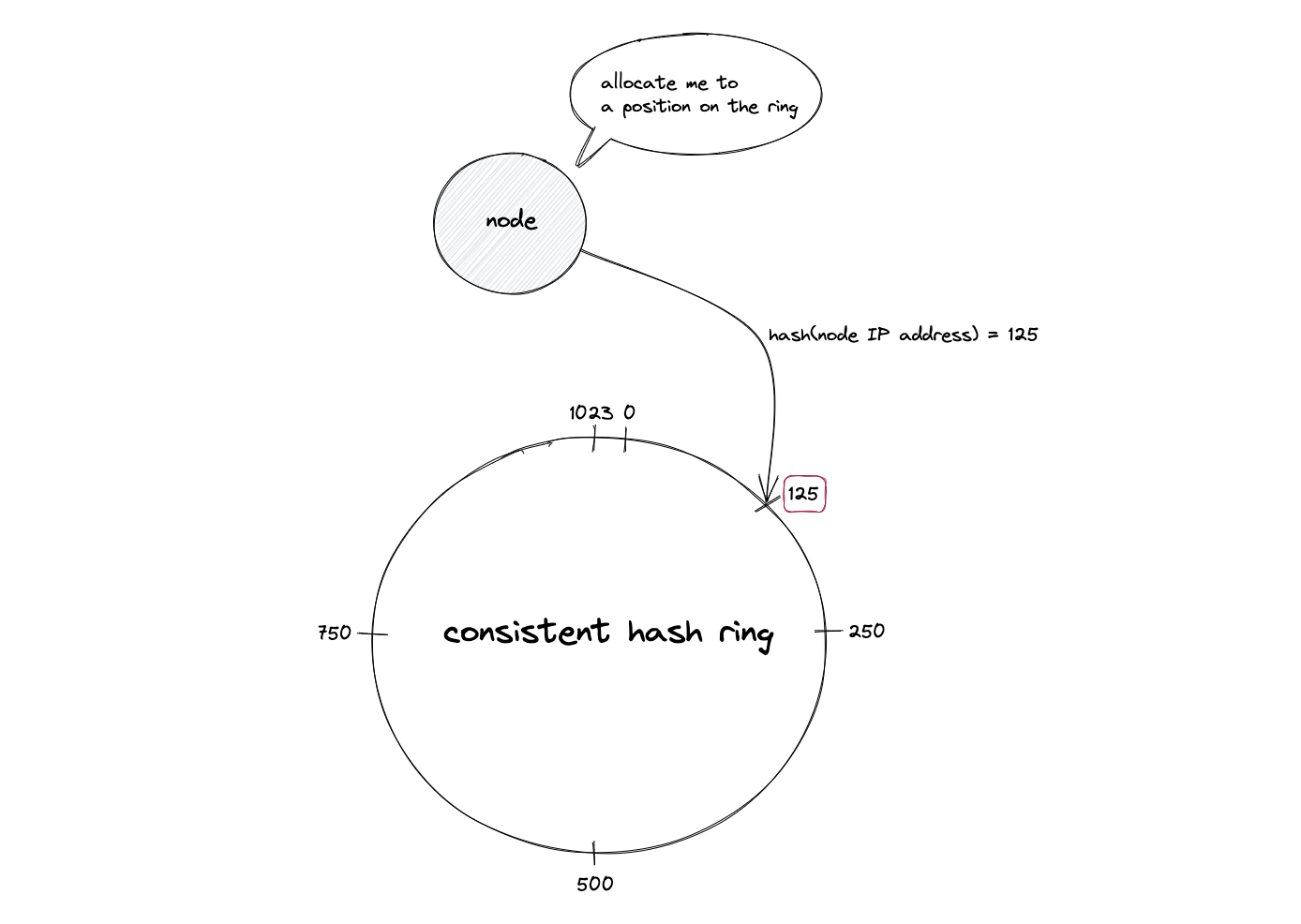
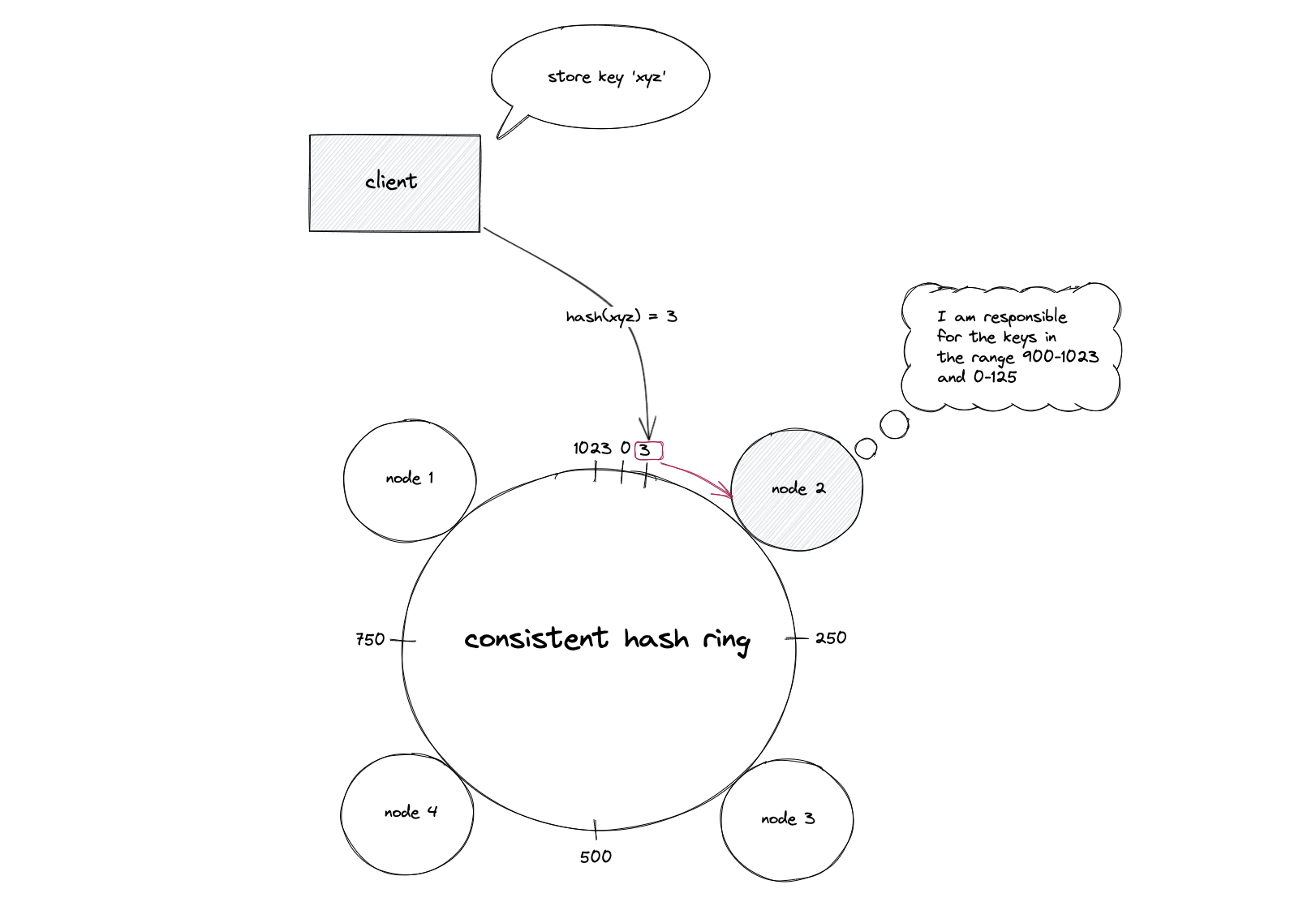
In a consistent hashing architecture, the output space of a hash function is treated as a continuous, finite ring—often ranging from 0 to 2^n – 1. When a server is added to the cluster, its unique identifier (such as an IP address or hostname) is hashed, placing it at a specific point on the circle. When a data object is stored, its key is hashed to land at a position on that same ring. The object is then assigned to the first node encountered when moving in a clockwise direction.
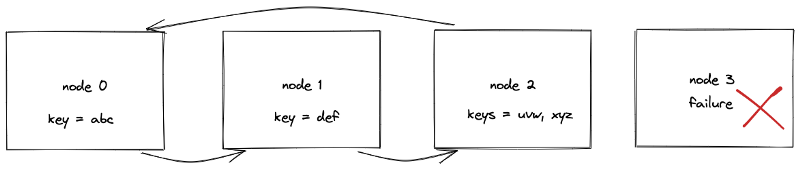
This design transforms how systems handle churn. When a node is removed due to a failure, only the keys that were previously assigned to that specific node need to be remapped to its immediate neighbor. All other nodes remain completely unaffected. This localized impact is the hallmark of a resilient, fault-tolerant distributed system.
Mitigating Hotspots with Virtual Nodes
While the basic consistent hashing model solves the problem of mass remapping, it introduces a new challenge: non-uniform data distribution. Because nodes are placed on the ring based on the hash of their IDs, it is possible for nodes to be clustered together, leaving large gaps in the ring. This results in "hotspots," where one node might be responsible for a disproportionately large segment of the keyspace, leading to uneven load distribution and potential performance degradation.
To rectify this, engineers introduced the concept of "virtual nodes" (or vnodes). Instead of a physical server occupying a single point on the ring, a node is assigned multiple positions by hashing its ID with different salts. This technique ensures that a single physical server can be distributed across various segments of the ring. Furthermore, it allows for heterogeneous hardware utilization; a more powerful server with greater memory and CPU capacity can be assigned a higher number of virtual nodes, effectively attracting a larger share of the traffic.
Implementation and Performance Metrics
The technical implementation of consistent hashing typically relies on a self-balancing binary search tree (BST) or a similar ordered data structure. This allows the system to perform a "successor search"—finding the first node at or after the position of a given key—in logarithmic O(log n) time.
In large-scale production environments, maintaining this state is crucial. Some systems utilize a centralized coordination service (such as Apache Zookeeper or etcd) to maintain the ring state. Others, like decentralized P2P networks, use a gossip protocol to synchronize the membership of the ring across all nodes.
The asymptotic complexity of these operations is highly efficient. Adding or removing a node involves updating the BST, which takes O(log n) time, followed by the redistribution of only the affected fraction of keys (roughly 1/n of the total dataset). For modern cloud-native applications, this efficiency is the difference between a seamless scale-up and a service outage.
Real-World Applications and Industry Standards
The adoption of consistent hashing is ubiquitous among major technology platforms.
- Amazon Dynamo: As outlined in the seminal 2007 paper, Amazon’s Dynamo uses consistent hashing to ensure high availability and partition data across its vast fleet of key-value stores.
- Netflix: To manage the delivery of massive video files, Netflix utilizes consistent hashing to distribute content across its Open Connect CDN, ensuring that even if a cache server fails, the impact on streaming quality is minimized.
- Discord: To support millions of concurrent users in chat rooms, Discord employs consistent hashing to map specific chat spaces to server nodes, allowing them to scale their infrastructure dynamically as user demand fluctuates throughout the day.
- Vimeo and Beyond: Similar techniques are used by video platforms for load balancing, ensuring that traffic is routed intelligently based on the availability and capacity of edge nodes.
Advanced Optimizations: Multi-Probe and Bounded Loads
As systems have pushed the boundaries of performance, further optimizations have emerged. "Multi-probe" consistent hashing attempts to reduce the space complexity of storing virtual nodes by using multiple hash functions to identify candidate nodes, rather than physically mapping them to the ring. This is particularly useful in environments where memory footprint is a primary concern.
"Bounded-load" consistent hashing addresses the edge case of extremely popular keys. Even with uniform distribution, a single "celebrity" key can overwhelm a specific node. Bounded-load algorithms introduce a threshold; if a node’s load exceeds a certain percentage above the average, the system intelligently routes the request to a pre-defined secondary or tertiary node. This prevents the "thundering herd" problem and ensures that even in the face of viral traffic spikes, the system maintains consistent latency.
Implications for Future Systems
The necessity of consistent hashing highlights a broader truth in computer science: as data volumes grow, the complexity of state management becomes the primary bottleneck for innovation. Consistent hashing is not merely an algorithm; it is a fundamental architectural pattern that enables the elasticity of the cloud.
As we look toward the future of distributed computing, the principles of consistent hashing continue to evolve. Whether in edge computing, decentralized storage protocols, or multi-cloud environments, the ability to maintain a stable, predictable mapping between data and compute resources remains essential. For developers and system architects, mastering these concepts is no longer optional—it is the prerequisite for building the next generation of internet-scale services. By minimizing data movement and maximizing availability, consistent hashing ensures that the infrastructure of the web remains as fluid and resilient as the information it carries.