Understanding the Gossip Protocol and Its Role in Modern Distributed Systems Architecture

In the landscape of modern distributed computing, maintaining a cohesive view of system state across thousands of geographically dispersed nodes is a fundamental challenge. As system architectures shift from monolithic structures to highly available, horizontally scalable designs, traditional centralized management services—such as Apache Zookeeper—often become bottlenecks. These centralized entities represent a single point of failure and struggle to keep pace with the high-throughput requirements of global-scale systems. To address these limitations, engineers have increasingly turned to the Gossip Protocol, a decentralized, peer-to-peer communication technique modeled after the organic, unpredictable spread of social rumors or biological epidemics.
The Evolution of Distributed Consensus
The genesis of gossip-based systems can be traced back to the late 1980s, when researchers at Xerox PARC, including Alan Demers, published foundational work titled "Epidemic Algorithms for Replicated Database Maintenance." At that time, the challenge was to keep replicated databases consistent without overloading the network or relying on a master node. The solution proposed was simple: instead of forcing a global update, nodes would periodically exchange information with a random subset of their peers.
Over the decades, this concept has evolved from a theoretical curiosity into the backbone of some of the world’s most robust infrastructure. Systems like Apache Cassandra, Amazon Dynamo, and various peer-to-peer file-sharing networks rely on gossip protocols to manage membership lists, track node health, and achieve eventual consistency. By moving away from centralized authority, these systems gain immense resilience; if a single node fails, the "rumor" of that failure propagates through the network, allowing the system to self-heal without human intervention.
Mechanics of the Epidemic Model
The Gossip Protocol operates on a principle of local interactions leading to global awareness. Each node in a cluster maintains a membership list and a local state. During a predetermined interval, a node selects a random peer and initiates a data exchange. This process is governed by two primary parameters: "fanout," which determines the number of peers contacted per cycle, and "cycle," the frequency at which these exchanges occur.
Mathematically, the time required for a message to propagate through a network of $n$ nodes is approximately $O(log n)$ relative to the fanout. For a cluster of 25,000 nodes, a properly configured gossip protocol can achieve total cluster awareness in roughly 15 cycles. If configured for a 10-millisecond interval, the entire system can reach a consistent state in approximately three seconds. This logarithmic convergence makes the protocol highly efficient for large-scale operations where linear communication would result in network congestion.
Taxonomy of Gossip Strategies
Different architectural requirements dictate the choice of gossip strategy. There are three primary implementations:
- Anti-Entropy Protocols: These are designed to minimize discrepancies between replicas. Nodes compare their datasets and reconcile differences, often using Merkle trees to identify which specific segments of data are out of sync. This ensures that the system eventually achieves a "perfect" state, though it can be bandwidth-intensive if the entire dataset is transferred frequently.
- Rumor-Mongering (Dissemination) Protocols: These focus on broadcasting new information rapidly. Once a node receives a "rumor" (an update), it shares it with peers. To prevent infinite loops and network flooding, messages are typically marked as "removed" after a set number of rounds, balancing speed with network load.
- Aggregation Protocols: These are used for computing global statistics, such as the average load across a cluster. Each node contributes its local value to the pool, and through iterative averaging with neighbors, the entire cluster arrives at a system-wide aggregate value without needing a central coordinator.
Performance Metrics and Reliability
The efficacy of the gossip protocol is measured by its convergence speed and network overhead. A notable case study involving a 128-node cluster demonstrated that running a gossip-based membership service consumed less than 2% of CPU cycles and maintained a bandwidth footprint of under 60 KBps. This low overhead allows the protocol to function in the background of critical applications without impacting user-facing latency.
Reliability is further bolstered by the use of "tombstones." In a distributed system where data deletion is complex due to asynchronous replication, a tombstone serves as a marker for a deleted entry. The gossip protocol ensures this marker propagates across all nodes, preventing "zombie" data from reappearing. Furthermore, the use of generation clocks and version numbers ensures that newer updates always supersede older ones, maintaining logical ordering even when messages arrive out of sequence.
Operational Challenges and Limitations
While the protocol is favored for its simplicity and resilience, it is not a panacea. The primary trade-off is the delay in achieving strong consistency. Because the system relies on eventual consistency, there is a "window of vulnerability" where different nodes may hold different versions of the truth. For applications requiring strict serializability—such as financial transaction processing—gossip protocols must be augmented with more rigid consensus mechanisms like Paxos or Raft.
Additionally, the protocol is susceptible to network partition blindness. If a cluster is split into two isolated sub-networks, the gossip protocol will continue to operate within each partition, oblivious to the fact that the other half of the cluster is unreachable. This can lead to "split-brain" scenarios if not carefully managed with quorum-based read/write policies.
Furthermore, debugging a gossip-based system is notoriously difficult. Because the system state is emergent rather than explicitly orchestrated, reproducing a specific bug requires complex simulation tools that can track the non-deterministic path of a message across thousands of nodes. This inherent non-determinism, while beneficial for robustness, complicates the developer experience during incident response.
Industry Implications and Future Directions
The shift toward gossip protocols reflects a broader industry movement toward "autonomous infrastructure." As cloud-native architectures continue to scale, the ability to manage system state through decentralized gossip is becoming a requisite skill for software architects. The protocol’s ability to "age out" old data and automatically detect node failures through heartbeat monitoring significantly reduces the operational burden on site reliability engineers (SREs).
Recent trends suggest that gossip protocols are being refined with machine learning to optimize peer selection. Instead of choosing peers purely at random, modern implementations may favor peers that are topologically closer in terms of network latency, further accelerating convergence. As edge computing grows, the ability of the gossip protocol to function across unstable, wide-area networks will likely see it playing an even larger role in the development of distributed systems that must operate across the globe.
Summary of Best Practices
For organizations implementing gossip-based systems, the following guidelines are standard:
- Bounded Load: Ensure that message sizes are capped to prevent the protocol from consuming excessive bandwidth during high-churn periods.
- Security: Implement cryptographic signatures for gossip messages to prevent malicious nodes from injecting false information or "poisoning" the cluster metadata.
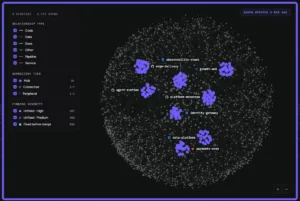
- Observability: Utilize dedicated visualization tools to monitor the propagation of messages, ensuring that the system is converging as expected.
- Seed Nodes: Maintain a small, static list of seed nodes to allow new nodes to join the cluster, preventing the creation of disconnected sub-networks.
By embracing the decentralized nature of the gossip protocol, architects can build systems that are not only capable of handling massive scale but are also inherently resistant to the inevitable failures of distributed hardware. While the protocol requires careful tuning of its parameters and a clear understanding of eventual consistency, its role as a fundamental building block of modern computing remains secure. It serves as a testament to the idea that in complex systems, the most robust solutions are often the ones that mirror the simplest, most organic behaviors of the natural world.