Digital.ai Release 26.3 Integrates AI Agents into Enterprise DevOps Pipelines to Balance Velocity and Governance


The rapid adoption of generative artificial intelligence has fundamentally altered the trajectory of enterprise software development, pushing delivery cycles into a state of hyperdrive. While this transition promises unprecedented productivity gains, it has simultaneously introduced significant systemic risks. As AI agents move beyond experimental coding assistants and begin autonomously executing tasks within production environments, IT leaders face a critical challenge: how to prevent ungoverned, opaque AI actions from compromising the integrity of secure delivery pipelines.
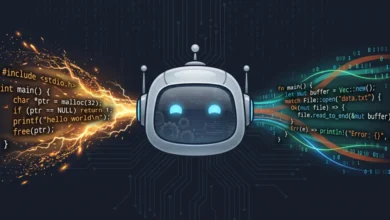
To address this friction between the demand for AI-driven velocity and the necessity of enterprise-grade security, Digital.ai announced the launch of Release 26.3. This update represents a shift in DevOps philosophy, treating AI agents as first-class citizens within the software delivery lifecycle. By embedding these agents directly into established compliance and governance frameworks, Digital.ai aims to harmonize the probabilistic nature of modern AI with the deterministic requirements of traditional testing and security protocols.
The Evolution of the Software Delivery Lifecycle
For decades, the DevOps movement has relied on deterministic automation—scripts and pipelines that execute the same logic repeatedly to ensure stability. The emergence of agentic AI, which utilizes large language models to make autonomous decisions, introduces a new, non-deterministic variable. In an unmanaged environment, an AI agent might suggest or implement a code change that bypasses security scans or violates compliance standards simply because it is optimized for speed or functional completion.
Digital.ai Release 26.3 is designed to bridge this gap. By forcing AI agents to operate within the constraints of established governance policies, the platform ensures that every autonomous action is subject to the same oversight as a human-initiated commit. This is particularly vital as organizations expand their reliance on agents to manage complex tasks ranging from legacy mainframe updates to cloud-native container orchestration.
Chronology of AI Integration in DevOps
The path to the current release has been marked by a rapid escalation in how software teams interact with machine intelligence:
- 2022–2023 (The Coding Assistant Era): AI tools were primarily utilized as "copilots," offering code completion and syntax suggestions. Human oversight remained the bottleneck and the safeguard for every line of code.
- Early 2024 (The Agentic Shift): Industry focus shifted toward "agentic workflows," where AI tools began managing tasks like bug triage, pull request summarization, and basic infrastructure provisioning.
- Late 2024 (The Governance Crisis): Enterprise IT departments reported increased friction as unauthorized AI agents began interacting with CI/CD pipelines, creating "shadow automation" that circumvented traditional security checks.
- November 2026 (Digital.ai Release 26.3): The introduction of policy-based orchestration for AI agents, allowing companies to mandate human-in-the-loop requirements for critical deployment stages while automating low-risk workflows.
Supporting Data and Industry Context
Recent industry reports indicate that while 75% of enterprises are experimenting with AI in their software development lifecycles, less than 20% have implemented robust governance models to manage these autonomous agents. This gap presents a significant surface area for supply chain attacks and accidental outages.
According to industry analysts, the cost of an improperly governed software deployment can range from $50,000 to over $1 million per hour in downtime for large enterprises. As companies shift toward "AI-first" development, the ability to control agent behavior—not just code quality—has become a prerequisite for maintaining operational resilience. Digital.ai’s decision to allow a "bring your own model" (BYOM) approach is a strategic response to this data, acknowledging that enterprises will likely use a mix of proprietary, specialized, and commercial models rather than a single standardized AI.
Official Perspectives on Agentic Governance
Derek Holt, CEO of Digital.ai, emphasized that the goal of the 26.3 release is not to restrict AI, but to integrate it into the existing fabric of enterprise operations.
"Enterprise software delivery in the AI era combines AI agents, people, and automation as companies accelerate their agentic journey from coding to delivery," Holt stated during the announcement. "Our customers need those three to work seamlessly together across all delivery pipelines. Release 26.3 brings the power of agents and AI into harmony with traditional DevOps automation and human judgment across all delivery targets, from mainframes and data centers to cloud and containers."
By positioning the release as a "harmony" between agents and humans, Digital.ai is signaling a departure from the "all-or-nothing" approach to AI. Instead, they are advocating for a tiered model where autonomous agents handle repetitive, well-defined tasks, while human experts are automatically prompted to intervene when a process reaches a threshold of complexity or risk that requires professional judgment.
Implications for Enterprise Infrastructure
The flexibility inherent in Release 26.3—specifically the ability to connect internal or external models—is a significant development for highly regulated industries such as finance, healthcare, and government. These sectors have historically been slower to adopt AI due to concerns regarding data privacy, model bias, and security.
- Legacy and Modern Hybridization: By supporting both legacy infrastructure (mainframes) and modern cloud-native platforms, the release ensures that organizations do not need to bifurcate their DevOps strategy. AI agents can be governed by the same set of policies regardless of the underlying environment.
- Compliance-as-Code: The integration allows for compliance policies to be treated as code, which AI agents must reference before finalizing a deployment. If an agent’s proposed action violates a regulatory requirement, the pipeline can be set to automatically halt or trigger an alert for manual review.
- Risk Mitigation: The "human-in-the-loop" requirement serves as an essential failsafe. In scenarios where an AI agent lacks sufficient training data or encounters an edge case, the system defaults to a human developer, preventing the propagation of erroneous or insecure code.
The Future of Autonomous Development
As organizations look toward 2027 and beyond, the focus of the DevOps community will likely shift from simply increasing the number of agents in the pipeline to optimizing the quality of their interactions. Digital.ai’s latest upgrade suggests that the industry is entering a phase of maturity where "velocity" is no longer the sole metric of success. Instead, "governed velocity"—the ability to move fast while maintaining strict adherence to internal and external standards—will become the new benchmark for enterprise software delivery.
For current users, the transition to Release 26.3 involves upgrading existing templates to accommodate agentic workflows. This modular approach allows for a gradual integration, where companies can test the impact of AI agents in low-risk environments before scaling them to production-critical workflows.
The integration of AI agents into the software development pipeline is no longer a matter of "if" but "how." With the release of 26.3, Digital.ai has provided a structured framework that acknowledges the inevitability of agentic workflows while providing the necessary guardrails to ensure that human oversight remains the final arbiter of software quality. By balancing the probabilistic potential of AI with the deterministic requirements of security, enterprises are better positioned to harness the productivity gains of the AI era without sacrificing the stability that modern business operations demand.
Organizations interested in evaluating the specific capabilities of Release 26.3 are encouraged to review the updated documentation provided by the Digital.ai portal, which outlines the configuration steps for both hosted and internally approved AI models. As the landscape continues to evolve, the ability to manage this triad of people, agents, and automation will likely distinguish industry leaders from those struggling to keep pace with the rapid acceleration of software delivery.