The Shift Toward Decentralized Finance: Why USDD Is Challenging the Traditional Banking Paradigm

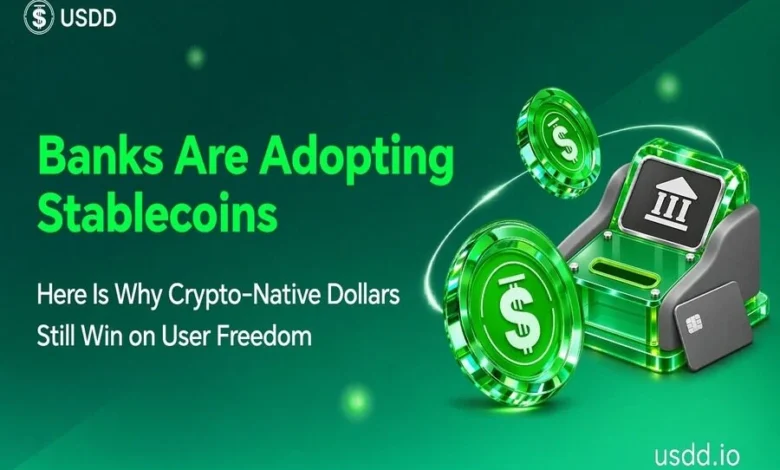
As traditional financial institutions accelerate their adoption of digital asset rails, the decentralized stablecoin protocol USDD is positioning itself as a more efficient, user-centric alternative to legacy banking systems. According to Yvonne Chia, Head of Communications at USDD, the protocol’s structural focus on self-custody, 24/7 global settlement, and transparent on-chain yield provides a competitive edge that centralized intermediaries struggle to replicate. This evolution marks a significant milestone in the ongoing integration of blockchain technology into the global financial infrastructure.
The discourse surrounding stablecoins has shifted from a peripheral interest among crypto enthusiasts to a primary focus for global regulatory bodies and commercial banks. While major financial entities are exploring stablecoin-based settlement to reduce overhead, decentralized protocols like USDD are operating on a model that prioritizes permissionless access and programmatic transparency. This fundamental divergence in operational philosophy suggests that the future of finance may be defined by a competition between bank-integrated digital dollars and truly open, protocol-based assets.
A Chronology of Decentralized Stablecoin Development
The emergence of USDD represents a multi-year effort to address the inefficiencies inherent in the fiat-based monetary system. Following the launch of the protocol, the team focused on building a robust, multichain ecosystem that could withstand market volatility while maintaining its peg.
In early 2024, the USDD team began a strategic pivot toward broader interoperability, recognizing that siloed liquidity hinders adoption. By January 2025, the protocol completed a major upgrade that saw USDD expand natively across the Ethereum and BNB Chain ecosystems, in addition to its foundational presence on the TRON network. This expansion was not merely technical; it was a response to the growing demand for DeFi-native assets that can move seamlessly across heterogeneous blockchain environments.
Throughout 2024, the protocol introduced the "Smart Allocator" system, which enabled automated yield generation for holders through sUSDD. This move signaled a departure from the static holding models typical of early stablecoins, allowing users to earn returns that were previously accessible only to institutional participants or those with high capital requirements.
Permissionless Access vs. Legacy Gatekeeping
The core value proposition of USDD, as articulated by Yvonne Chia in a recent industry interview with ChangeNOW, centers on the removal of institutional barriers. Traditional banking remains a high-friction environment for billions of individuals, particularly in developing economies where strict "Know Your Customer" (KYC) requirements, minimum balance thresholds, and geographic restrictions create a "financial divide."
In contrast, USDD is designed to be permissionless. A user with a smartphone and internet access can establish a self-custodial wallet and begin transacting within minutes. This shift from institutional custody to individual control is a cornerstone of the decentralized finance (DeFi) movement. By eliminating the middleman, USDD ensures that the user maintains complete autonomy over their assets. Unlike a bank account, which is subject to the operating hours, risk management policies, and potential account freezes of a private entity, an on-chain stablecoin exists independently of any single institution’s infrastructure.
24/7 Global Settlement and the Death of Banking Hours
Perhaps the most palpable failure of the traditional financial system is its reliance on "banking hours" and legacy settlement networks like SWIFT or ACH, which are prone to delays, especially over weekends and holidays. These inefficiencies result in capital "trapped" within the system for days, costing businesses and individuals time and liquidity.
USDD addresses this by leveraging the inherent characteristics of blockchain networks, which function continuously. Whether executing a cross-border transfer on a Sunday or a major public holiday, the settlement occurs at the speed of the underlying network. This 24/7 functionality is not just a convenience; it is a requirement for the modern digital economy.
To further lower the barrier to entry, the protocol introduced "GasFree" integration on the TRON network. By allowing users to pay transaction fees in USDD rather than the network’s native token (TRX), the protocol significantly reduces the complexity of the user experience. Industry data suggests that this approach effectively lowers transaction costs, with eligible users paying approximately 0.5 USDD per transfer—a significant discount compared to the standard 1.5 USDT fees often observed on alternative chains.
Redefining Yield: Returning Value to the User
In the conventional banking model, institutions operate on a "spread" mechanism. They collect deposits, lend those funds out at higher interest rates, and retain the majority of the profit, passing only a fraction to the depositor. This model is predicated on the bank’s role as an intermediary, justifying its profit margin by managing risk and providing custodial services.
USDD disrupts this model by using decentralized protocols to pass yield directly to the user. Through the USDD Earn program, users deposit their assets to receive sUSDD, which tracks yield generated by the Smart Allocator. Because the process is automated and governed by smart contracts, there is no need for a banking intermediary to siphon off returns. This enables a more equitable distribution of yield, where the value created by capital deployment stays within the hands of the liquidity providers rather than the bank’s balance sheet.
The Shift Toward On-Chain Verification
The current financial climate has sensitized the public to the risks of opaque balance sheets. Traditional banks often require that customers rely on "institutional trust," where information is disclosed only in periodic, often lagging, regulatory filings. In contrast, USDD embraces an ethos of "Don’t trust, verify."
The protocol emphasizes transparency through publicly accessible on-chain data. While transparency is not a panacea for all financial risks, it fundamentally changes the nature of the relationship between the issuer and the user. Instead of relying on a bank’s internal promises, participants can examine the protocol’s reserves and collateralization levels in real-time. This objective, data-driven approach to verification is becoming the industry standard for digital assets, forcing even traditional players to rethink their reporting standards.
Multichain Integration and the Future of DeFi
The final pillar of the USDD strategy is its commitment to an open, multichain ecosystem. By expanding beyond TRON to Ethereum and the BNB Chain, the protocol has effectively diversified its utility. This allows USDD to participate in a wider range of DeFi integrations, such as Pendle and Morpho, where users can implement more sophisticated financial strategies.
This interconnectedness is critical for the long-term viability of stablecoins. An asset that is isolated to one chain is essentially a "walled garden." By fostering an environment where USDD can move across chains, the protocol ensures that its utility is not limited to a single application or network. This makes USDD a versatile tool for participants in the broader crypto ecosystem, whether they are looking for yield, liquidity, or a stable medium of exchange for decentralized applications.
Implications for the Global Financial Landscape
The rapid growth of decentralized stablecoins like USDD presents a clear challenge to the traditional banking sector. As banks begin to adopt stablecoin rails to update their legacy infrastructure, they are inadvertently validating the decentralized model. However, there remains a fundamental gap: the difference between a "bank-issued stablecoin" that operates under strict institutional control and a "decentralized stablecoin" that operates under the governance of open-source code.
The competitive advantage of USDD—its 24/7 availability, transparent yield, and self-custodial nature—positions it as an essential component of a future financial system that is not dependent on the constraints of legacy institutions. While traditional banks will likely play a role in the future of money, the agility and accessibility of decentralized protocols indicate that the next evolution of finance will be built by those who prioritize open, permissionless, and verifiable infrastructure.
As the ecosystem continues to mature, the focus will likely shift toward further improving cross-chain interoperability and refining the risk-management frameworks that govern these protocols. For users, the outcome is a broader set of choices and the ability to manage their wealth with a level of freedom that was previously unattainable within the conventional banking framework. By demonstrating the efficacy of its model, USDD is not merely reacting to the trends of the digital age—it is helping to set the standard for what a global, decentralized currency should be.