Amazon Alexa Tablet 12 Pro Review: A New Era for the Retail Giant’s Hardware Ecosystem

The technology sector has long maintained a complex relationship with Amazon’s proprietary hardware line. While smart displays and household speakers have successfully integrated into millions of living rooms, the company’s tablet division—historically anchored by FireOS—has faced sustained criticism. Burdened by sluggish performance, limited app store ecosystems, and intrusive promotional software, previous Fire tablets frequently functioned more as digital billboards than versatile computing devices. However, the release of the Amazon Alexa Tablet 12 Pro marks a significant departure from this legacy, officially signaling Amazon’s transition into a post-FireOS era powered by a fully realized Android operating system.
Following a comprehensive two-week evaluation period, industry analysts and reviewers have found the Alexa Tablet 12 Pro to be a surprisingly competent, well-engineered device. Priced at $499 / £449 for the base configuration, the 12-inch slate successfully balances mainstream consumer demands with competitive pricing. Yet, as Amazon steps into a higher tier of tablet computing—competing directly with established mid-range and premium offerings from Samsung and Apple—questions remain regarding its long-term performance longevity and the subtle integration of ecosystem-driven software.
Design, Build Quality, and Peripherals
Aesthetically and structurally, the Alexa Tablet 12 Pro represents a major step forward for Amazon’s hardware design team. Encased in a premium, smudge-proof aluminum chassis with subtle cursive Alexa branding on the rear panel, the device offers a level of sophistication previously unseen in the company’s budget-oriented portfolio. Measuring 270.8 x 183.85 x 6.5 mm and weighing 550 grams, the slate features an ergonomic 3:2 aspect ratio. This specific geometric choice optimizes the device for productivity tasks, such as document viewing and multitasking in a horizontal orientation, though its weight prevents it from matching the one-handed portability of dedicated e-readers.
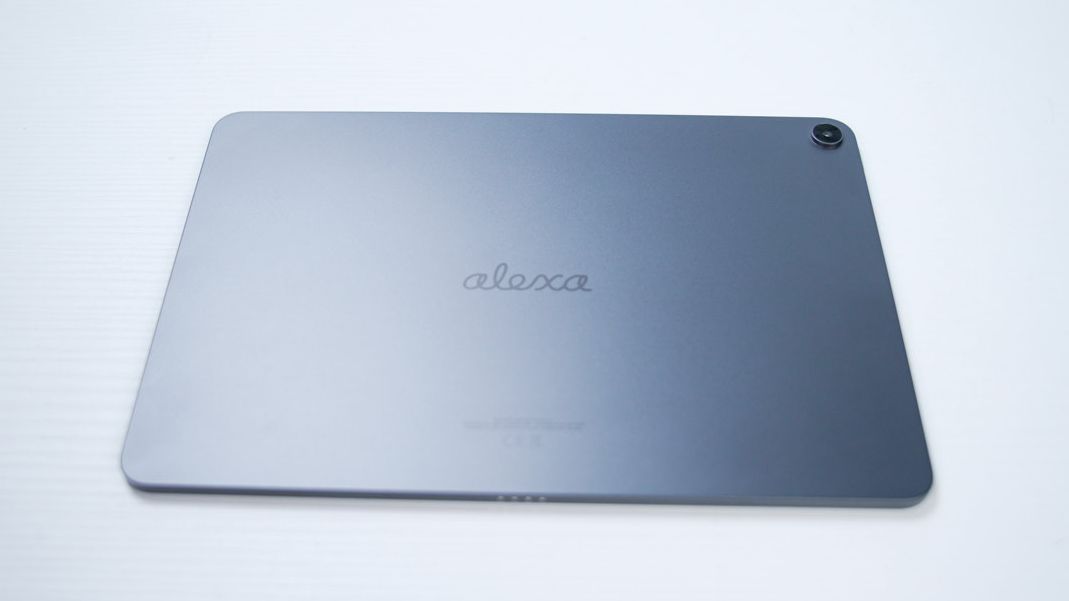
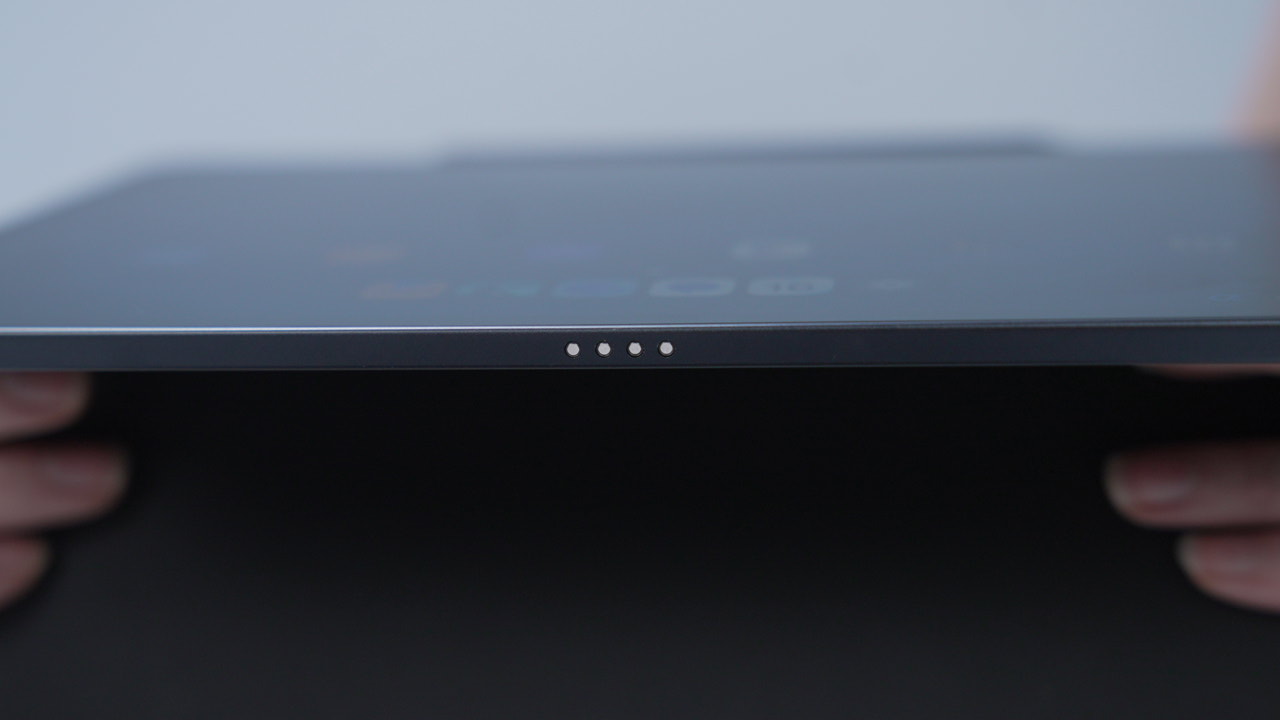
The tablet is equipped with IP52 dust and splash resistance, enhancing its durability for everyday domestic use. Biometric security is handled by a side-mounted fingerprint sensor embedded in the power button, positioned alongside a volume rocker. Connectivity options include Bluetooth 5.3 LE, Wi-Fi 6E support, and a USB-C 3.2 Gen 1 port located on the bottom edge, accompanied by pogo pins on the left side for seamless peripheral attachment.
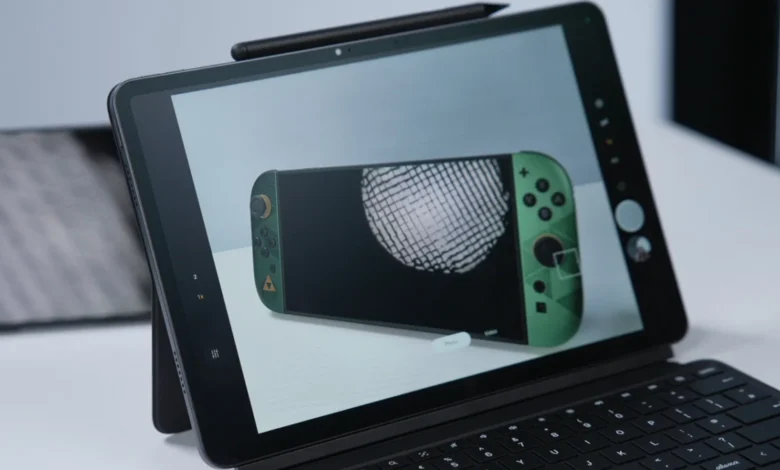
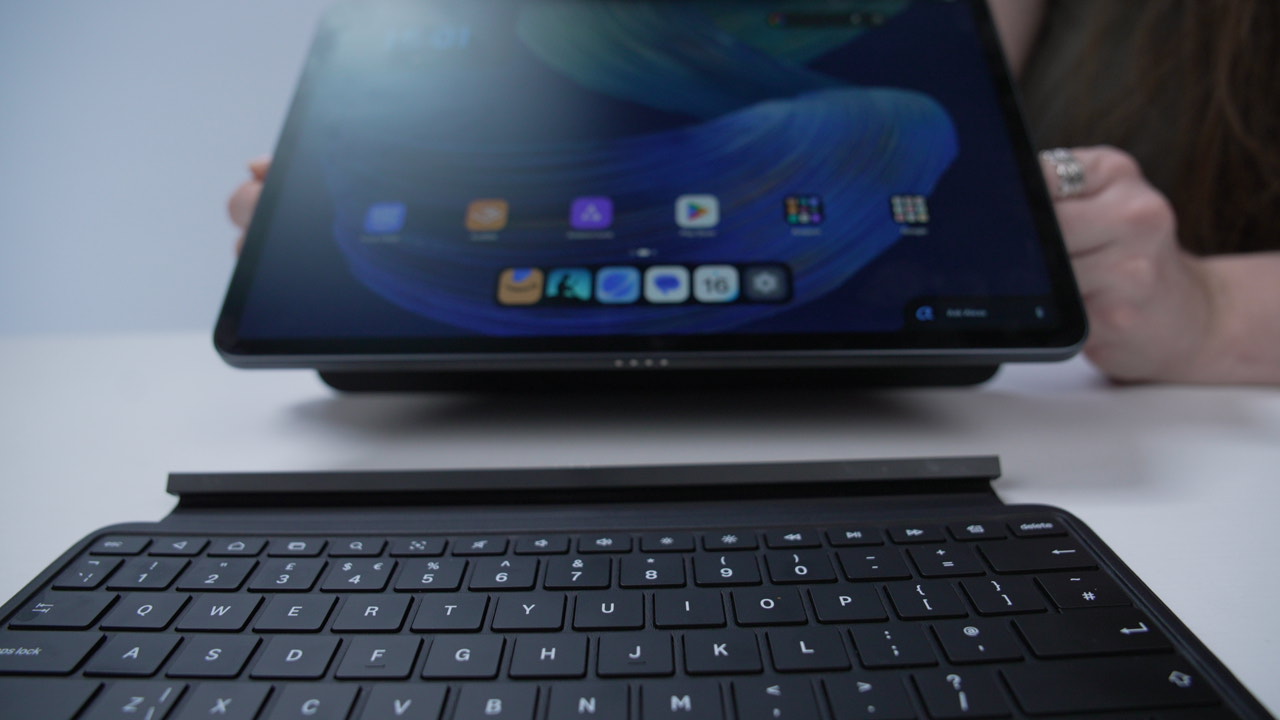
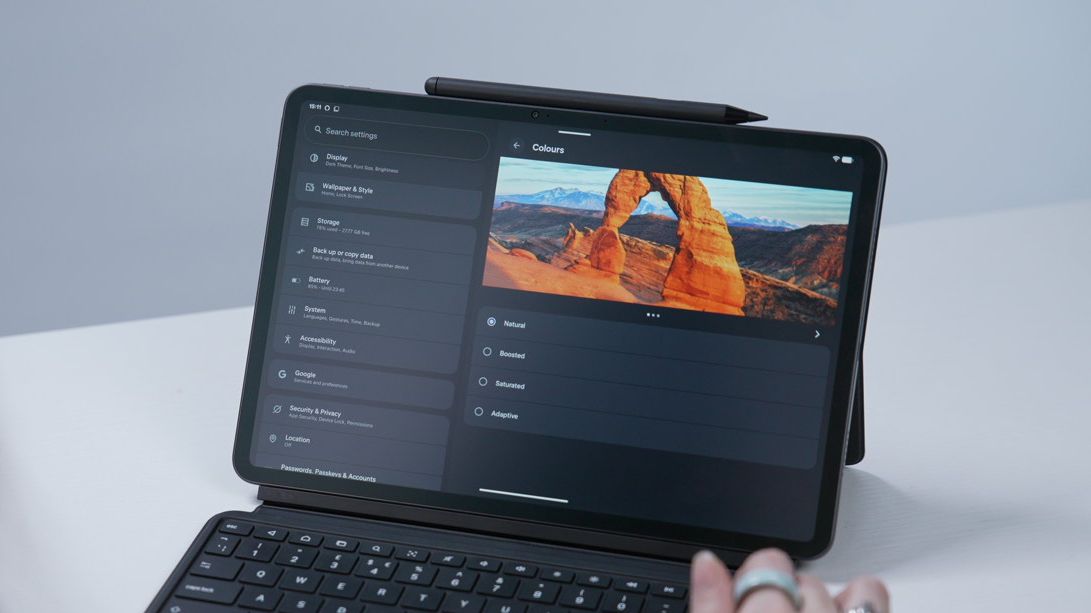
Amazon offers optional accessories designed to unlock the device’s full productivity potential: a folio keyboard priced at $149.99 / £129.99 and a stylus priced at $89.99 / £79.99, though bundled purchasing options reduce the combined cost to $150 / £140. The chiclet keyboard provides a tactile typing experience, featuring dedicated shortcuts, a responsive trackpad, and specific keys for system navigation, including an Alexa+ key and a writing assistance button. Nevertheless, the accompanying magnetic kickstand cover has drawn mixed feedback for stability issues when used on uneven surfaces or a user’s lap. The stylus, which magnetically attaches and charges on the chassis, provides a natural weighted feel for digital sketching and note-taking, complemented by a reverse-end eraser function.
Display Technology: The Nanomatte Advantage
The standout feature of the Alexa Tablet 12 Pro is its visual interface, anchored by a 12-inch 2.8K LCD display boasting a 2800 x 1840 resolution, a pixel density of 280 ppi, and a smooth 120Hz refresh rate. While a standard display option is available, the model featuring the optional nanomatte coating—available for an additional $50 / £50—has garnered critical acclaim.
The nanomatte variant effectively diffuses ambient lighting, providing exceptional anti-glare performance that makes the screen legible from multiple viewing angles, even with a modest peak brightness of 500 nits. The surface texture mimics the tactile feel of paper, reducing eye strain during extended reading sessions and providing suitable friction for stylus-based input. Color reproduction offers adjustable profiles, allowing users to shift from the highly saturated default "Boosted" setting to a more balanced "Natural" profile during video streaming. However, digital artists note that the display suffers from suboptimal palm rejection in third-party creative applications like Clip Studio Paint, positioning it behind specialized creative slates like the iPad Pro or Samsung Galaxy Tab S10 Ultra.
Performance and Software Architecture
Under the hood, the Alexa Tablet 12 Pro is driven by the MediaTek Dimensity 8400 4nm octa-core processor, paired with an Arm Mali-G720 7-core GPU. Base configurations feature 128GB of internal storage, while upgraded tiers offer 16GB of RAM and 256GB of storage. Running on Android 16—with an upgrade to Android 17 anticipated—the software environment represents a monumental shift away from the restrictive limitations of legacy FireOS.
Performance during everyday tasks, light multitasking, and moderate gaming—such as running titles like Wuthering Waves alongside windowed media playback—proves stable, though the device can generate noticeable warmth under sustained heavy loads. Despite these capabilities, the hardware is not positioned as a high-end processing powerhouse. Users may encounter occasional software stuttering during rapid app switching and minor navigation lag, factors that raise questions regarding the device’s performance longevity over a three-to-four-year usage cycle.
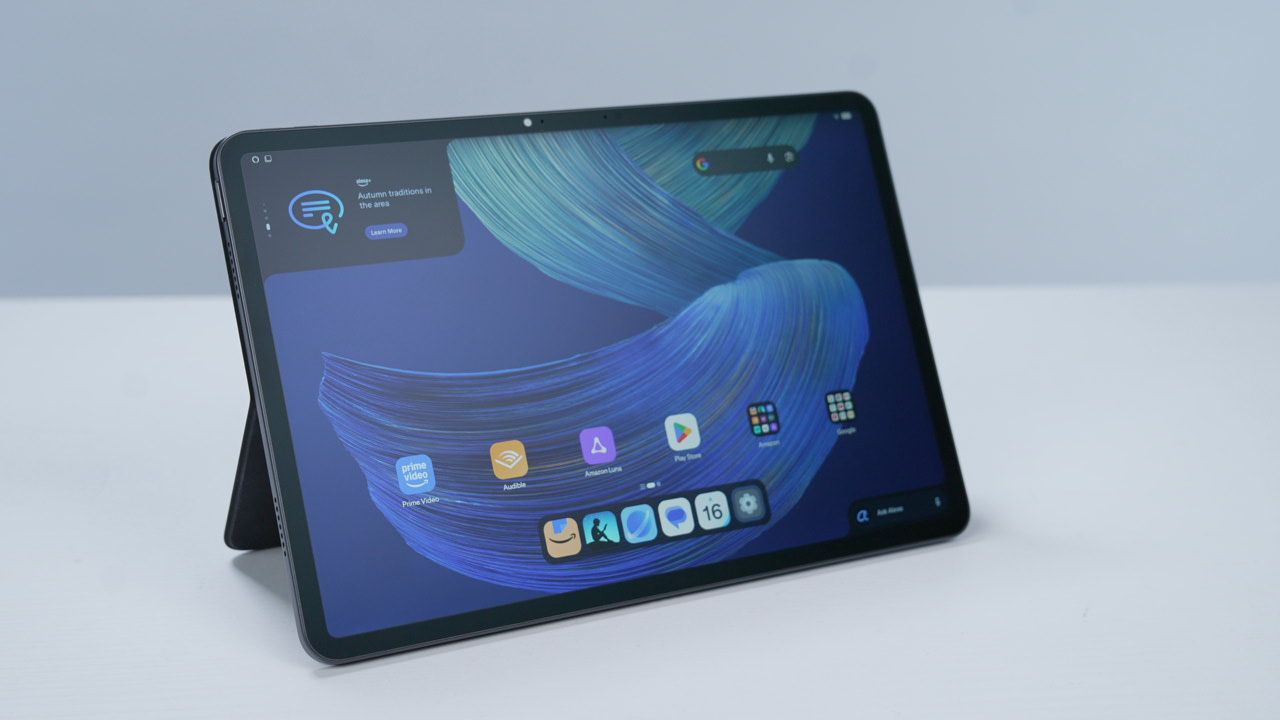
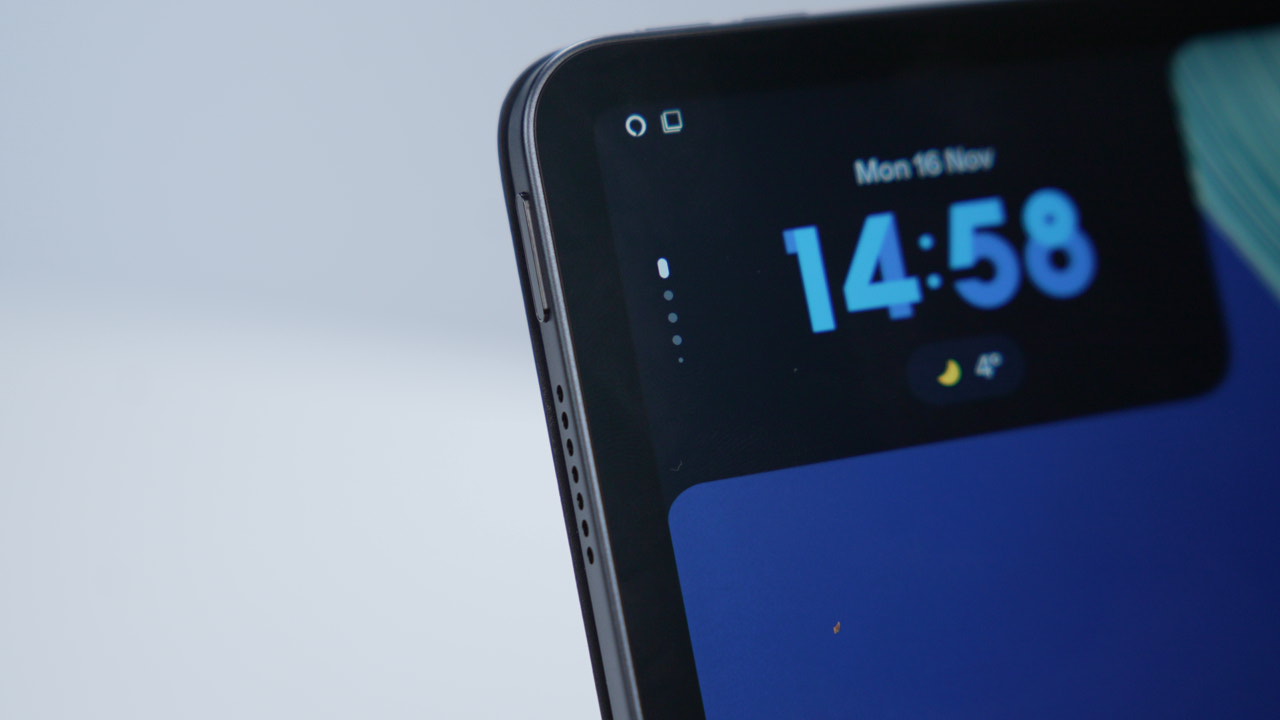
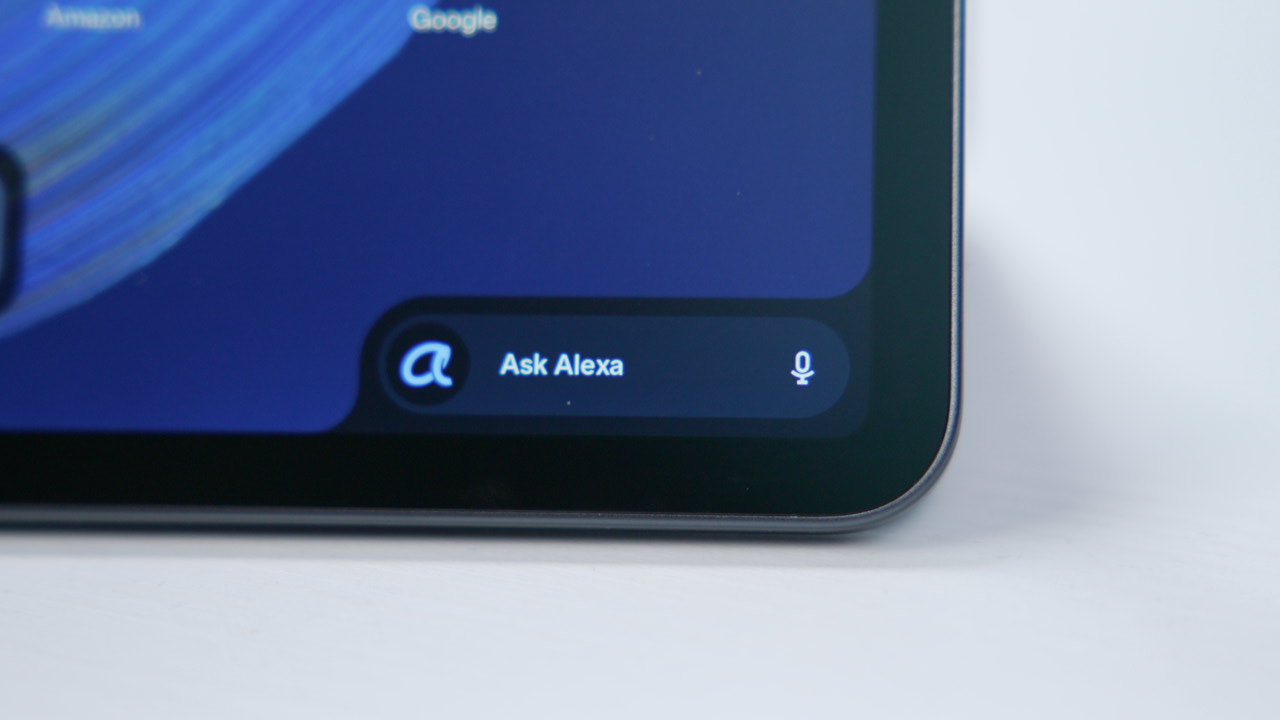
Integration with Amazon’s ecosystem is managed through a customized default launcher. While critics have historically raised concerns over aggressive advertising on Amazon hardware, the Tablet 12 Pro maintains a restrained footprint. Prominent widgets offer quick access to recent Kindle reads, Prime Video, and Amazon Luna, alongside the persistent "Ask Alexa" search utility. Because the device operates on Android, users retain the freedom to install third-party launchers if they prefer a neutral interface. The Kindle experience is particularly optimized; opening a digital book automatically triggers a reading profile that reduces blue-light emission, mutes non-essential notifications, and optimizes battery consumption.
Battery Life, Audio, and Auxiliary Features
Power management is supported by a 9000mAh battery. While Amazon advertises up to 16 hours of continuous video playback, real-world testing indicates that intensive media streaming—such as running Netflix continuously—depletes approximately 50% of the charge within four hours, leading to a total runtime of roughly eight hours. Furthermore, a full recharge cycle requires between two and three hours using standard charging protocols.
Audio output relies on built-in stereo speakers, which deliver functional dialogue clarity for casual viewing but lack bass depth and dynamic range, resulting in a somewhat tinny acoustic profile. Imaging hardware includes an 8MP front-facing camera mounted off-center for horizontal video conferencing and a 13MP rear camera. Both sensors support 1080p Full HD video recording, meeting the baseline requirements for remote meetings and casual snapshot capture, though they fall short of professional-grade optical standards.
Market Positioning and Competitive Analysis
Priced competitively within the mid-range market, the Alexa Tablet 12 Pro occupies a strategic niche between budget consumer slates and premium flagship devices.
- Samsung Galaxy Tab S10 FE: Starting at $549.99 / £539, Samsung’s alternative features a slightly smaller 90Hz display and a marginally less powerful processor, but counters with superior IP68 water and dust resistance, 45W fast charging, and an included S Pen.
- Apple iPad Air (M4): Priced significantly higher at $749 / £749, Apple’s offering delivers superior processing power via the M4 chip, but features a smaller 11-inch screen with a static 60Hz refresh rate and operates within the restrictive ecosystem of iPadOS.
Broader Implications and Final Assessment
The launch of the Alexa Tablet 12 Pro indicates a strategic recalibration of Amazon’s hardware division. By abandoning the restrictive confines of FireOS in favor of an open Android foundation, the company has successfully decoupled its hardware utility from mandatory software limitations.
For households deeply integrated into the Amazon ecosystem—including Prime subscribers, Kindle enthusiasts, and users reliant on Alexa-managed smart home environments—the Alexa Tablet 12 Pro represents a high-value, versatile productivity and media device. Conversely, consumers seeking an uncompromised entertainment hub without ecosystem-adjacent software prompts, or those requiring long-term processing headroom for heavy creative workloads, may find more specialized alternatives in the wider tablet market.