We are entering our maintenance era

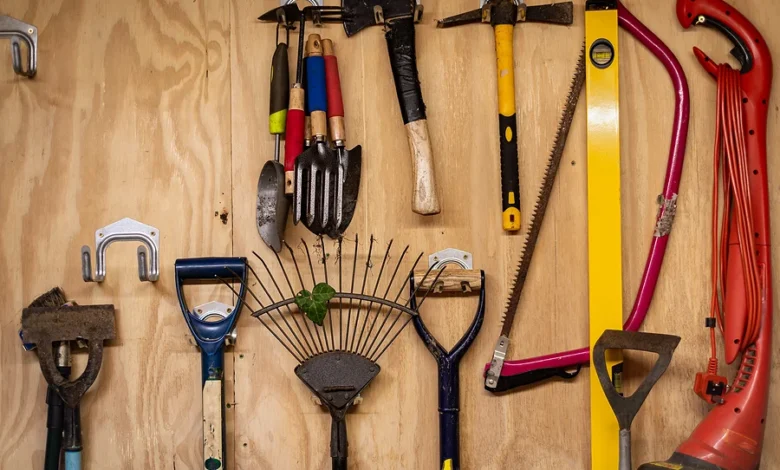
The rapid proliferation of software-defined products has fundamentally altered the relationship between consumers, corporations, and the digital infrastructure that underpins modern life. As smart devices, generative artificial intelligence, and interconnected industrial systems become ubiquitous, a critical tension has emerged: the industry’s relentless pursuit of innovation is currently outpacing its capacity for stewardship. This divergence has birthed what experts are increasingly calling the "maintenance era," a period defined by the reality that the true cost of technology is not found in the initial purchase price, but in the unending labor required to counteract software entropy.
The Anatomy of Digital Decay
Software, unlike mechanical hardware, is inherently unstable. It exists in a state of constant flux, requiring security patches, API updates, and UI refreshes to remain functional within an evolving ecosystem. The phenomenon of "bit rot"—the slow deterioration of software performance due to changing environments—has migrated from the server room into the domestic and industrial sphere.
For the average consumer, this manifests as "smart home fatigue." A smart thermostat or oven, once touted for its revolutionary feature set, may lose functionality when a third-party service updates its API or a cloud provider shifts its infrastructure. Similarly, the automotive industry has undergone a seismic shift; vehicles are no longer static assets but mobile computers that require frequent over-the-air (OTA) updates. While these updates can introduce new safety features, they also force drivers to navigate changing interfaces, often leading to cognitive friction and operational frustration.
Chronology of a Shifted Priority
The tech industry’s current fixation on innovation over maintenance can be traced back to the growth-at-all-costs models of the early 2010s.
- 2010–2015: The "Move Fast and Break Things" era dominated Silicon Valley. During this period, the primary metric of success for tech firms was the rapid deployment of new features and the expansion of user bases.
- 2016–2020: As IoT devices began to populate homes, early adopters encountered the first wave of "orphan" products—devices that became useless after the parent company ceased support or pivoted its business model.
- 2021–2022: The industry saw a peak in internal friction, exemplified by the struggle between IT departments and Operational Technology (OT) teams. While IT teams prioritized rapid integration of cloud services, OT engineers resisted, favoring the stability and reliability of legacy industrial protocols.
- 2023–Present: A broader recognition of "technical debt" has taken hold. The focus has begun to shift from pure invention to the sustainability of the software supply chain.
The Cost of Innovation: An Empirical Look
Data from the software development industry highlights the sheer scale of the maintenance burden. According to industry benchmarks from the Consortium for Information & Software Quality (CISQ), the cost of poor-quality software—which includes security vulnerabilities and maintenance debt—reached an estimated $2.41 trillion in the United States in 2022.
Furthermore, a significant portion of developer time is now consumed by "keeping the lights on." A 2023 study by Stripe found that developers spend, on average, 13.5 hours per week addressing technical debt, which equates to roughly 33% of a full-time work week. This diversion of talent away from innovation is a direct result of the industry’s failure to treat maintenance as a primary, rather than secondary, objective.
Organizational Disincentives: The Google Case Study
The institutional preference for innovation is not merely a cultural quirk but an structural mandate within many technology giants. At companies like Google, the internal promotion and compensation structures have historically favored the creation of "greenfield" projects. Engineers who launch a new, high-visibility product are often rewarded more robustly than those who maintain, stabilize, and scale existing infrastructure.

This "innovation bias" creates a precarious environment for users. When the incentive structure discourages long-term maintenance, products are abandoned as soon as they cease to offer growth potential. This creates a cycle of decay where users must constantly migrate to new services, further exacerbating the entropy of their digital lives.
The IT vs. OT Clash
The divide between Information Technology (IT) and Operational Technology (OT) offers a stark illustration of the conflict between change and consistency. In manufacturing environments, OT systems are designed for high availability and "five-nines" reliability. The introduction of IT-based updates—which are by nature erratic and frequent—threatens the integrity of these systems.
OT engineers have long viewed maintenance as a core competency. They prioritize predictability over feature-richness. The modern challenge lies in reconciling these two philosophies. As industrial processes become increasingly reliant on AI and real-time data analytics, the "no" culture of traditional engineering must evolve into a "secure-maintenance" culture, where updates are validated, tested, and integrated with the same rigor applied to the original installation.
A New Framework for Sustainability
If the current trajectory of software development is to remain viable, the industry must pivot toward a more holistic view of the product lifecycle. This transition involves several key pillars:
- Mandatory Continuing Education: Similar to the medical or legal professions, roles that manage critical technological infrastructure should require ongoing certification. This ensures that the workforce remains competent in the face of rapidly changing AI tools and security standards.
- Economic Valorization of Maintenance: Businesses must begin to account for the "cost to maintain" in their initial product pricing models. This may manifest as recurring subscription models that transparently fund the ongoing development and security of a device, or the inclusion of a "sunset guarantee" that informs the consumer of the product’s expected support lifespan.
- Human-Centric Design for Change: Software interfaces must be designed with the expectation that they will change. Rather than forcing users to adapt to sudden, radical UI shifts, developers should employ more gradual, tiered transitions that respect the user’s need for consistency and stability.
- Incentive Realignment: Organizations must restructure internal performance metrics to value maintenance and stability on par with innovation. Recognizing the "quiet" work of fixing bugs and updating legacy code as high-value intellectual labor is essential for reducing long-term technical entropy.
Broader Implications and Future Outlook
The transition into the maintenance era suggests that the future of technology will be less about the "next big thing" and more about the "durable thing." As computing becomes embedded in everything from agricultural machinery to smart home appliances, the quality of the maintenance ecosystem will become a primary competitive differentiator.
For businesses, this means the end of the "set it and forget it" model of product deployment. Companies that fail to provide a clear, long-term maintenance roadmap will likely face consumer backlash and increased regulatory scrutiny, particularly as issues regarding the "right to repair" gain legislative momentum.
Ultimately, the goal is to foster a more sustainable relationship with the tools we use. Constant innovation without adequate maintenance is a recipe for exhaustion—both for the developers building these systems and the users navigating them. By acknowledging that software decays and that this decay requires a deliberate, resourced response, the industry can transition from a state of chaotic flux to a more mature, stable, and sustainable technological future. The maintenance era does not signal a retreat from innovation; rather, it represents the necessary professionalization of the digital age, ensuring that the innovations of today remain functional, secure, and valuable for years to come.