Black Friday deal alert: Google Pixel 10 drops to $599 at Amazon for a limited time

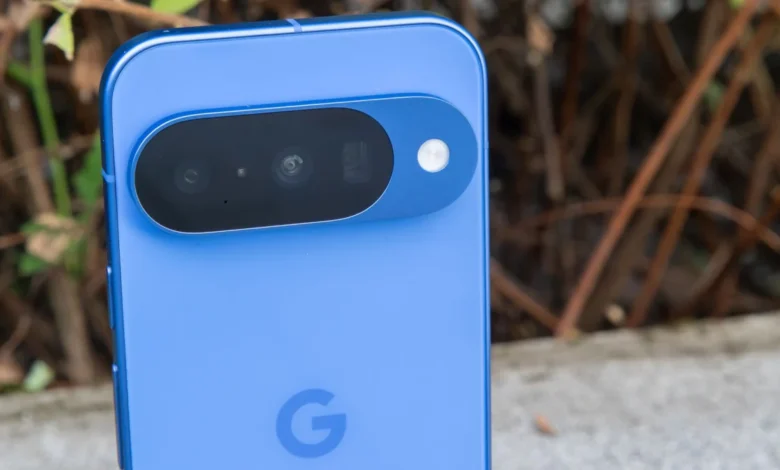
The annual retail phenomenon known as Black Friday has once again arrived, signaling a prime window for consumers to acquire flagship-tier technology at significantly reduced price points. In a move that highlights the competitive landscape of the premium smartphone market, Google has authorized a substantial discount on its latest handset, the Pixel 10. Amazon is currently retailing the unlocked version of the device for $599, representing a 25% reduction from its standard $799 manufacturer’s suggested retail price (MSRP). This $200 discount brings the device to its lowest price point since its market introduction, positioning it as a compelling option for those seeking high-end functionality within a mid-range budget.
A Chronology of the Pixel Launch Cycle
To understand the significance of this discount, one must examine the release trajectory of the Pixel series. Historically, Google has utilized a late-autumn release schedule for its flagship devices, often followed by aggressive promotional pricing during the November holiday shopping period. The Pixel 10, powered by the proprietary Tensor G5 chipset, represents the latest iteration of Google’s hardware strategy.
Following its initial launch, the device faced a crowded market populated by competitors from Samsung, Apple, and various Chinese original equipment manufacturers (OEMs). By positioning the device at the $599 price tier during the Black Friday window, Google is attempting to capture a larger segment of the "value-flagship" market—a category defined by users who desire premium aesthetics and software features but are unwilling to pay the $1,000-plus premiums often associated with top-tier hardware.
Technical Specifications and Hardware Analysis
The Google Pixel 10 is built around a 6.3-inch Actua OLED display, which utilizes advanced panel technology to achieve a peak brightness of 3,000 nits. This brightness rating is a significant metric, as it ensures readability in direct sunlight, a common benchmark for modern high-end smartphones. The display supports a 120Hz adaptive refresh rate, which provides fluid motion for interface navigation and media consumption.
Beneath the chassis, the device features the Tensor G5 processor paired with 12GB of RAM. While the Tensor series is renowned for its machine-learning capabilities and seamless integration with Google’s software ecosystem, industry benchmarks suggest that it prioritizes power efficiency and AI-driven tasks over raw gaming performance. Consequently, while the Pixel 10 excels in daily productivity, computational photography, and voice-to-text processing, it is not optimized for the sustained high-thermal demands of professional-grade mobile gaming or intensive 3D rendering.
The camera system remains a central pillar of the device’s value proposition. The inclusion of a triple rear-camera setup, anchored by a 5x telephoto lens and supported by 20x Super Res Zoom, provides users with a versatile photographic toolkit. This hardware is supplemented by Google’s proprietary computational photography algorithms, which are often cited by reviewers as industry-leading for still photography. However, it should be noted that compared to the larger "Pro" variants in the Google lineup, the standard Pixel 10 utilizes downgraded primary and ultrawide sensors to reach its lower price point.
Market Implications and Competitive Positioning
The decision to discount the Pixel 10 to $599 has broader implications for the smartphone industry. As hardware commoditization continues, manufacturers are increasingly relying on software services and ecosystem lock-in to maintain profitability. For Google, the Pixel 10 serves as a gateway to the broader Google ecosystem, including Google One storage subscriptions, Gemini AI services, and integration with Nest smart home devices.
For the consumer, this discount offers a bridge between budget devices and high-end flagships. It specifically targets the "iPhone switcher" demographic—individuals who are dissatisfied with the closed nature of iOS but hesitant to experiment with the complex, heavily skinned Android interfaces found on devices from other manufacturers. By offering a "clean" Android experience, Google provides a familiar, intuitive alternative to the status quo.
Balanced Analysis: Who Should Buy and Who Should Wait
Market analysis suggests that the Pixel 10 is not a universal solution for every consumer. The device’s appeal is highly specific to the user’s primary use cases.
Target Demographics:
- The Pragmatic User: Those who prioritize battery longevity (rated at over 24 hours), display quality, and a simplified software experience.
- The Switcher: Individuals moving from Apple devices who seek a transition that minimizes UI friction.
- The Value-Oriented Buyer: Consumers who require flagship camera features without the flagship price tag.
Considerations for Discerning Buyers:
- Charging Capabilities: The Pixel 10 retains relatively conservative charging speeds compared to competitors in the same price bracket, which may deter users accustomed to rapid-charging technologies.
- Thermal/Gaming Constraints: The Tensor G5 is not designed for heavy-duty gaming. Users who prioritize frame rates and sustained performance under load may find more value in devices equipped with Snapdragon or equivalent high-performance silicon.
- Software Stability: As with many new hardware releases, early adopters have noted occasional software bugs. While Google provides regular monthly patches, the initial experience can occasionally be suboptimal compared to more mature software platforms.
Official Stance and Ecosystem Context
While Google has not released specific sales figures for the Pixel 10, the company’s emphasis on "helpful AI" suggests a strategic pivot toward software-led differentiation. By bundling the Pixel 10 with features like the Qi2 Pixelsnap magnetic wireless charging standard, Google is signaling a commitment to both hardware interoperability and long-term support.
From an industry perspective, the $599 price point effectively disrupts the mid-range market. By offering an IP68-rated device with Gorilla Glass Victus 2 protection at this cost, Google is forcing competitors to justify their pricing structures. This puts pressure on mid-range devices that lack premium build materials or advanced ingress protection.
Conclusion and Future Outlook
As the Black Friday period concludes, the availability of the Google Pixel 10 at $599 remains a time-sensitive opportunity. For the average consumer—defined here as someone who uses their smartphone for communication, social media, photography, and light productivity—the Pixel 10 represents a highly refined tool that hits a "sweet spot" of performance and price.
However, the rapid pace of the mobile industry ensures that this hardware will soon face new challenges. With rumors already circulating regarding future iterations of the Tensor chip and potential shifts in display technology, the Pixel 10 is clearly positioned as the "current" standard. Whether this device serves as a long-term companion depends on whether the user values Google’s software-first approach more than the raw hardware specs found in competing flagships.
For those planning to purchase, it is recommended to monitor authorized retailers such as Amazon closely, as inventory levels during Black Friday events are notoriously volatile. Potential buyers should also consider the environmental factors, such as the device’s IP68 rating, which makes it a durable choice for long-term ownership, provided the user can work within the constraints of its current charging and performance profile. As the digital marketplace continues to evolve, the Pixel 10 remains a focal point for those seeking a balance of luxury features and accessible pricing.