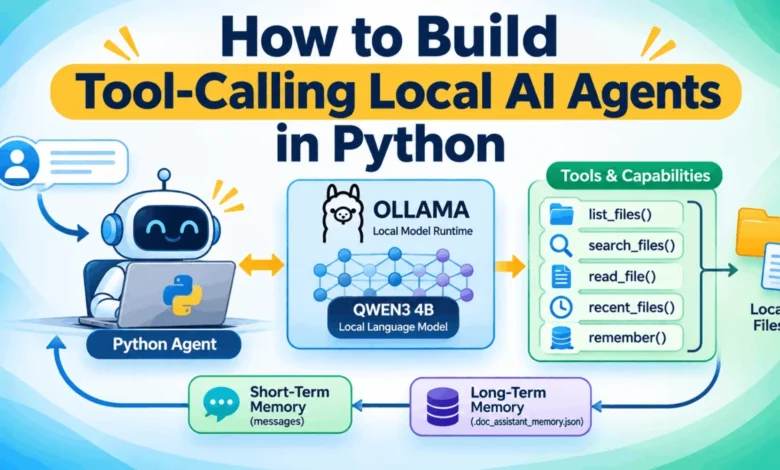
The landscape of artificial intelligence is undergoing a significant shift toward local execution, prioritizing data privacy and operational independence. As organizations and individual developers become increasingly wary of transmitting proprietary code and sensitive project documentation to cloud-based large language model (LLM) providers, the demand for self-hosted AI agents has surged. Building a local AI agent that can navigate, read, and manage a project folder using Python, Ollama, and the Qwen3 model represents a breakthrough in practical, secure software engineering. By utilizing tool calling, these agents transcend simple text generation, effectively becoming autonomous assistants capable of interacting with the local file system.
The Evolution of Localized AI Agents
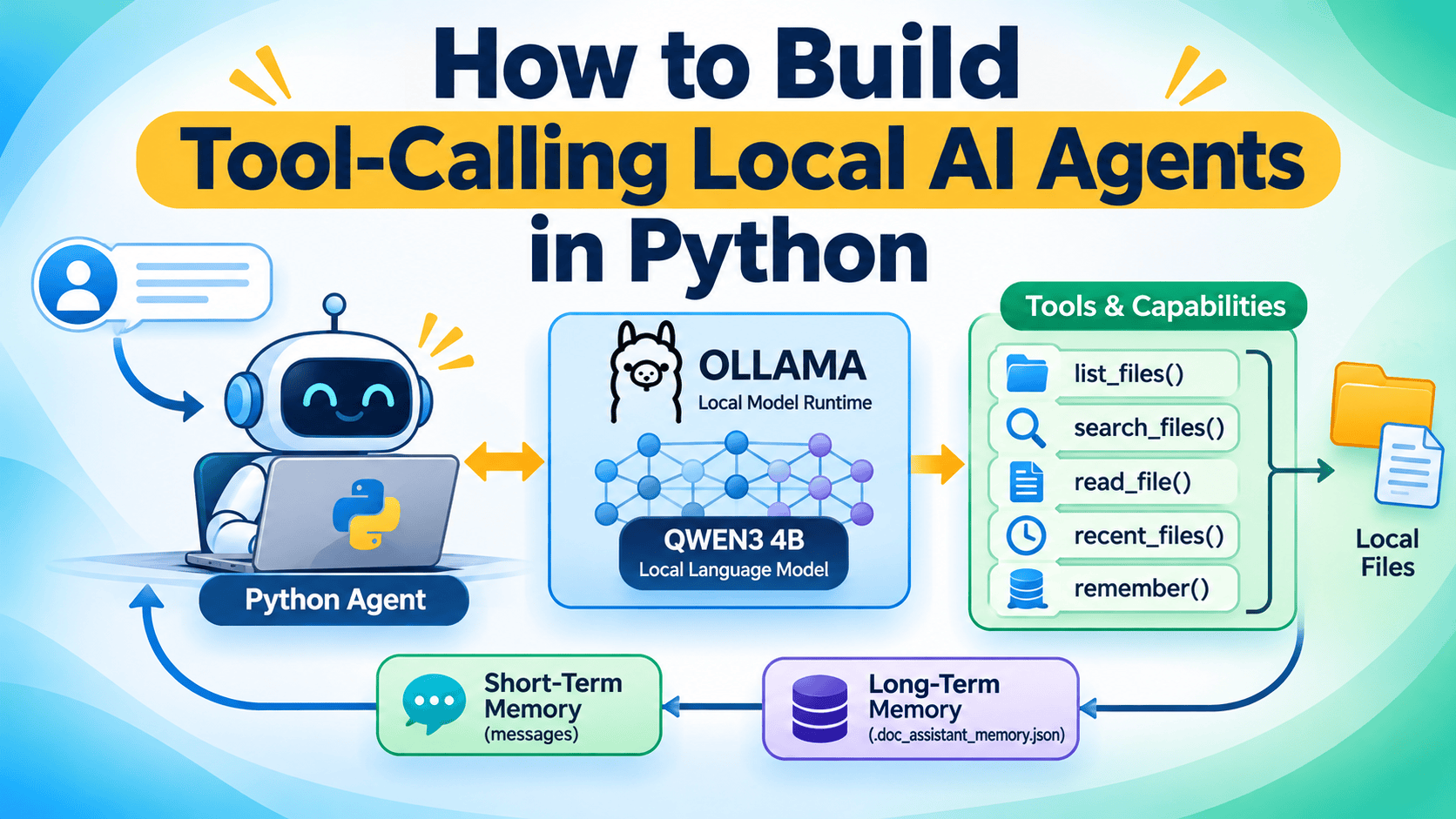
The fundamental limitation of standard LLMs lies in their static nature; they are trained on a fixed corpus and lack real-time access to the user’s local environment. To bridge this gap, developers have turned to tool calling—a mechanism where an AI model is provided with a defined set of functions (tools) it can invoke to perform specific actions. When a model determines that a request requires external information, it outputs a structured request to execute a function, such as searching a directory or reading a specific file.
This architecture marks a departure from traditional RAG (Retrieval-Augmented Generation) systems, which often rely on complex vector databases. Instead, a tool-calling agent treats the file system as its primary knowledge source, querying it dynamically. This is particularly relevant given the recent advancements in smaller, highly capable open-weights models like Qwen3, which can run on consumer-grade hardware while maintaining impressive logic and instruction-following capabilities.
Infrastructure and Setup Requirements
Implementing a local agent requires a stable runtime environment. The process begins with the deployment of the Ollama server, a lightweight, open-source tool designed to manage and serve large language models locally. By utilizing the 4B parameter version of Qwen3, users can achieve a balance between performance and memory overhead, making the system viable for laptops and workstations equipped with moderate GPU capabilities.
To ensure consistency, developers must configure the environment to handle high-token-count contexts. As an agent iterates through multiple tool calls, the conversation history—combined with the outputs of these tools—consumes the context window. Setting a context length of 32,000 tokens (32K) is standard for maintaining long-term coherence, though this requires careful monitoring of VRAM allocation. If the system experiences latency or crashes, offloading the model to the GPU via dedicated environment variables or adjusting the context window size is recommended.
The Anatomy of a Tool-Calling Exchange
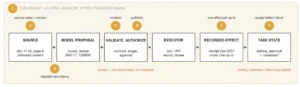
The interaction cycle within an agentic workflow is governed by four distinct roles: System, User, Assistant, and Tool. The System role establishes the agent’s constraints and behavioral guidelines. The User initiates the request, while the Assistant (the model) analyzes the request and determines which tools are necessary to fulfill it. The Tool role represents the output of the Python function execution, which is then fed back into the model to inform its final response.
This iterative loop—where the model requests data, receives it, processes it, and potentially requests further information—is the hallmark of autonomous behavior. For a project assistant, this might involve an initial scan of the directory, followed by a search for specific function definitions, and concluding with a summary of the findings.
Designing Secure and Efficient Tools
A critical concern when granting an AI agent file-system access is security. To mitigate the risk of arbitrary code execution or accidental data deletion, developers must implement strict sandboxing. By creating helper functions that resolve file paths against a defined "root" directory, the agent is effectively confined to the project folder. Any attempt to traverse to sensitive system directories or access restricted files is intercepted and returned as an error, allowing the model to correct its course without compromising the system.
Commonly implemented tools include:
- list_files: Provides a structural overview of the project, including file sizes and directory hierarchies.
- search_files: Executes text-based searches across the repository, returning specific lines of code or documentation.
- read_file: Retrieves the content of a specific file, allowing the agent to analyze code implementation details.
- recent_files: Filters files based on last-modified timestamps, helping the agent stay contextually aware of the user’s recent activity.
- remember: A long-term memory tool that persists user-defined facts in a JSON file, enabling the agent to retain knowledge across multiple sessions.
Managing Memory and Contextual Integrity
Memory in local agents is twofold: short-term and long-term. Short-term memory is maintained through the message history list. However, as this list expands, it threatens to exceed the model’s context window. Implementing a "trim" function ensures that only the most recent and relevant interactions are retained, prioritizing the user’s current intent.
Long-term memory is achieved via the "remember" tool. By storing key insights or user preferences in a external JSON file, the agent can load this data into the system prompt upon initialization. This allows the AI to "recall" details such as project-specific conventions, preferred testing frameworks, or ongoing tasks, creating a personalized experience that evolves alongside the user’s workflow.
Implications for Modern Development
The rise of local, tool-capable agents has profound implications for software development and data privacy. By keeping data on the local machine, organizations can utilize AI to assist in the maintenance of sensitive codebases without violating security policies. This approach also reduces dependency on external API costs and minimizes the risks associated with data leakage.
From a technical perspective, the ability to build these agents from scratch using standard Python libraries demonstrates the maturation of the local LLM ecosystem. As models become more efficient and tool-calling schemas become standardized, we can expect to see an increase in specialized agents capable of automated testing, refactoring, and project management.
Conclusion and Future Outlook
Building a local AI agent is no longer an experimental endeavor reserved for research labs; it is an accessible, practical solution for developers looking to enhance their productivity. By adhering to rigorous design patterns—specifically in how tools are defined and how context is managed—developers can create robust, secure, and highly intelligent assistants. As we look toward the future, the integration of these agents into daily development cycles promises to streamline complex workflows, providing a significant boost to efficiency while ensuring complete control over the underlying data. As hardware capabilities improve and model architectures continue to shrink, the performance gap between cloud-based and local AI will continue to close, making local agents the preferred choice for the privacy-conscious developer.