AMD Unveils Helios AI Rack System, Igniting a Fierce Challenge to Nvidia’s Dominance in High-Performance AI Computing

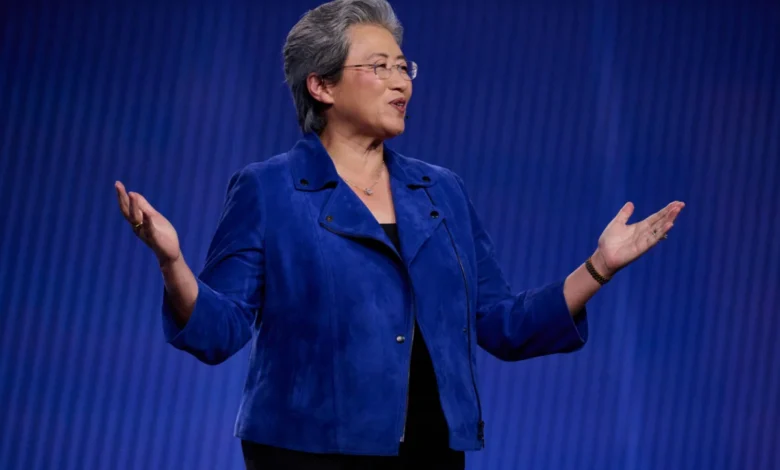
San Francisco, CA – Advanced Micro Devices (AMD) has formally unveiled its groundbreaking Helios rack-scale AI system, positioning it as a direct and formidable challenger to Nvidia’s long-standing hegemony in the high-performance artificial intelligence (AI) computing market. The announcement, made by AMD Chair and CEO Dr. Lisa Su at the company’s sold-out Advancing AI conference in San Francisco on Thursday, underscores AMD’s aggressive strategy to capture a significant share of the rapidly expanding AI infrastructure market, particularly among the world’s largest AI research labs and cloud providers.
The Dawn of Helios: A New Era in AI Infrastructure
The Helios system represents a pinnacle of AMD’s engineering efforts, designed from the ground up to address the insatiable compute demands of cutting-edge AI models. Dr. Su heralded Helios as the tech industry’s "highest-performance AI rack," specifically built "to train and run the most demanding frontier models in the world at massive scale." This rack-scale system integrates a multitude of processors into a single, high-powered unit, optimized for deployment in hyperscale data centers where the training and inference of sophisticated AI models consume unprecedented computational resources. The company confirmed that Helios is slated for shipment later this year, marking a critical milestone in AMD’s roadmap for AI acceleration.
Rack systems are the foundational building blocks of modern AI data centers. They are purpose-built to aggregate immense processing power, memory, and high-speed interconnects into a cohesive unit capable of handling the parallel processing inherent in deep learning algorithms. By combining hundreds, if not thousands, of specialized accelerators like Graphics Processing Units (GPUs) within a single, highly optimized enclosure, these systems provide the necessary horsepower for tasks ranging from training foundational large language models (LLMs) to running complex simulations and data analytics.
Direct Confrontation with Nvidia’s Reign
For years, Nvidia has been the undisputed leader in the AI accelerator market, largely due to its pioneering GPU technology and its robust CUDA software ecosystem. Nvidia’s Vera Rubin and Grace Blackwell rack-scale systems have set the industry benchmark, becoming the go-to solutions for most major AI players. AMD’s introduction of Helios, first revealed in 2025 and showcased onstage at CES 2026, is a direct challenge to this dominance. Early performance metrics reported by outlets like The Register suggest that Helios can indeed outcompete Nvidia’s Vera Rubin in several key areas, signaling a genuine threat to the incumbent’s market share. This competitive dynamic is expected to intensify the "AI arms race" among chipmakers, potentially leading to accelerated innovation and more diverse options for AI developers.
Strategic Partnerships and Early Adopters Fuel Momentum
A testament to Helios’s perceived capabilities and AMD’s strategic inroads, the company has already secured an impressive roster of high-profile customers committed to deploying the system. Industry titans such as Microsoft, OpenAI, Meta, Oracle, and Anthropic have all announced plans to integrate Helios into their AI infrastructure.
Microsoft’s CEO, Satya Nadella, publicly affirmed the company’s intent to expand its Azure cloud infrastructure with Helios, underscoring the critical role AMD’s new system will play in powering Microsoft’s ambitious AI initiatives. This partnership is particularly significant, as Microsoft is a key player in cloud computing and a major investor in AI research, including its close ties with OpenAI. The integration of Helios into Azure could provide AMD with a substantial foothold in the hyperscale cloud market, directly challenging Nvidia’s entrenched position.
Further bolstering AMD’s position, Anthropic, a leading AI safety and research company known for its Claude AI model, announced a strategic partnership with AMD just days before the Advancing AI conference. This collaboration involves the deployment of up to two gigawatts of AMD Instinct MI450 series GPUs via the new rack system. A deployment of this magnitude, measured in gigawatts, signifies an immense scale of computational power, comparable to the output of a small nuclear power plant. Such partnerships are crucial for AMD, not only for revenue generation but also for gaining valuable feedback from leading AI practitioners, which can drive further improvements in hardware and software. The MI450 series GPUs, central to these deployments, are AMD’s latest generation of accelerators designed for demanding AI and high-performance computing workloads, featuring advanced memory technologies and inter-GPU communication capabilities.
Beyond Helios: AMD’s Broader AI Compute Strategy
AMD’s ambitions in the data center extend beyond the Helios rack system and its powerful GPUs. During the Advancing AI conference, the company also introduced its Venice-X CPU, a new central processing unit specifically designed for data centers and high-computing workloads. Expected to launch in 2027, the Venice-X CPU boasts impressive specifications, including 1152 MB of 3D V-Cache, 96 cores, and a boost clock of 5.15 GHz, leveraging AMD’s Zen 6 architecture. While GPUs are the primary engines for AI training, high-performance CPUs like Venice-X play a vital role in managing data, orchestrating workloads, and handling pre- and post-processing tasks in complex AI environments. This dual-pronged approach, offering both cutting-edge GPUs and CPUs, allows AMD to provide a more comprehensive and integrated solution for data center customers, aiming to compete with Intel in the CPU market and Nvidia in the GPU/accelerator market simultaneously.
Dr. Lisa Su’s Vision: The Trillion-Dollar AI Accelerator Market
Dr. Lisa Su’s keynote address delved deeply into the future trajectory of the chip industry, painting a vivid picture of a market utterly transformed by AI. She asserted that by 2030, chips powering AI will constitute a massive portion of the overall computing market, driven by what she termed a "step change in compute demand." This surge, according to Su, is largely fueled by the rise of "agentic AI."
Agentic AI refers to a new paradigm of artificial intelligence where systems are designed to act autonomously, reason through complex problems, and interact with their environment and tools over extended periods to achieve goals. Unlike traditional AI models that might perform a single task or respond to a direct query, agentic AI involves dozens of sequential steps, requiring continuous reasoning, tool invocation, data access, and iterative problem-solving. This multi-step, iterative nature of agentic AI dramatically increases the computational resources needed, particularly the demand for GPUs. Each "thought" or "action" of an AI agent translates into significant processing cycles, necessitating vast arrays of powerful GPUs to maintain efficiency and responsiveness.
Su’s projections for this burgeoning market are staggering. "We’re now expecting that by 2030, the AI accelerator market is going to reach about $1.4 trillion," she declared. To put this into perspective, she added, "What that means is, by the end of the decade, the AI accelerator market is going to approach the size of the entire semiconductor market today." This projection, if realized, signifies an unprecedented shift in the technology landscape, where specialized AI hardware becomes the dominant force in the chip industry. The current global semiconductor market is estimated to be around $600 billion, highlighting the colossal growth anticipated for AI accelerators. This growth is not just about the volume of chips but also the increasing complexity and cost of each unit, as the performance requirements continue to escalate.
Furthermore, Su emphasized that GPUs are expected to constitute the vast majority of this trillion-dollar market. "We do expect that GPUs are going to make up the vast majority of that market because the algorithms are still very much in their infancy, and we’re still continuing to see the workloads change, and that favors programmability in the overall silicon ecosystem," she explained. The programmability of GPUs, allowing them to be adapted to rapidly evolving AI algorithms and models, gives them a distinct advantage over more specialized, fixed-function AI accelerators. As AI research continues to innovate at a rapid pace, the flexibility offered by GPUs ensures they remain at the forefront of AI compute.
Implications for the AI Industry and Competitive Landscape
AMD’s aggressive move with Helios and its ambitious market projections carry significant implications for the broader AI industry.
- Intensified Competition: The direct challenge to Nvidia is set to foster a more competitive environment, which could drive innovation faster, potentially lower hardware costs over time, and provide customers with more diverse options and supply chain resilience.
- Democratization of AI: A more competitive market might make high-performance AI compute more accessible, potentially accelerating AI research and development across a wider range of organizations, not just the hyperscalers.
- Ecosystem Development: AMD’s success will heavily depend on the maturity and adoption of its software ecosystem, particularly ROCm (Radeon Open Compute platform), which aims to be an open-source alternative to Nvidia’s proprietary CUDA. Building developer loyalty and ensuring seamless integration with popular AI frameworks like TensorFlow and PyTorch will be crucial.
- Infrastructure Demands: The "gigawatt-scale" deployments highlight the massive energy and infrastructure demands of frontier AI. This will necessitate significant investments in renewable energy, advanced cooling technologies, and data center design to support the continued expansion of AI.
- Strategic Partnerships as Differentiators: The growing list of key customers for Helios demonstrates that strategic partnerships are becoming increasingly vital in the AI hardware race. These collaborations not only provide revenue but also validate technology and foster co-development.
Challenges and Opportunities for AMD
While AMD’s entry into the high-end AI rack market is promising, the company faces considerable challenges. Nvidia’s CUDA ecosystem has a decades-long head start and deeply entrenched developer loyalty. Shifting this allegiance will require not only superior hardware performance but also a robust, user-friendly, and well-supported software stack. The cost and complexity of migrating existing AI workloads from CUDA to ROCm are significant barriers for many organizations.
However, the opportunities for AMD are equally immense. The AI market is growing at an exponential rate, and the demand for compute is outstripping current supply. Even a fraction of the projected $1.4 trillion market represents a colossal revenue stream. By offering a viable alternative to Nvidia, AMD can capitalize on customer desires for diversified supply chains, competitive pricing, and potentially open-source software options. The strategic partnerships with major AI players like Microsoft and Anthropic provide crucial validation and a foundation for building out its ecosystem.
In conclusion, AMD’s launch of the Helios AI rack system marks a pivotal moment in the chip industry’s AI era. With aggressive performance claims, strategic customer wins, and a bold vision for the future of AI compute, AMD is making a decisive play to reshape the competitive landscape. The coming years will reveal whether Helios can truly dent Nvidia’s formidable lead and usher in a new era of intensified competition and innovation in the race to power the world’s most advanced artificial intelligence.