Android Studio Quail 2 Stable: Gemini/AI Agent Mode Revolutionizes Android Development with Parallel Conversations and Enhanced Debugging


The latest stable release of Android Studio, codenamed Quail 2, marks a significant leap forward in integrating artificial intelligence into the integrated development environment (IDE). This update dramatically expands the capabilities of Gemini/AI Agent Mode, allowing developers to engage in multiple AI conversations concurrently. This enhancement underscores Google’s commitment to embedding AI-powered workflows directly into the tools developers use daily, aiming to streamline the complex process of Android application development. Beyond AI advancements, Quail 2 also introduces substantial improvements to debugging and profiling, alongside a more accessible pathway for exploring experimental features, solidifying its position as a pivotal release for the Android developer community.
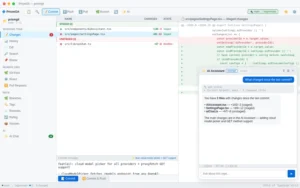
The redesign of Agent Mode in Quail 2 is a cornerstone of this release, promising not only a boost in performance but also more effective task decomposition and superior tool support. The most transformative aspect is the newfound ability for developers to manage several agent conversations simultaneously. This addresses a previously significant bottleneck in the development workflow, where developers were often forced to wait for one AI task to complete before initiating another. Now, a developer can initiate a complex UI refactoring in one virtual tab, simultaneously address a ProGuard rule in a second, and generate comprehensive documentation in a third, all without interruption. This parallel processing capability is poised to dramatically accelerate development cycles, allowing for more efficient multitasking and a more fluid development experience.
This parallel processing capability is a direct response to the evolving demands of modern software development, where agility and efficiency are paramount. As Android applications grow in complexity, the need for tools that can keep pace with developer productivity has become increasingly critical. The ability to delegate multiple distinct tasks to the AI agent concurrently means that developers can allocate their cognitive resources more effectively, focusing on higher-level problem-solving and architectural decisions rather than being bogged down by sequential, time-consuming operations. This shift represents a move towards a more collaborative and synergistic relationship between human developers and AI assistants within the IDE.
Beyond Gemini, Android Studio’s agent mode now offers robust support for a variety of large language models (LLMs). To empower developers in choosing the most effective model for their specific needs, Google has launched Android Bench, a dedicated benchmark suite tailored for Android development. This benchmark meticulously evaluates LLMs against a comprehensive set of common development tasks, incorporating Android best practices across critical areas such as permissions management, navigation patterns, network connectivity, and other essential components of robust Android applications. By providing transparent performance data, Android Bench aims to demystify the selection of AI models, ensuring developers can leverage the most suitable AI for tasks ranging from code generation and debugging to architectural advice. This initiative not only benefits individual developers but also encourages broader innovation within the AI model ecosystem for mobile development.
The integration of LeakCanary, a widely adopted open-source tool for memory leak detection, into Android Studio Quail 2 represents another significant enhancement, particularly for debugging. This integration fundamentally alters the memory leak detection process by offloading the computationally intensive heap analysis from resource-constrained testing devices to the developer’s more powerful development computer. Running this analysis locally can result in leak tracing speeds up to five times faster and eliminates the jank that can plague on-device analysis, ensuring the test application on the device remains responsive and performs as expected.
The implications of this integration are far-reaching. Memory leaks are a notorious source of application instability and poor user experience, often leading to crashes and performance degradation. Traditionally, identifying and diagnosing these leaks could be a laborious and time-consuming process. By moving the heavy lifting of heap analysis to the developer’s machine, Android Studio Quail 2 dramatically shortens the feedback loop. Developers can now pinpoint memory issues with greater speed and accuracy, leading to more stable and performant applications. Furthermore, once a leak is detected, the IDE provides seamless integration with Agent Mode, enabling developers to jump directly to the offending line of code, request the AI to suggest a fix, or even ask the AI to explain the root cause of the retained reference, fostering a deeper understanding of memory management principles. This educational aspect is particularly valuable for less experienced developers.
The introduction of App Quality Insights (AQI) as a fully integrated feature within Android Studio further amplifies the AI agent’s utility, particularly in the critical area of crash analysis. AQI automatically synthesizes essential data, including stack traces, device telemetry, and relevant source code, to precisely identify the root cause of application crashes. The AI agent then steps in to analyze this synthesized information, offering a step-by-step plan to resolve the crash. Developers can review this proposed fix before applying the necessary changes to their project and subsequently verify the resolution.
This comprehensive approach to crash analysis signifies a paradigm shift in how developers handle application failures. Instead of manually sifting through logs and code, developers are presented with an AI-generated diagnosis and a remediation plan. This not only saves considerable time and effort but also reduces the likelihood of human error in the debugging process. The ability for the agent to analyze the root cause and propose a fix, complete with a review step, empowers developers to tackle complex issues with greater confidence and efficiency. The verification step further ensures that the applied fix effectively addresses the problem, contributing to a more robust and reliable application lifecycle.
Another key development in Quail 2 is the stabilization of Studio Labs. This feature was initially introduced to provide developers with a dedicated environment for discovering and testing experimental AI features without the need to commit to a full IDE upgrade. By bringing these features to a stable platform, Google is making cutting-edge AI capabilities more accessible and reliable for a wider range of developers. This fosters a more iterative and collaborative approach to AI feature development, allowing for broader testing and feedback from the community before features are fully integrated into the mainstream release. The stabilization of Studio Labs signals a maturity in Google’s approach to AI integration, moving from experimental showcases to dependable tools.
The chronology of Android Studio releases leading up to Quail 2 demonstrates a consistent trajectory towards enhanced developer productivity and AI integration. Each release has built upon the foundation of the previous one, gradually introducing more sophisticated tools and capabilities. Early versions focused on core IDE functionalities and performance. Subsequent releases began to incorporate AI-assisted coding features and improved debugging tools. The introduction of Gemini and its evolution into the Agent Mode, culminating in the parallel conversation capabilities of Quail 2, represents a significant acceleration of this AI-driven transformation. The stabilization of Studio Labs further indicates a strategic approach to onboarding developers to new AI paradigms.
The broader implications of Android Studio Quail 2 extend beyond mere feature enhancements. This release signals a definitive shift in the role of AI in software development. By embedding advanced AI capabilities directly into the IDE, Google is not just providing tools but is actively shaping the future of how Android applications are conceived, built, and maintained. The parallel conversation feature, in particular, has the potential to redefine developer workflows, moving from sequential task execution to a more dynamic and parallelized approach. This could lead to a significant reduction in development time and an increase in the overall quality of Android applications.
Furthermore, the emphasis on benchmarks like Android Bench suggests a commitment to transparency and objective evaluation of AI models. This not only helps developers make informed decisions but also encourages competition and innovation among AI providers, ultimately benefiting the entire Android ecosystem. The proactive integration of tools like LeakCanary demonstrates an understanding of the persistent challenges faced by developers and a commitment to providing robust solutions.
Finally, as with any major IDE update, Android Studio Quail 2 incorporates the latest stability and performance improvements inherited from the underlying IntelliJ platform. This ensures that the new features are built upon a solid and reliable foundation, providing a smooth and efficient development experience for all users. The continuous evolution of the IntelliJ platform, which powers Android Studio, is a testament to the ongoing commitment to providing developers with a best-in-class development environment. The release of Quail 2, with its groundbreaking AI advancements and significant debugging enhancements, solidifies Android Studio’s position as an indispensable tool for Android developers worldwide. The future of Android development is clearly intertwined with the intelligent capabilities that Google is now making readily accessible.