Anthropic Unveils Autonomous Claude Code Projects to Transform Multi-Session Development Workflows


Managing complex software builds has historically required a fragmented approach, forcing developers to manually divide tasks, oversee painstaking handoffs between different modules, and eventually reconcile disparate code segments into a cohesive product. Anthropic, the AI research company behind the Claude model family, has introduced a significant evolution in its development ecosystem with the launch of autonomous Claude Code projects. This new capability enables the AI to act as a project manager, taking a high-level goal and orchestrating the entire lifecycle—from scoping and task delegation to parallel execution and final assembly—without constant human intervention.
The Mechanics of Autonomous Development
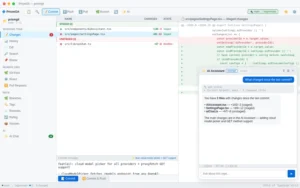
At the core of the updated Claude Code projects is the transition from a linear, prompt-and-response model to a multi-threaded, agentic workflow. Traditionally, AI coding assistants functioned primarily as reactive tools; they would provide snippets or explain logic based on a single prompt. The new framework changes this dynamic by allowing Claude to maintain state across multiple, simultaneous threads of execution.
When a developer sets a specific objective—such as optimizing application latency or migrating deprecated API endpoints—Claude breaks the request down into granular, actionable tasks. For instance, in an effort to improve p75 latency for a checkout service, Claude can initiate profiling on multiple endpoints concurrently. It then proceeds to test potential optimizations, monitor performance metrics, and generate pull requests (PRs) across different parts of the codebase. By managing these threads in parallel, the system significantly reduces the time required for iterative testing and debugging.
This capability extends to cross-repository management. If a developer needs to retire a deprecated v1 endpoint that spans across API, web, and mobile repositories, Claude can create individual threads for each repository. It navigates the unique requirements of each codebase, executes the necessary migrations, runs local test suites, and drafts the required PRs. Furthermore, it identifies dependency chains, advising the developer on the sequence in which PRs should be merged to ensure architectural stability.
Chronology and Availability
The introduction of these features marks a pivotal shift in the trajectory of the Claude ecosystem, which has evolved rapidly over the past eighteen months.
- Early 2024: Anthropic introduces the initial version of Projects, allowing users to create focused workspaces where Claude could maintain a broader context of specific files and documentation.
- Late 2024: The integration of Claude Code begins to bridge the gap between AI chat and local development environments, allowing Claude to execute shell commands and interact directly with file systems.
- Present: The rollout of the updated project architecture begins in beta. Access is currently limited to select Claude Pro and Max subscribers who utilize cloud sessions within Claude Code and currently maintain no existing projects on web or desktop interfaces.
- Immediate Future: Anthropic plans to scale access to a wider pool of Pro and Max subscribers over the coming week.
- Long-term Roadmap: The updated project architecture is slated to expand to include all Claude users, including those on Team and Enterprise plans, following the initial beta stabilization period.
For existing users, the transition is designed to be seamless. Current projects will remain functional in their existing state, with Anthropic pledging to upgrade them as the new architecture is rolled out across chat interfaces and the "Cowork" toolset. A waitlist has been established for users who have not yet gained access to the beta.
Supporting Data and Efficiency Metrics
The push toward autonomous, multi-threaded coding agents is supported by broader industry data regarding developer productivity. According to recent surveys by organizations such as Stack Overflow and GitHub, developers spend an estimated 30% to 40% of their time on "non-coding" tasks—tasks that include context switching, documentation retrieval, and managing dependency conflicts.
By automating the management of parallel threads, Anthropic aims to reclaim this lost productivity. Preliminary internal testing suggests that tasks involving multi-repo synchronization, which previously might have taken a developer several hours to coordinate and execute, can be reduced to a fraction of the time. The ability to "steer" progress from mobile devices or step away while the AI continues to work represents a shift toward asynchronous development, where the human role evolves from manual laborer to high-level architect and reviewer.
Industry Context and Implications
The release arrives during a period of intense competition among providers of AI-augmented development tools. Companies like GitHub (with Copilot Workspace) and Cursor have been aggressively iterating on agentic workflows. Anthropic’s approach is distinct in its emphasis on "orchestration"—positioning Claude not just as a code generator, but as a project manager that understands the structural relationships between different parts of an enterprise application.
The implications for software engineering teams are multifaceted. First, there is a clear move toward higher abstraction. As AI agents become better at handling the "plumbing" of a codebase—such as updating dependencies or refactoring standard endpoints—senior engineers may find themselves spending more time on architectural design and less time on implementation details.
Second, there is the issue of safety and verification. The ability for an AI to open PRs and execute changes in parallel requires robust guardrails. Anthropic has emphasized that the developer remains the final authority, retaining the ability to review outputs and steer the project at any stage. However, the move toward autonomous execution necessitates a change in CI/CD (Continuous Integration/Continuous Deployment) practices. Organizations will likely need to enhance their automated testing suites to accommodate the influx of AI-generated PRs, ensuring that the speed gained through automation does not come at the cost of code quality or security.
Expert Perspectives and Theoretical Impact
Industry analysts suggest that the "agentic" turn in software development is the most significant shift since the introduction of cloud-based development environments. By shifting the workload from manual coordination to AI-managed threads, companies may see a decrease in "context loss," a common phenomenon where developers lose track of the broader implications of small, localized changes.
However, some technical experts remain cautious. "The challenge with autonomous agents isn’t just the execution; it’s the intent," noted a software architecture consultant familiar with the space. "When you allow an agent to manage cross-repository changes, the margin for error is thin. If the agent misinterprets the interdependency of two services, it could cause cascading failures. The success of this product will depend entirely on how well Claude can handle edge cases and how effectively it communicates its rationale back to the human developer."
Future Outlook
As Anthropic prepares to expand these features to Enterprise and Team tiers, the focus will likely shift to governance and auditability. Large organizations will require granular control over what AI agents can and cannot do within their infrastructure. Future iterations will likely include deeper integration with enterprise identity management, enhanced logging for AI-led code changes, and more sophisticated policy engines to govern agent behavior.
For now, the beta launch serves as a testing ground for a new paradigm. By enabling developers to offload the cognitive burden of project coordination, Anthropic is betting that the future of coding is not just about writing lines of code faster, but about managing the complexity of the entire software lifecycle more efficiently. Whether this leads to a widespread adoption of autonomous coding agents will depend on the stability of these projects during the upcoming broader rollout and the ability of developers to effectively integrate these new tools into existing, mission-critical workflows.