In the architecture of large-scale distributed systems, maintaining a coherent state across thousands of nodes remains one of the most formidable engineering challenges. As data centers scale from dozens to tens of thousands of servers, centralized management services—such as Apache Zookeeper or etcd—often encounter significant bottlenecks. These centralized entities, while providing strong consistency, introduce single points of failure and struggle to maintain performance under the weight of massive horizontal expansion. To resolve this, engineers have increasingly turned to the Gossip Protocol, a decentralized, peer-to-peer communication mechanism that prioritizes high availability and eventual consistency.
Often referred to as an "epidemic protocol," the Gossip Protocol mimics the organic spread of rumors or biological infections. Just as a piece of information propagates through a social network or an illness travels through a population, the protocol relies on nodes periodically exchanging state information with a random subset of their peers. This strategy allows information to diffuse throughout a cluster in logarithmic time, ensuring that even in massive environments, the system achieves global awareness through localized interactions.
The Evolution of Distributed State Management
The history of state management in distributed systems has moved from rigid, centralized control to fluid, decentralized models. In the early 2000s, as cloud computing began to take shape, the limitations of the "leader-follower" architecture became apparent. If a central service discovery agent failed, the entire cluster would lose its ability to coordinate tasks, route traffic, or detect node failures.
The foundational shift toward epidemic algorithms was formalized in 1987 by Alan Demers and his colleagues in their seminal work, Epidemic Algorithms for Replicated Database Maintenance. The researchers identified that in systems where strict serializability is not a hard requirement, nodes could achieve synchronization by simply sharing their local views with neighbors. This realization provided the bedrock for modern distributed databases like Apache Cassandra and the membership management systems used by Amazon’s Dynamo.
Mechanics of the Gossip Protocol
At its core, the protocol functions through a series of "gossip rounds." Each node in the cluster is configured with two primary parameters: the "fanout" (the number of peers a node contacts in each round) and the "interval" (the frequency of the gossip cycle).
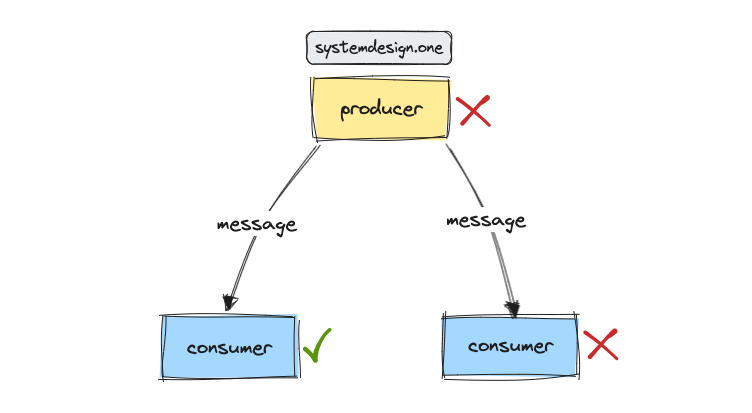
The message propagation strategy is generally categorized into three distinct models:
- Push Model: A node with a new update proactively shares it with a random subset of peers. This is highly effective when updates are infrequent, as it minimizes overhead while ensuring rapid initial spread.
- Pull Model: Nodes actively poll their neighbors for any recent updates. This model excels in high-traffic environments where updates are frequent, as it reduces the likelihood of missing information.
- Push-Pull Model: Combining both, this hybrid approach is widely considered the most efficient. It allows for the rapid dissemination of new information (push) while ensuring that straggler nodes catch up on missed data (pull).
In practice, this process generates a logarithmic convergence. For a cluster of 25,000 nodes, a properly tuned Gossip Protocol can achieve global consistency in approximately 15 rounds. With an interval of 10 milliseconds, the entire system can reach a synchronized state in roughly three seconds, a performance metric that centralized systems would struggle to match without significant hardware investment.
Performance and Reliability Metrics
Industry case studies have demonstrated the operational efficiency of this approach. In a controlled test of a 128-node cluster, the Gossip Protocol consumed less than 2% of total CPU cycles and maintained a bandwidth footprint of under 60 KBps. These metrics are critical for cloud providers, where every millisecond of CPU time and every byte of bandwidth translates directly to operational cost.
The reliability of the system is further bolstered by the use of "tombstones." When a piece of data needs to be deleted, the system does not immediately wipe the entry, as that would risk the deleted state being overwritten by a node that hasn’t received the news yet. Instead, a tombstone—a special marker—is inserted, effectively invalidating the record until it can be purged system-wide. This ensures that deletions are propagated just as reliably as updates, maintaining the integrity of the distributed state.
Types of Gossip Implementations
Not all gossip is created equal. Depending on the specific requirements of the application, engineers choose from three primary variants:
- Anti-Entropy: This is the "corrective" approach. It is used to reconcile differences between replicas in a database. It essentially performs a background check to ensure all nodes are in sync. While thorough, it can be bandwidth-intensive, often requiring the use of Merkle Trees—a data structure that allows nodes to compare datasets efficiently without sending the entire contents over the wire.
- Rumor-Mongering: Also known as dissemination, this focuses on spreading new information as quickly as possible. Once a node has successfully shared the "rumor" a sufficient number of times, it stops. This minimizes network flooding while maintaining high probability that every node receives the message.
- Aggregation: This specialized form is used for system-wide calculations, such as determining the average load across a cluster or calculating total disk usage. Nodes sample information from their neighbors and combine it, eventually arriving at a global aggregate without needing a central coordinator to sum the values.
The Role of Seed Nodes and Metadata
While the protocol is decentralized, it is not entirely unstructured. Most implementations utilize "seed nodes"—statically configured, high-availability servers that act as entry points for new nodes joining the cluster. When a new node comes online, it queries a seed node to obtain an initial membership list.
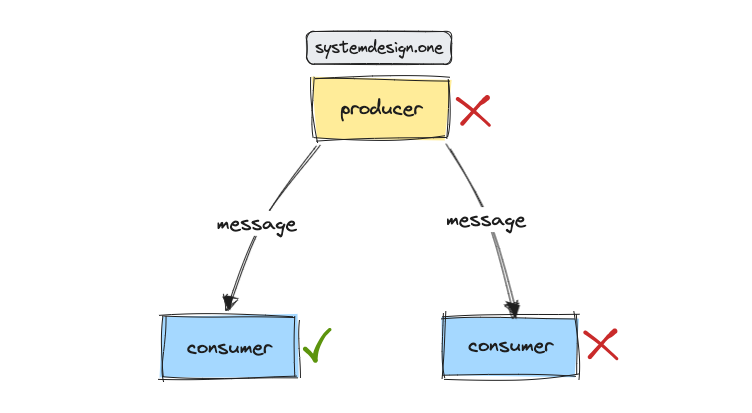
To manage node metadata, systems utilize generation clocks and version numbers. A generation clock is a monotonically increasing counter that resets upon a node’s reboot. Combined with a version number for application state, this allows nodes to distinguish between old, stale data and fresh updates. This versioning system is essential for fault detection; if a node’s heartbeat counter ceases to increment, the cluster marks it as "unhealthy," allowing the load balancer to route traffic away from the failing resource.
Challenges and Limitations
Despite its robustness, the Gossip Protocol is not a panacea. Its reliance on eventual consistency means there is a non-zero delay between an update occurring and that update being visible to the entire cluster. In systems where strict, immediate consistency is required—such as financial transaction processing—the Gossip Protocol is often paired with other consensus algorithms like Paxos or Raft.
Furthermore, the protocol can be "network-partition blind." If a network failure splits a cluster into two, nodes within each sub-partition will continue to gossip with one another, potentially causing the two groups to diverge significantly. When the partition heals, the anti-entropy mechanisms must work to reconcile these divergent states, which can cause a sudden spike in network traffic.
Debugging remains a significant hurdle for site reliability engineers (SREs). Because the protocol is inherently non-deterministic, reproducing specific failure scenarios is notoriously difficult. Developers often rely on high-fidelity simulations and visualization tools to observe message flow and identify bottlenecks in the gossip logic.
Broader Implications for Distributed Architecture
The move toward gossip-based architectures reflects a broader industry trend toward "self-healing" systems. By removing the need for a central authority, organizations can build services that scale linearly with the addition of hardware. As cloud-native computing continues to dominate, the principles of the Gossip Protocol—randomized communication, bounded load, and decentralized state—are becoming standard requirements for any system designed to operate at planetary scale.
Ultimately, the Gossip Protocol represents a pragmatic engineering compromise: by sacrificing the theoretical perfection of immediate consistency, it gains the practical power of infinite scalability and resilience. In the meat world, gossip may be a source of chaos, but in the realm of distributed systems, it is the quiet, persistent pulse that keeps the modern internet alive and functional.