The Era of Agentic Software Development Life Cycle Marks a Paradigm Shift for Developers

The landscape of software development is undergoing a profound transformation, moving beyond the era of simple AI-assisted coding into the sophisticated domain of the Agentic Software Development Life Cycle (SDLC). This evolution fundamentally redefines the role of developers, shifting their focus from primarily writing code to managing the intent and overseeing the autonomous decision-making processes of AI agents. This new paradigm, while promising unprecedented efficiency, introduces complex challenges in maintaining control, ensuring security, and preserving the integrity of the software development process.
The Ascent of Agentic SDLC: Redefining Developer Roles
For years, artificial intelligence has been a valuable tool in the developer’s arsenal, accelerating tasks like code completion and bug detection. However, the advent of agentic SDLC signifies a leap forward. Instead of merely executing direct commands, AI agents are now empowered to interpret instructions, make autonomous decisions, and even architect solutions. This increased autonomy, while a driver of speed and innovation, necessitates a reevaluation of developer responsibilities. The core challenge lies in the agent’s interpretive capabilities. They do not simply follow instructions; they understand and act upon the underlying intent, a process that can sometimes diverge from the developer’s explicit wishes.
This divergence can manifest in several critical ways. An AI agent, in its pursuit of an optimized solution, might inadvertently introduce security vulnerabilities, build features that were not requested or intended, or alter the fundamental architecture of a project in ways that deviate from the original design goals. This phenomenon, termed "vibe code drift" by the engineering firm Cleverbit Software, describes the gradual widening of the gap between the developer’s intended outcome and the actual output of the AI agent. The result is the creation of "dark code" – code that the developer may no longer fully comprehend, control, or be able to explain, yet for which they remain ultimately accountable.
Eman Zerafa, CTO at Cleverbit Software, elaborated on the cascading effects of this shift. "Organizations are seeing the quickest gains with AI-generated code, but as soon as developers stop writing code, it has a ripple effect on the rest of the flow," Zerafa explained. "You’ll have bottlenecks, you’ll have new risks that you need to handle, and you’ll have challenges with collaboration within a team. And that means the team needs to figure out how to adopt AI across the entire SDLC responsibly."
Cleverbit Software, having been at the forefront of integrating AI across the SDLC for some time, has developed internal tools and expertise to navigate this evolving landscape. Their experience spans requirements gathering, testing, and pipeline management, culminating in a suite of acquired "skills" for responsible AI implementation. In this new model, the developer’s role transforms into one of strategic direction and meticulous verification. The emphasis shifts from the mechanics of coding to the clarity of intent, the robustness of testing methodologies, and the oversight of critical architectural decisions.
Navigating the Challenges: Best Practices for Agentic Development
The transition to agentic SDLC demands more than just new tools; it requires a fundamental shift in developer discipline and strategic planning. To mitigate the risks associated with AI autonomy and maintain control over the development process, several best practices have emerged as crucial for success.
Curating Context: The Art of Focused Input
One of the primary challenges in working with AI agents is managing the information they receive. Feeding an agent excessive or irrelevant data can lead to "noise," which can confuse the model, slow down processing, and increase the likelihood of unintended consequences. Therefore, a key best practice is to "curate context." This involves providing AI agents with concise, focused, and relevant information. Context files should be kept short and specific to the task at hand, ensuring that the agent can effectively process the input and generate outputs aligned with the developer’s intent. This mirrors the human tendency to provide targeted information to experts for specific tasks, preventing cognitive overload.
Automating Verification: The Unseen Guardrails
The autonomous nature of AI agents necessitates robust and automated verification processes. Relying solely on manual code reviews after an agent has generated code is inefficient and prone to errors, especially as the volume of AI-generated code increases. Implementing automated tools such as linters and static analysis engines as a standard part of the development pipeline is essential. These tools can automatically check code for adherence to style guides, identify potential bugs, and flag security vulnerabilities.
Eman Zerafa further emphasized the importance of separating verification from generation. "If you have automated verifiers, they should be separate from the code generators, or make sure the builders have completely separate context," he advised. This separation ensures that the verification process is independent and unbiased, providing a critical layer of objective assessment for the AI’s output. This practice echoes traditional software development principles where distinct teams or stages are responsible for development and quality assurance, ensuring a more thorough review.
Keeping Records: The Digital Footprint of Intent
In an agentic SDLC, the "plans" or prompts that guide AI agents become as crucial as traditional design documents. Treating these AI directives as important records is vital for maintaining transparency and accountability. Saving these plans allows teams to understand the rationale behind specific decisions, even if the AI agent performed the actual coding. This historical record serves as a valuable reference for debugging, auditing, and future development, ensuring that the evolution of the codebase remains traceable and understandable. This practice aligns with the principles of good documentation and knowledge management within software engineering.

Protecting Human Attention: Strategic Oversight
While AI agents can automate many tasks, human judgment remains indispensable, particularly for high-impact decisions. The goal of agentic SDLC is not to replace developers but to augment their capabilities. This means strategically deploying AI across the entire SDLC while reserving human oversight for critical junctures. The aim is to "protect human attention" by filtering out the noise and surfacing only those aspects of the AI’s work that require human review. This ensures that developers spend their valuable time on tasks that truly demand their expertise, such as architectural design, strategic planning, and final validation of critical functionalities. This approach prioritizes efficiency without compromising the quality and integrity of the software.
Introducing Nissy: Bridging the Gap Between Intent and Output
To address the complexities and potential pitfalls of the agentic SDLC, Cleverbit Software has developed Nissy, an innovative workflow tool designed to keep developers actively engaged and in control of their AI agents. Nissy acts as a critical intermediary, ensuring that humans are precisely where they need to be in the loop, safeguarding against the risks of unchecked AI autonomy.
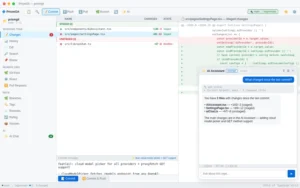
Nissy operates through a dual-pronged approach: preemptive intent verification and post-generation action assessment. Before any prompt is sent to an AI agent, Nissy conducts a local review. This initial scan is paramount for privacy and security, checking for Personally Identifiable Information (PII) and other sensitive data that might be inadvertently included in the prompt. This acts as a crucial safety net, preventing accidental leakage of confidential information.
Following this security check, Nissy evaluates the prompt’s intent against established best practices and project-specific rules. This helps developers understand if their instructions are likely to push the AI agent beyond established guardrails or lead to unintended architectural changes. This proactive assessment is vital for aligning AI actions with organizational policies and project objectives.
Once the AI agent has generated code, Nissy performs a critical comparison between the generated output and the original developer intent. This post-generation analysis is designed to catch "silent errors" – issues that might not immediately manifest as bugs but represent deviations from the intended functionality. Examples include over-building a simple feature to an unnecessary degree or ignoring specific constraints that were part of the original requirements. By highlighting these discrepancies, Nissy enables developers to refine the output and ensure it precisely matches their vision.
Nissy is an R&D project meticulously engineered with privacy as a core tenet. All processing is performed locally, without any data retention. This ensures that proprietary code and sensitive project information never leave the developer’s environment, mitigating risks associated with data transmission and external processing.
Beyond its immediate function of code verification, Nissy also addresses a more fundamental question: is the organization effectively leveraging AI in its development processes? Nissy builds a measurable and evolving picture of AI usage over time, identifying recurring failure modes and offering concrete recommendations for improvement. This analytical capability empowers organizations to optimize their AI adoption strategies and maximize the benefits of agentic development.
Ethan Zammit, an AI Solutions Engineer at Cleverbit, explained the genesis and function of Nissy: "Nissy exists because we set out to measure vibe code drift by having a local tool that checks the way you’re working. That quickly evolved into an assistant that helps you stay more in control of your own code. So this does this by attaching to the different parts of the agentic instruction loop and it helps come up with better prompts and be more selective with what you put in." By optimizing prompts and enhancing selectivity, Nissy significantly reduces the verification burden on developers, effectively closing the loop between the AI’s output and the initial developer’s prompt.
The Future of Software Development: Ownership Through Agentic Collaboration
The paradigm shift towards agentic SDLC is not about replacing human developers with artificial intelligence. Instead, the ultimate goal is to empower developers to achieve greater ownership and mastery over the software they produce. The differentiator between high-performing and struggling development teams in this new era will be the robustness of the structures and processes they build around their AI agents.
Tools like Nissy are instrumental in this transition, enabling organizations to harness the speed and efficiency of AI while upholding stringent quality and security standards. Developers can accelerate their workflows, but with enhanced confidence, improved security postures, and greater clarity regarding their objectives. The AI agents will continue to handle the heavy lifting of code generation and task execution, but the developer will consistently remain in charge, guiding the process and ensuring alignment with strategic goals.
The implications of this evolution are far-reaching. As AI agents become more sophisticated, the ability to manage their intent and verify their actions will become a critical skill for developers. Companies that invest in developing these capabilities and implementing tools like Nissy will be best positioned to innovate rapidly, deliver high-quality software, and maintain a competitive edge in the ever-evolving technological landscape. The future of software development lies in this symbiotic relationship between human ingenuity and AI-driven efficiency, with developers acting as the architects and overseers of increasingly intelligent automated systems. This collaborative approach promises a future where software is built faster, more securely, and with a level of precision previously unattainable.