Bitcoin Short-Term Holders Flush Tens of Thousands of Coins to Exchanges at a Loss Amid Market Slump

As Bitcoin hovers near the lower boundary of the $70,000 range, recent market dynamics have revealed a wave of capitulation among the cryptocurrency’s newest participants. On-chain data indicates that investors who acquired Bitcoin within the past several months are increasingly moving their holdings to centralized exchanges at a distinct loss. This trend has introduced heightened apprehension regarding near-term selling pressure, amplifying fears that a deeper correction could unfold if macroeconomic headwinds persist.
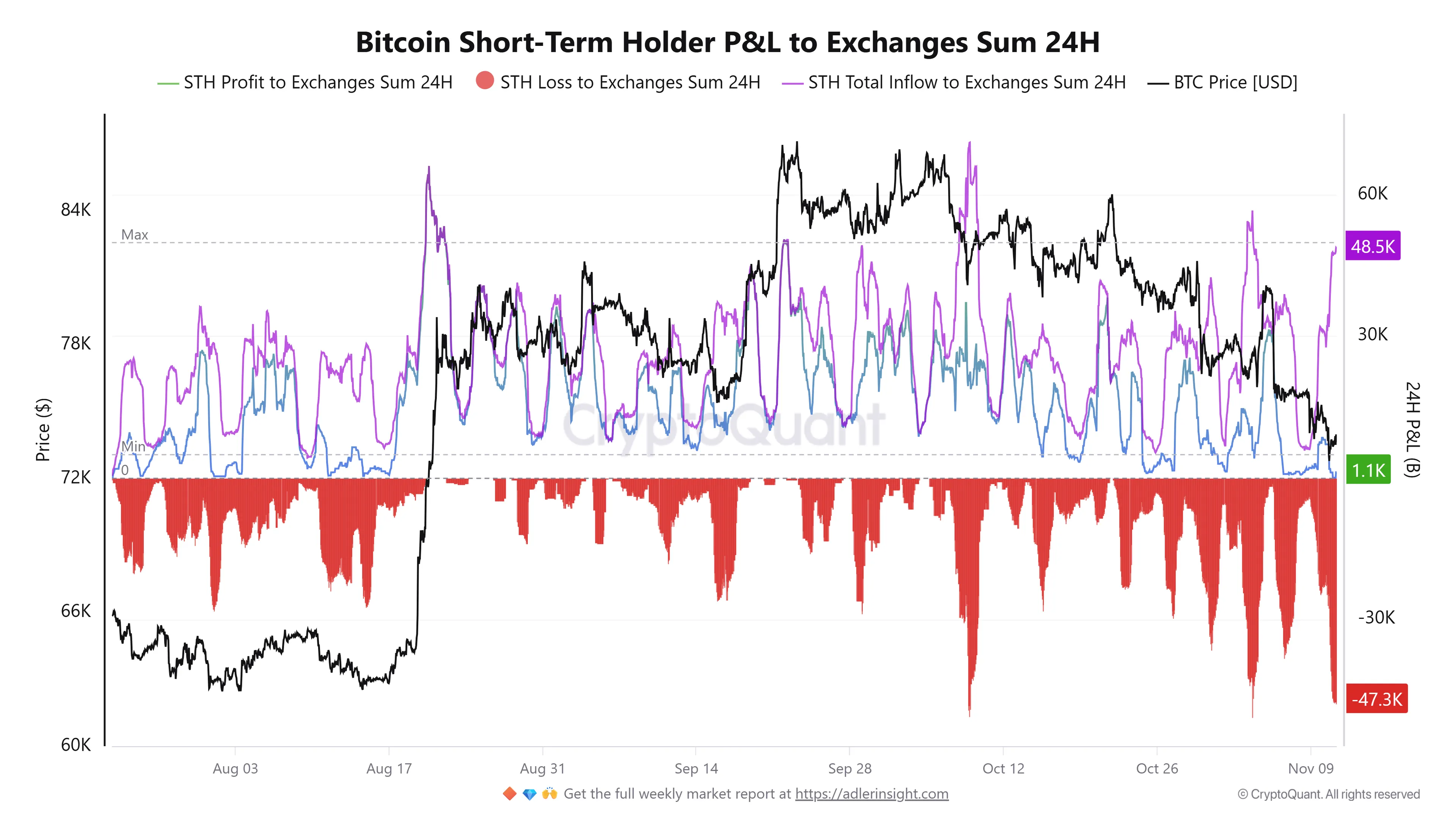
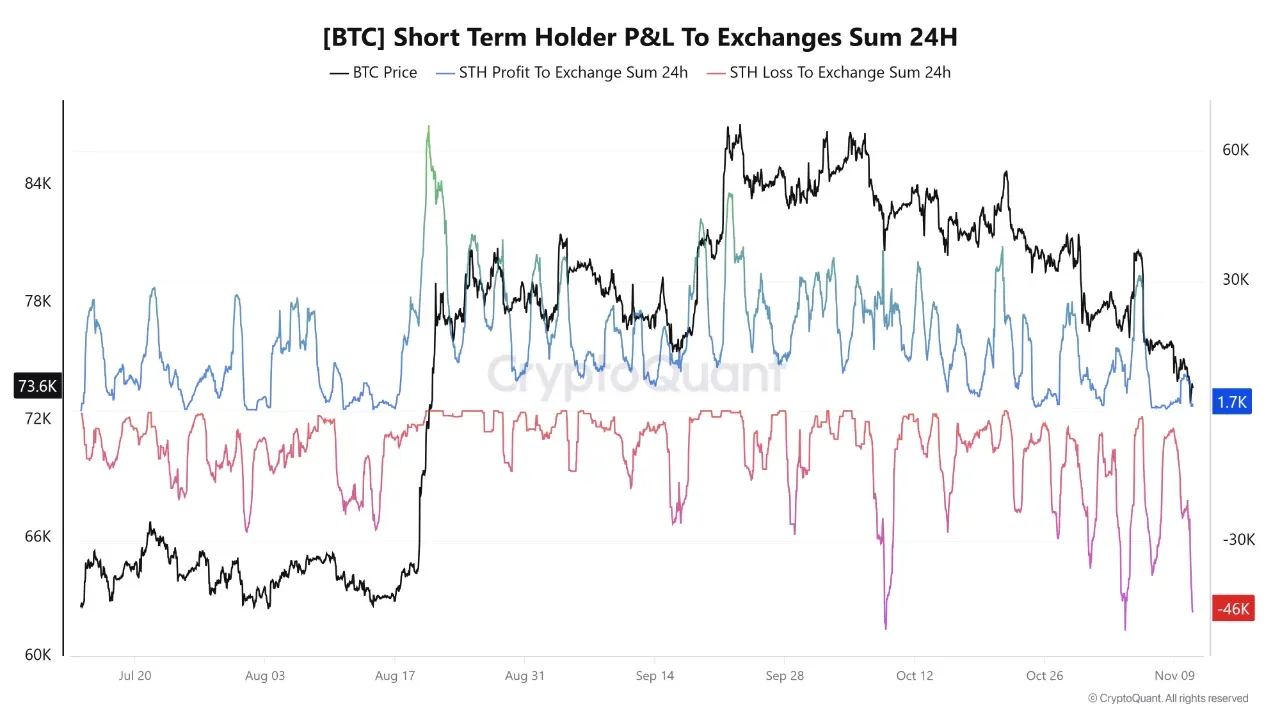
According to analytics compiled by blockchain research firm CryptoQuant, approximately 47,300 BTC were transferred to exchanges below their initial acquisition price over a single 24-hour window. This starkly contrasts with the mere 1,100 BTC that arrived at a profit during the same period. Combined daily inflows hovered near 48,500 BTC, representing a valuation of roughly $3.6 billion based on prevailing market prices of approximately $74,000 per coin.

Understanding the Mechanics of On-Chain Inflows
To contextualize these movements, market analysts emphasize a critical distinction: the metrics measure transfers to exchange wallets rather than definitive, executed market sales. Moving digital assets to an exchange platform is frequently the prerequisite step for executing a trade, yet deposits can also serve alternative functions, including the provision of collateral for derivative positions, trading for alternative digital assets, or participating in localized platform services. Consequently, on-chain data cannot explicitly confirm the exact volume of transferred Bitcoin that was immediately liquidated into fiat or stablecoins.
Nevertheless, the directional weight of these flows carries profound significance. The metrics specifically monitor the behavior of short-term holders—a cohort defined by CryptoQuant as entities that have held their Bitcoin supply for less than 155 days. These retail and institutional participants are historically the most vulnerable to sudden price reversals, psychological fatigue, and panic-driven decision-making, particularly when their portfolios slip underwater. When a buyer acquires an asset during a local market peak and watches its value contract, the temptation to cut losses and preserve remaining capital often triggers aggressive exchange deposits.
Chronology of a Correction: A Timeline of Underwater Transfers
The current wave of loss-making exchange deposits is not an isolated occurrence but rather the culmination of weeks of downward pressure following Bitcoin’s attempts to sustain higher valuations earlier in the year. The chronology of these on-chain movements highlights a distinct escalation in panic among recent market entrants:

- Late September: Bitcoin reaches local highs above $85,000, drawing a significant wave of retail FOMO (fear of missing out) and short-term speculative capital into the market.
- Early October: Macroeconomic pressures and shifting liquidity dynamics cause the premier cryptocurrency to initiate a gradual descent, breaking below key psychological thresholds and putting late-cycle buyers into negative territory.
- November 3: CryptoQuant contributors note the first major wave of distress, recording an inflow of 50,790 BTC transferred to exchanges at a loss as prices slide toward the mid-$70,000 range.
- November 9: Major platforms like Binance register targeted inflows, including 1,925 BTC originating from wallets that had remained dormant for one to three months.
- November 10: A secondary, highly asymmetrical wave materializes, with approximately 46,060 BTC deposited at a loss. During this 24-hour window, profitable transfers registered at a meager 1,700 BTC, establishing a striking ratio where approximately 27 coins arrived at a loss for every single coin transferred at a profit.
- Mid-November: The trend persists, with recurring spikes in loss-making transfers pushing metrics to depths not regularly observed since the summer months, reflecting sustained structural stress among newer market participants.
Detailed Data Analysis: The Binance Breakdown
A granular examination of deposit patterns on major liquidity hubs like Binance sheds further light on the composition of these distressed assets. Specialized CryptoQuant metrics group incoming deposits by the duration of time that has elapsed since each coin was last moved on-chain.
On November 1, Binance recorded 3,290 BTC arriving from wallets that had previously been active within a one-to-seven-day window. This figure expanded dramatically just 48 hours later, with 8,114 BTC from the same ultra-short-term category flooding the platform on November 3. While these metrics do not explicitly disclose the exact timestamp of the original over-the-counter or spot purchase, they vividly illustrate that coins changing hands very recently are being actively routed back onto order books.
This behavior underscores the precarious position of investors who entered the market during the late-summer and early-autumn rallies. For instance, a retail investor who purchased Bitcoin at an average price of $80,000 in September is currently confronting an unrealized paper loss of roughly 7.5% with the asset trading near $74,000. For leveraged traders or risk-averse participants, enduring a persistent bleed can become psychologically untenable, prompting them to execute market orders that lock in realized losses.
Broader Market Implications and the Long-Term Holder Landscape
While short-term holders bear the immediate brunt of the recent downturn, market analysts caution that vulnerability is not strictly confined to new entrants. Recent data compiled by on-chain intelligence platform Glassnode highlights a parallel layer of risk among more seasoned investors. According to Glassnode estimates, long-term investors currently hold approximately 4 million BTC that were accumulated within a dense cost-basis range between $85,000 and $118,000.
This massive accumulation cluster suggests that if a broader macroeconomic or technical recovery attempts to push Bitcoin back toward its previous all-time highs, it will encounter a formidable wall of supply. Investors who bought near the top and have endured weeks of drawdown may view a return to their break-even point as an optimal exit strategy, potentially generating persistent overhead resistance and capping rapid price appreciation.
Conversely, the capitulation of short-term holders is historically viewed by market veterans as a double-edged sword. On one hand, waves of loss-making deposits signal intense short-term bearish sentiment and an absence of immediate buying enthusiasm. On the other hand, market cycles often find local bottoms only after weak hands have thoroughly flushed their coins out of private custody and into exchange reserves, effectively transferring supply from impatient speculators to long-term value accumulators.
As regulatory developments, shifting monetary policy expectations, and macroeconomic liquidity indicators continue to dictate the rhythm of global financial markets, Bitcoin’s immediate trajectory remains delicately balanced. Whether the current influx of underwater coins acts as the final purging phase of a healthy market consolidation or precedes a deeper protracted correction will depend heavily on whether institutional demand can absorb the incoming supply at these crucial price supports.
Related posts: