Demystifying the Model Context Protocol: How MCP is Revolutionizing AI Agent Integration and Workflow Automation

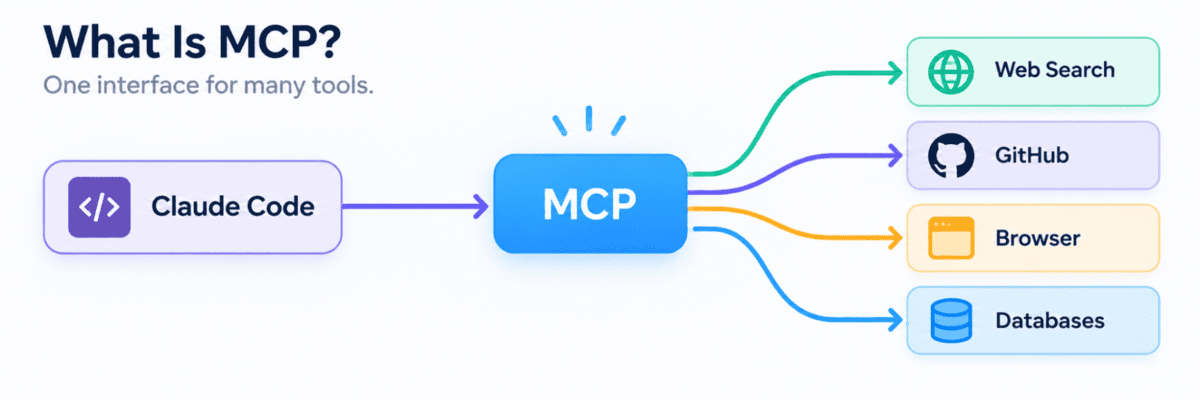
The rapid proliferation of artificial intelligence agents and coding assistants has brought a quiet revolution to the software development landscape, spearheaded by a single technical standard: the Model Context Protocol (MCP). While the acronym has become ubiquitous in engineering discussions, the mechanics of how MCP functions and how developers can leverage it effectively remain shrouded in complexity for many practitioners. At its core, MCP provides a universal, standardized interface that allows AI applications to seamlessly connect with external tools, databases, repositories, and web environments. Rather than requiring developers to construct bespoke, custom integrations for every individual API or service, MCP establishes a common language. This protocol enables an AI application to dynamically connect to standardized servers, discover available capabilities, and execute complex workflows without manual intervention.
To fully grasp the significance of this architecture, one must examine the operational hurdles that preceded it. Historically, expanding the capabilities of a large language model (LLM) meant writing custom middleware for every external data source. Connecting an AI model to a GitHub repository, a live web search engine, or a browser automation framework required distinct, non-standardized codebases for each integration. This fragmented approach created massive maintenance overhead, slowed down innovation, and made it difficult for AI agents to scale their utility beyond text generation. MCP fundamentally alters this paradigm by decoupling the reasoning engine—the LLM—from the integration layer. The model retains full autonomy over deciding when a tool is necessary and how to interpret the results, while the protocol standardizes the discovery and execution mechanisms.
Understanding the Anatomy of the Model Context Protocol
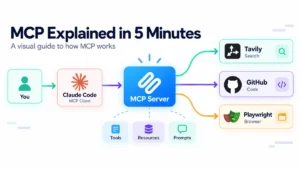
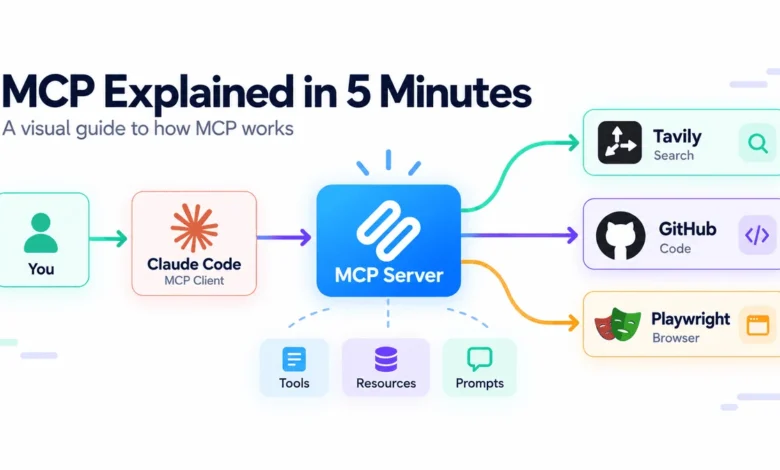
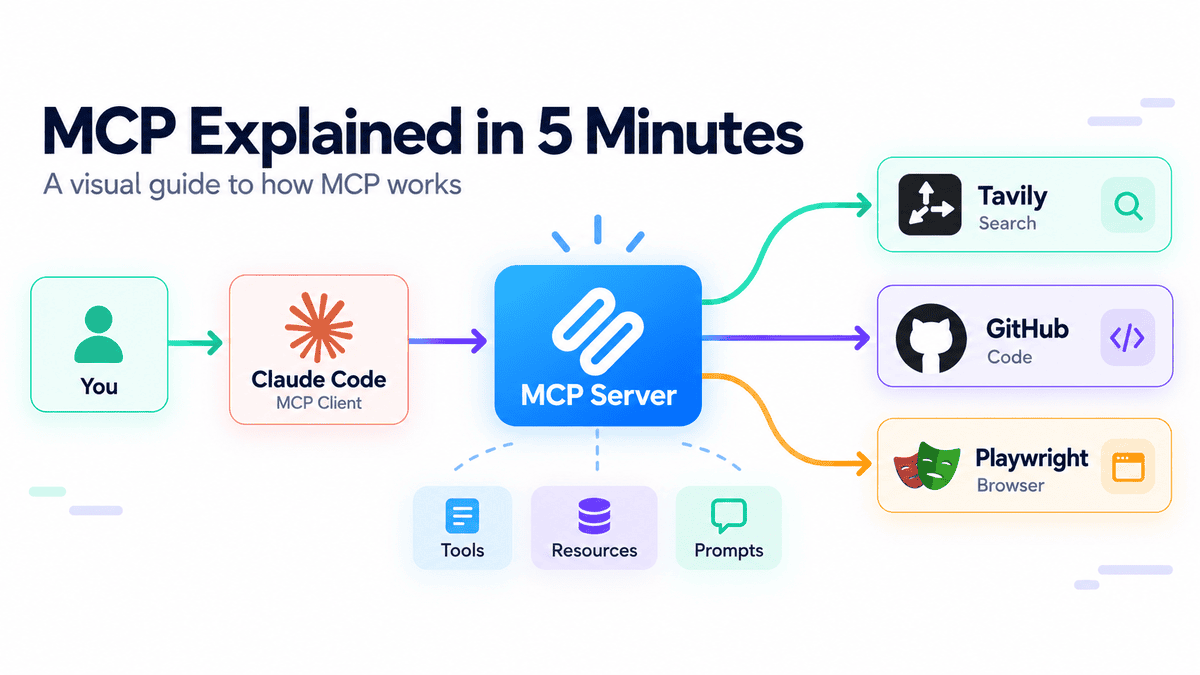
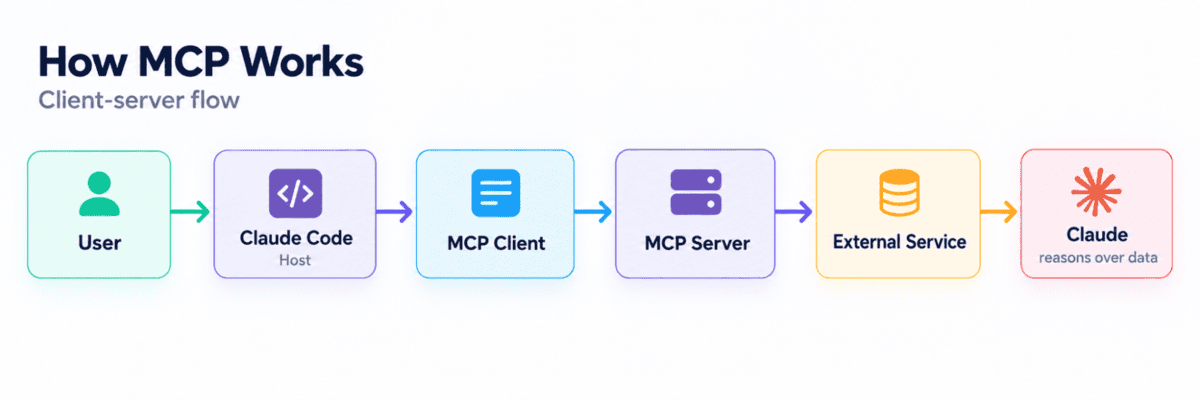
The architecture of MCP relies on a robust client-server model designed for clarity and modularity. At the center of this ecosystem is the host, typically an AI-driven application or development environment such as Claude Code. Embedded within this host is an MCP client responsible for establishing and managing connections with one or more MCP servers. These servers act as gateways to external services, exposing specific capabilities such as executable tools, static or dynamic resources, and pre-defined prompts.
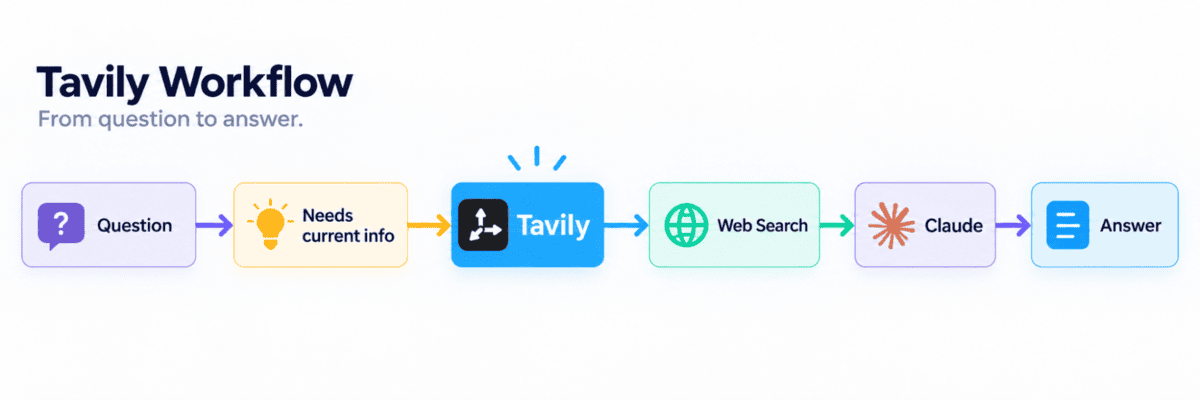
When a user issues a command—such as querying the latest software release and summarizing its documentation—the AI model evaluates its internal knowledge base, identifies a gap requiring real-time information, and inspects the registered MCP servers. Upon discovering a compatible web-search or data-retrieval tool, the model formulates a request, transmits it through the MCP client to the corresponding server, and processes the returned data. Crucially, the protocol itself does not perform any cognitive reasoning. It serves strictly as a secure, structured conduit, ensuring that the model can interact with disparate systems using a uniform syntax.
Practical Implementation: Integrating MCP within Claude Code
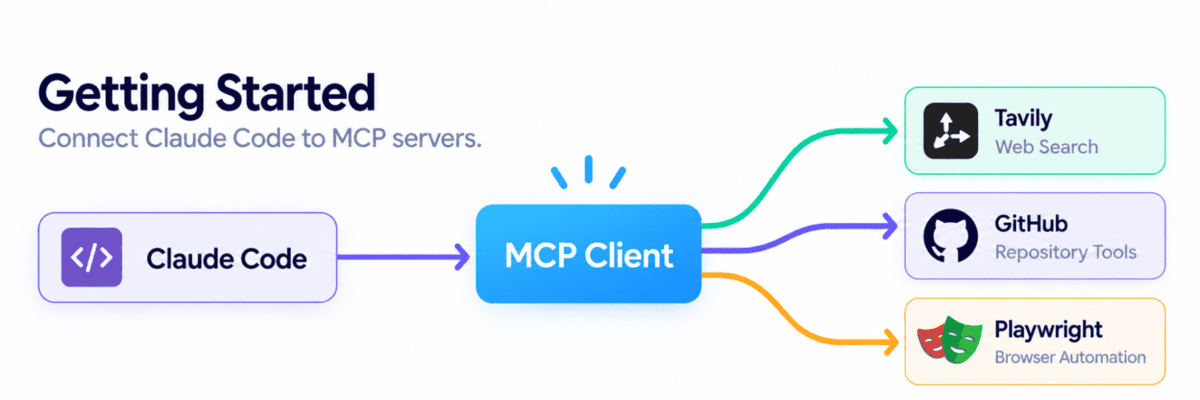
To evaluate the real-world utility of the Model Context Protocol, developers can implement MCP servers within advanced environments like Claude Code, which features native management capabilities. Operators can inspect their active configurations by executing the claude mcp list command or by utilizing the interactive /mcp interface directly within the terminal workspace. By connecting specialized servers, users can drastically expand the operational boundaries of their AI assistants.
The integration of live web-search capabilities via Tavily represents one of the most immediate use cases for overcoming the static knowledge limitations of traditional language models. By adding a remote Tavily MCP server through standard command-line interfaces, developers grant the AI agent the ability to execute live web searches, crawl pages, extract data, and perform real-time research. When a user asks the assistant to investigate the latest updates for a complex software library, the model queries the Tavily server, retrieves up-to-date documentation, and synthesizes the findings without requiring any manual API configuration by the developer.
Similarly, repository management workflows have been transformed through official protocol implementations like the GitHub MCP server. By authenticating via a secure Personal Access Token (PAT) with scoped permissions, developers can empower their AI assistants to read codebases, search through commit histories, analyze continuous integration workflows, inspect open issues, and review pull requests directly from the development environment. Instead of manually copying and pasting code snippets or error logs into a chat window, the AI autonomously requests the necessary context through the secure MCP tunnel, enabling deep contextual code reviews and automated debugging.
Beyond traditional APIs and code repositories, browser automation frameworks have also been integrated into the MCP ecosystem. Microsoft’s Playwright MCP server allows AI agents to interact directly with web browsers, enabling capabilities such as navigating web pages, clicking interface elements, filling out input forms, and executing end-to-end user interface tests on local or remote applications. By utilizing structured accessibility snapshots provided by the server, the model can interpret visual layouts programmatically and execute complex, multi-step browser interactions reliably.
The Evolution of the Protocol: Recent Specifications and Scalability
The rapid adoption of MCP has driven continuous iteration on its foundational architecture. A significant milestone in this evolution is the introduction of the stateless protocol core. In earlier iterations, maintaining active sessions between clients and servers introduced scaling complexities, particularly in distributed cloud environments. The modern specification redesigns this interaction model by ensuring that individual requests contain all necessary contextual information for processing, eliminating the requirement for persistent state retention at the server level.
This architectural shift has profound implications for enterprise deployments. Stateless remote MCP servers can now be scaled horizontally across standard cloud infrastructure with minimal overhead, matching the elasticity of modern microservice architectures. Furthermore, recent updates have introduced enhanced security frameworks, granular permission controls, and optimized data serialization formats. These improvements collectively ensure that organizations can deploy AI agents capable of interacting with sensitive internal databases and corporate repositories without compromising data governance or security compliance.
Broader Implications for Enterprise AI and Agentic Workflows
The widespread standardization facilitated by the Model Context Protocol marks a critical turning point in the commercial deployment of autonomous AI agents. As businesses increasingly seek to move beyond conversational chatbots toward goal-oriented agents capable of executing multi-step business and engineering workflows, the need for reliable, uniform tool integration becomes paramount.
By abstracting the complexities of underlying APIs and establishing a predictable, scalable framework for tool discovery and execution, MCP lowers the barrier to entry for building sophisticated AI systems. Developers no longer need to waste valuable engineering hours writing and maintaining custom connectors for every new service or internal tool. Instead, the ecosystem is shifting toward a plug-and-play model where any service can expose an MCP-compatible interface, instantly rendering it accessible to any compliant AI agent.
Ultimately, the trajectory of the Model Context Protocol suggests a future where AI assistants function less as isolated software utilities and more as deeply integrated team members capable of orchestrating complex digital environments. As the developer community continues to contribute open-source servers and refine the underlying specifications, MCP is poised to become the foundational networking layer for the next generation of artificial intelligence applications, bridging the gap between advanced language models and the vast landscape of digital tools.