From RAG to Agentic AI: Building the Next Generation of Intelligent Enterprise Systems

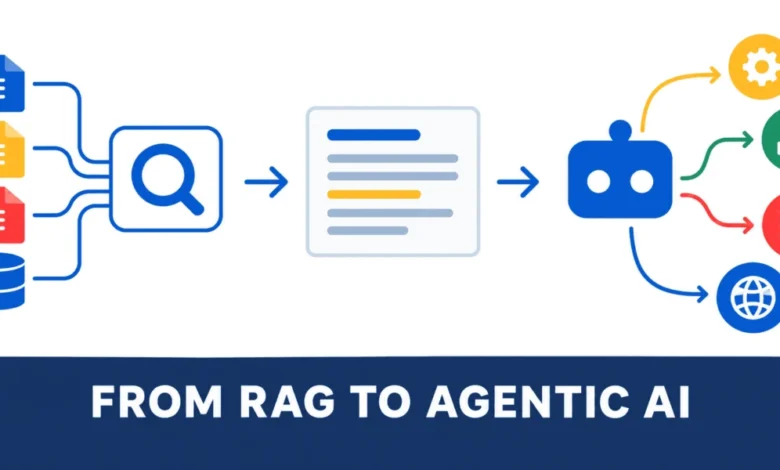
As global enterprises accelerate their investments in artificial intelligence, the limitations of early-generation deployment architectures have triggered a significant shift in enterprise software engineering. Over the past three years, the corporate landscape has transitioned from basic Retrieval-Augmented Generation (RAG) setups to sophisticated, multi-layered systems known as Agentic AI. This evolution marks a departure from static, single-pass document matching toward dynamic, reasoning-driven workflows capable of self-correction, deterministic data processing, and rigorous confidence scoring.
The Evolution of Enterprise Search: From Basic RAG to Agentic Architectures
The initial wave of enterprise Generative AI relied heavily on vanilla RAG frameworks. By embedding user prompts into vector databases and retrieving semantically similar text chunks, organizations bypassed the limitations of large language models (LLMs) that lacked proprietary, internal context. However, as these pipelines scaled from proof-of-concept projects to production environments supporting thousands of daily enterprise users, structural deficiencies quickly emerged.
Industry data indicates that standard RAG implementations often falter when processing domain-specific terminology, managing organizational acronyms, or evaluating the absolute accuracy of generated text. When a corporate employee submits an ambiguous query, standard vector search frequently fails to reconcile multiple semantic meanings. Furthermore, vanilla RAG architectures lack inherent mechanisms to quantify output uncertainty, causing fabricated responses to appear indistinguishable from factually grounded information.
Recognizing these vulnerabilities, systems architects began developing more robust solutions. This progression unfolded across three distinct generations of retrieval and reasoning infrastructure: hybrid search methodologies, knowledge-graph integration, and autonomous agentic workflows.
Generation One: Hybrid Retrieval and the Integration of Lexical Signals
The first major milestone in overcoming vanilla RAG limitations was the widespread adoption of hybrid search frameworks. While dense vector search excels at identifying conceptual similarities—matching queries like "zero inventory" to "supply gaps"—it frequently overlooks exact keyword matches. In enterprise environments saturated with product codes, regulatory statutes, and specialized acronyms, missing an exact term can cause critical operational failures.
To mitigate this, engineering teams combined dense vector search with sparse keyword algorithms, typically utilizing the Okapi BM25 ranking function executed in parallel asynchronous pipelines. This approach reduced retrieval latency by up to 40 percent in production environments compared to sequential execution models.
To manage overlapping results from heterogeneous search engines, organizations implemented multi-tier deduplication strategies based on unique identifiers, source locations, and content fingerprints. These distinct candidate sets are then synthesized using Reciprocal Rank Fusion (RRF), a mathematically established ranking algorithm that prioritizes documents achieving high placement across both semantic and lexical evaluations, before final filtering via cross-encoder rerankers.
Generation Two: Incorporating Knowledge Graphs for Structural Context
Despite the precision of hybrid retrieval, standard pipelines continue to treat document chunks as isolated data points, ignoring the hierarchical relationships and ontologies inherent to enterprise operations. To address this, organizations introduced GraphRAG, embedding structured knowledge graphs into the retrieval pipeline.
A primary engineering challenge during this phase involved entity extraction methodology. While early tutorials heavily relied on LLMs to extract named entities, production environments encountered significant bottlenecks regarding latency, API costs, and non-deterministic output generation. Consequently, many enterprise engineering teams reverted to rule-based, multi-pass deterministic entity extraction techniques. By utilizing longest-first phrase matching against comprehensive entity indexes, organizations achieved consistent, real-time extraction at negligible computational cost.
These entity-tagged document fragments are subsequently scored and merged alongside vector and keyword outputs via RRF frameworks. To maintain operational continuity, database administrators deployed zero-downtime reindexing patterns, utilizing delta processing for incremental updates and atomic swaps for full synchronization during ongoing enterprise document ingestion cycles.
Generation Three: The Rise of Agentic AI and Dynamic Reasoning
The current frontier in enterprise systems architecture relies on Agentic AI, which replaces rigid retrieve-then-generate pipelines with dynamic, multi-step reasoning architectures. Rather than following predetermined operational paths, agentic systems evaluate intermediate results in real-time, decomposing complex multi-part queries into specialized sub-tasks, invoking appropriate tools, and coordinating multi-source data retrieval.
Industry benchmarks emphasize that production-grade agentic systems must master core disciplines including tool utilization, memory management, planning, coordination, and evaluation. Furthermore, systems architects stress the necessity of establishing safety as an immutable architectural boundary rather than a downstream filtering mechanism. By positioning security evaluations at the initiation point of the execution graph, organizations can automatically intercept and reject queries containing sensitive consumer or proprietary data before processing occurs.
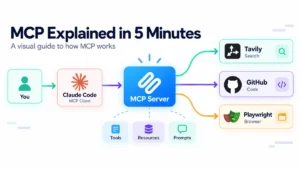
To enhance reliability, modern agentic frameworks incorporate deterministic disambiguation layers, human-in-the-loop validation checkpoints aligned with emerging standards like the Model Context Protocol (MCP), and multiplicative confidence scoring systems. Unlike arithmetic averaging, which can mask component-level failures by generating misleading median scores, multiplicative scoring drastically reduces overall confidence outputs if any single node in the pipeline—such as retrieval or planning—experiences uncertainty. This mathematical conservatism provides the system with a critical enterprise capability: the ability to accurately signal when it lacks sufficient data to formulate a verified response.
Industry Implications and Future Outlook
The systemic shift toward Agentic AI reflects broader economic and technical pressures within the enterprise software sector. Organizations demand greater operational determinism, stringent data privacy compliance, and predictable execution latencies. By reserving generative LLM calls exclusively for tasks requiring complex reasoning, while relying on deterministic programming for entity routing, disambiguation, and validation, enterprises are building more stable, auditable, and responsive AI systems.
As organizations look toward the future, the primary focus of enterprise AI research is shifting toward multi-agent orchestration. These advanced systems enable specialized, autonomous software agents to dynamically discover peer capabilities and collaborate across organizational boundaries. Industry analysts suggest that enterprises investing heavily in robust architectural foundations, hybrid retrieval, knowledge graphs, and rigorous safety protocols today will secure a decisive competitive advantage as intelligent enterprise systems continue to mature.