Global Cybersecurity Coalition Exposes Massive North Korean Contagious Interview Campaign Compromising 30,000 Devices Worldwide

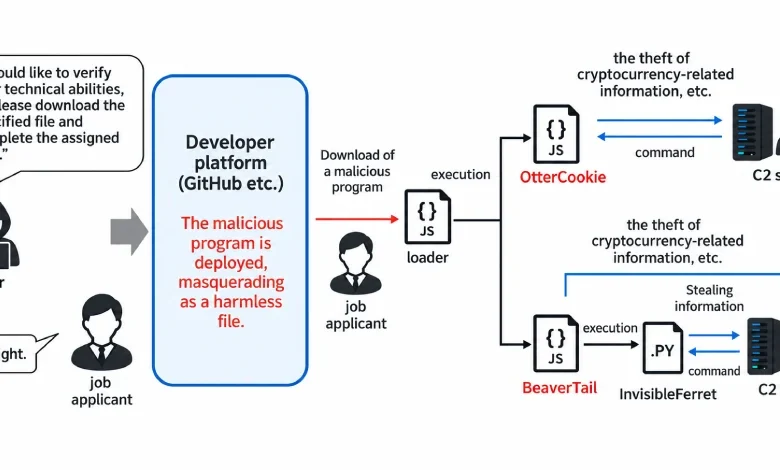
International cybersecurity authorities, led by a joint coalition of intelligence and law enforcement agencies from the United States, Japan, Australia, and Germany, have issued a comprehensive warning regarding a sophisticated, multi-year cyber espionage and financial theft operation orchestrated by North Korean threat actors. Known widely as the "Contagious Interview" campaign, this extensive operation has successfully compromised at least 30,000 individual devices across more than 100 countries. Furthermore, the threat actors have siphoned sensitive account credentials and directly plundered upwards of $10.71 million worth of cryptocurrency from over 7,000 digital wallets globally.
The campaign specifically targets individual web designers, software engineers, and specialists operating within the cryptocurrency, blockchain, and Web3 technology sectors. By masquerading as legitimate prospective employers, recruiters, and corporate technology firms, North Korean state-sponsored operatives approach high-value targets via professional networking platforms like LinkedIn. Once rapport is established, victims are funneled through elaborate, deceptive recruitment processes that ultimately compromise their personal and professional networks.
Anatomy of the Contagious Interview Campaign and Malware Arsenal
First brought to light by security researchers at Palo Alto Networks Unit 42, the Contagious Interview campaign has been running continuously since at least 2022. The methodology relies heavily on social engineering. Adversaries initiate contact by dangling lucrative remote employment opportunities before unsuspecting technology professionals. As part of the simulated evaluation process, candidates are instructed to complete technical coding tests, take home-grown programming assessments, or install specialized project management tools.
These benign-appearing exercises trigger a complex, multi-stage infection chain. Once the victim executes the provided files, a broad array of specialized malware families is deployed onto the host machine. Historically documented payloads associated with this campaign include BeaverTail, InvisibleFerret, FlexibleFerret, GolangGhost, PylangGhost, OtterCookie, RATatouille, OtterCandy, and StoatWaffle.

These payloads typically serve as initial loaders designed to establish persistent backdoors, harvest browser data, scrape cryptocurrency wallet keys, and exfiltrate sensitive files. The resulting backdoor access allows the threat actors to install remote access trojans (RATs), granting the adversaries continuous command-and-control capabilities over the victim’s device. For corporate environments, these compromised endpoints frequently serve as a secure beachhead, facilitating lateral movement, intellectual property theft, and corporate espionage.
Attribution and Overlapping Threat Clusters
The joint cybersecurity advisory highlights that the malicious activities are carried out by multiple overlapping threat clusters tracked under various monikers across the global cybersecurity community. These include CL-STA-0240, DeceptiveDevelopment, DEV#POPPER, Famous Chollima, Gwisin Gang, PurpleBravo, Tenacious Pungsan, UNC5342, Void Dokkaebi, and WaterPlum.
Intelligence assessments strongly indicate that groups such as WaterPlum and distinct factions of North Korean IT workers—often referred to as PurpleDelta or Wagemole—operate under the administrative control of the 313 General Bureau of the Munitions Industry Department. This finding aligns with previous private-sector intelligence assessments, including a June 2025 report from DTEX Systems which detailed how North Korea coordinates its state-backed revenue generation programs with its offensive cyber warfare divisions.
Further compounding the complexity of these operations, investigative analysts have discovered deep infrastructural overlaps between these clusters. In several instances, WaterPlum operatives and North Korean IT workers have been tracked sharing identical IP address spaces when accessing remote laptop farms or applying for technical positions at prominent Japanese cryptocurrency exchanges. To facilitate these operations, threat actors rely on global networks of enablers based in countries such as Japan and the United States, who establish and manage laptop farms designed to obscure the true geographic origin of the connections. Notably, international law enforcement agencies recently identified and successfully dismantled one such laptop-farm facility operated by a key facilitator in Japan.
Evolution of the North Korean IT Worker Fraud Scheme
Complementing their offensive malware campaigns, North Korean state-sponsored actors continue to expand their long-standing illicit IT worker program. Historically rooted in the dispatch of overseas manual labor during the 1960s and 1970s—beginning with forestry and logging in the Soviet Far East before broadening into construction, textiles, and restaurant services across Russia, China, the Gulf, and Africa—this program has evolved into a high-tech financial engine designed to evade international economic sanctions and generate foreign currency for the regime.

Today, this initiative involves deploying skilled information technology professionals—either physically stationed abroad or operating virtually through proxy infrastructure—to secure remote employment at Western and Asian corporations. Utilizing artificial intelligence tools to synthesize convincing fictitious identities, fabricate resumes, and bypass standard compliance checks, these workers integrate themselves into corporate engineering teams.
Recent intelligence compiled by cybersecurity firms Kudelski Security and Silent Push highlights how the operational infrastructure has adapted to modern communication channels. Analysts uncovered a North Korean IT worker utilizing Discord servers, such as one named "Mouse Review," to recruit unwitting foreign nationals located in the United States, Europe, and Latin America. These local recruits are hired to act as compliance and identity proxies, attending video interviews and serving as the "face" of the employee while the North Korean operator completes all technical responsibilities behind the scenes.
The Proxy Recruitment Model and AI Integration
The recruitment advertisements distributed on chat platforms and gaming servers explicitly outline the division of labor. One such AI-generated job posting uncovered by researchers reads: "YOUR ROLE IS SIMPLE, BUT CRUCIAL. You handle communications and interviews. I handle all technical work behind the scenes. You get paid consistently for your communication."
To incentivize participation, the scheme offers a financial split—typically allocating 35% of the earned salary to the foreign proxy while funneling the remaining 65% back to the North Korean operators. Furthermore, the advertisements note that during live coding challenges or technical interviews, the real operator can remotely access the proxy’s screen to solve complex programming tasks in real-time while the proxy maintains smooth verbal communication.
This proxy model addresses a critical bottleneck for Pyongyang’s intelligence apparatus: navigating stringent Know Your Customer (KYC) protocols, identity verification requirements, background checks, and regional hiring restrictions imposed by international sanctions. By leveraging the legal identities and banking accounts of unsuspecting citizens from developed nations, North Korean operatives can sustainably siphon salaries, gain deep access to corporate software repositories, and position themselves for subsequent intellectual property theft.

Broader Impact and Implications for Global Security
The convergence of malware-driven credential harvesting, cryptocurrency theft, and proxy-based employment fraud underscores the increasing sophistication of North Korea’s cyber-enabled financial operations. Government and private security analysts emphasize that the revenue generated through these schemes directly finances the regime’s strategic military objectives, including its nuclear weapons and ballistic missile programs.
The international cybersecurity community continues to urge organizations—particularly those in the financial technology, blockchain, and software development sectors—to implement stringent vetting procedures for remote contractors. Recommended defensive measures include conducting rigorous video-verified background checks, monitoring for anomalous endpoint behavior indicative of unauthorized remote access software, securing developer environments against multi-stage malware loaders, and remaining vigilant against unsolicited recruitment overtures on professional networking platforms.