LG Electronics Moves to Suspend Smart TV Apps Functioning as Residential Proxy Nodes Amidst Privacy Concerns

LG Electronics USA, a leading global home appliance and consumer electronics company, has announced a significant policy shift, stating its intent to suspend applications on its smart TV platform that transform user televisions into "always-on" residential proxy nodes. This decisive action comes less than a month after alarming research revealed that a substantial percentage of apps available on LG’s webOS store integrate software development kits (SDKs) allowing third parties to route internet traffic through users’ TVs without adequate transparency or ongoing control. The move underscores growing concerns about privacy, security, and the unregulated monetization of consumer smart devices.
The revelation stems from a detailed investigation by the security firm Spur, first highlighted by KrebsOnSecurity on July 2. Spur’s research meticulously examined the prevalence of residential proxy SDKs embedded within smart TV applications. Their findings were stark: more than 42 percent of apps available for download on LG smart TVs were found to contain these SDKs, effectively converting user televisions into indefinitely operating proxy nodes. The problem was not confined to LG; Spur also identified similar residential proxy components in over a quarter of applications designed for Samsung’s Tizen operating system, indicating a broader industry challenge.
The Unveiling of a Hidden Practice: Spur’s Groundbreaking Research
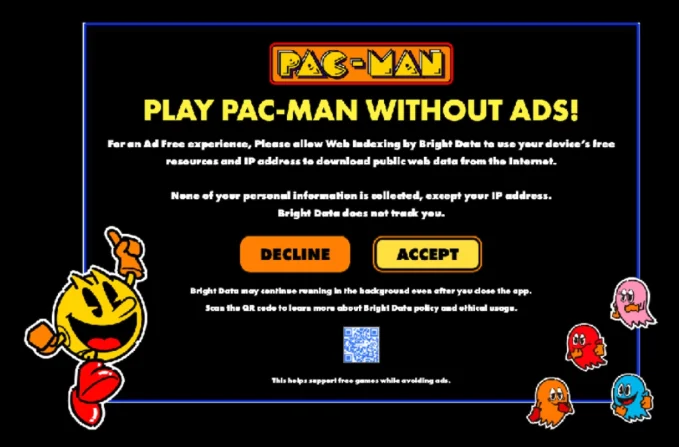
Spur’s report, published earlier this month, sent ripples through the smart device ecosystem. The security firm detailed how these residential proxy SDKs are bundled into a wide array of seemingly innocuous applications, ranging from casual games like Pac-Man to screensavers and essential file utilities. The core mechanism involves developers integrating these SDKs into their apps, which then, often with a one-time consent prompt that users may easily overlook or misunderstand, repurpose the user’s smart TV as an exit node for a commercial proxy network. This means that other internet users, often paying customers of proxy services, can route their online activities through the IP address of an unsuspecting TV owner, making it appear as if their traffic originates from that user’s home network.
The research painted a vivid picture of the scale of this practice. For LG’s webOS platform, the 42 percent figure translates to thousands of smart TVs potentially acting as part of a distributed proxy network. While the report also implicated Samsung’s Tizen OS with over 25 percent of its apps containing similar components, LG’s immediate and public response has placed it at the forefront of addressing this emerging threat to consumer privacy and device integrity. The image provided by Spur.us visually depicted this prevalence, illustrating the widespread nature of proxy SDKs across both major smart TV platforms.
Understanding Residential Proxy Networks and Their Implications
To grasp the gravity of LG’s decision, it’s crucial to understand what residential proxy networks are and why they pose a concern. A residential proxy utilizes a legitimate IP address assigned by an Internet Service Provider (ISP) to a residential user. Unlike datacenter proxies, which are easily identifiable and often blocked, residential proxies mimic regular user traffic, making them highly valuable for various online activities.
Proxy service providers, in turn, pay app developers to integrate these SDKs, effectively "renting" access to a pool of residential IP addresses. These IPs are then leased to paying customers for diverse purposes. While some uses are legitimate—such as market research, brand protection, ad verification, or accessing geo-restricted content for legal purposes—the nature of proxy networks also makes them attractive for illicit activities. These can include:
- Bypassing Security Measures: Evading anti-bot systems, CAPTCHAs, and geo-restrictions for unauthorized access.
- Credential Stuffing: Attempting to log into accounts using stolen username and password combinations.
- Ad Fraud: Generating fake clicks or impressions on advertisements.
- Spam and Phishing Campaigns: Masking the origin of malicious communications.
- Copyright Infringement: Illegally downloading or streaming content.
- DDoS Attacks: Launching distributed denial-of-service attacks, with individual residential IPs forming part of the attack infrastructure.
For the smart TV owner, the immediate implications can include increased bandwidth consumption, potentially slower internet speeds, and the unsettling reality that their home network is being used as a conduit for unknown third-party traffic. More critically, the user’s IP address could become associated with illicit activities, potentially leading to legal complications, unwarranted investigations, or blacklisting by online services. The lack of continuous transparency and control, as highlighted by Spur, means users are largely unaware of when and how their device is being utilized, or by whom.
LG’s Decisive Action and Policy Shift
Responding directly to the findings and questions posed by KrebsOnSecurity, LG Senior Vice President John Taylor issued a clear statement outlining the company’s stance and immediate action plan. "A residential proxy network is not an intended use for LG smart TVs, and LG Electronics is working with developers to remove the residential proxy option from their apps on the webOS platform," Taylor affirmed. He further added a stern warning: "If this option is not removed, these apps will be suspended."
This declaration signals a robust commitment from LG to purge its app store of these components. Taylor emphasized that the company is "well underway now" with its review of existing applications and is dedicated to preventing future occurrences. "As part of our ongoing efforts to enhance platform quality and the user experience, LG will continue to strengthen our evaluation process for developer-submitted apps, including those that incorporate residential proxy SDKs," he stated in his emailed communication. This proactive approach suggests LG is not merely reacting to the immediate scandal but is also implementing systemic changes to its app vetting and oversight mechanisms.
The Role of Proxy Providers and the Ethics of Consent
Spur’s report specifically identified Bright Data as accounting for a majority of the proxy SDKs found across both Samsung and LG smart TVs. In response to the scrutiny, Bright Data provided a statement to KrebsOnSecurity, asserting its commitment to ethical practices. "Every peer opts in through a dedicated screen and receives value in return; every customer is vetted, and our practices have now undergone a second independent audit by PwC," the statement read. Bright Data reiterated its dedication to an "open, transparent internet where legitimate businesses, researchers, and institutions can responsibly access data that lives in the public domain."

The company and other proxy providers mentioned in Spur’s report typically claim to adhere to rigorous "know-your-customer" (KYC) processes to validate the legitimacy of their clients’ use cases, often tied to data-scraping activities. They also state that they implement technological safeguards to prevent proxy service customers from interacting with or controlling other devices on the proxy user’s local network, addressing a critical security concern.
However, the ethical debate revolves around the nature of consent. Trevor Sutter of Spur critically argued that "A one-time consent prompt buried in a TV app is not a substitute for meaningful transparency, ongoing control, and platform oversight." He further highlighted the amplified risk when consent is given by individuals within a household, such as minors, who may not fully comprehend the implications of allowing their device to serve as a proxy node. This underscores a fundamental challenge in the smart device ecosystem: how to ensure genuine, informed consent when complex technical agreements are presented to a diverse user base, many of whom do not perceive their smart TV as a full-fledged computer with network implications.
Timeline of Key Events and Contextual Background
The chronology of events leading to LG’s announcement highlights the rapid response to critical security research:
- Early July 2026: Security firm Spur publishes its detailed research, exposing the widespread integration of residential proxy SDKs in smart TV applications across both LG’s webOS and Samsung’s Tizen OS platforms. The report specifically quantifies the prevalence, noting over 42% of LG apps and over 25% of Samsung apps contained these components.
- July 2, 2026: KrebsOnSecurity features Spur’s research, bringing the findings to a wider audience and pressing LG and other manufacturers for comments. This article specifically mentions the FBI’s seizure of the NetNut proxy platform and Popa botnet in a related context, underscoring the legal and security risks associated with such networks.
- Mid-July 2026: In response to inquiries regarding Spur’s research, LG Senior Vice President John Taylor issues a statement to KrebsOnSecurity, publicly declaring LG’s intention to work with developers to remove residential proxy options from their apps. He threatens suspension for non-compliant apps and commits to strengthening app evaluation processes.
- July 22, 2026: Bright Data, a prominent residential proxy network identified in Spur’s report, provides a statement to KrebsOnSecurity, defending its practices by emphasizing user consent, customer vetting, and independent audits.
- Ongoing: LG initiates its review and enforcement process, working with app developers to ensure compliance and removing non-conforming applications from its webOS store. This period also marks a broader industry discussion about smart device security and user privacy.
Broader Implications for Smart Device Security and User Privacy
The LG situation, while specific to its smart TVs, serves as a microcosm of broader challenges in the rapidly expanding Internet of Things (IoT) landscape. As more everyday devices—from refrigerators to smart speakers—become internet-connected, the potential for their misuse or monetization in ways opaque to the user grows. The blurring lines between consumer devices and commercial infrastructure raises fundamental questions about data ownership, privacy, and network security.
If residential proxy SDKs become normalized across various smart devices, the collective bandwidth of millions of homes could be silently siphoned off, impacting internet performance for legitimate uses. Furthermore, the sheer volume of devices and their often-lax security oversight present an attractive target for malicious actors seeking to build vast botnets or conduct large-scale cyberattacks by leveraging seemingly legitimate residential IP addresses. This scenario would significantly complicate cybercrime investigations, as the true origin of malicious traffic would be obscured behind innocent user devices.
The incident also highlights the need for robust app store governance. While app stores for smartphones have evolved over years to implement stricter security and privacy checks, the smart TV and broader IoT app ecosystems are still maturing. This case underscores the necessity for platforms to not only review apps for functionality but also for their underlying components and potential privacy implications, particularly when third-party SDKs are involved.
Past Controversies and LG’s Reputation
This incident is not an isolated one in LG’s recent history regarding questionable third-party integrations. Earlier this week, the popular YouTube channel Gamers Nexus exposed another contentious partnership involving LG. Their investigation revealed that certain high-end LG LCD monitors automatically install an application promoting paid McAfee antivirus subscriptions. Disturbingly, this app reportedly arrived through Windows Update without an explicit approval prompt from the user.
The McAfee software issue, much like the residential proxy SDKs, points to a pattern where LG devices, or their associated software ecosystems, are being leveraged to push third-party services, sometimes without clear user consent or an easy opt-out mechanism. These instances cumulatively raise questions about LG’s oversight of its supply chain and software partnerships, and its overall commitment to prioritizing user experience and privacy over potential monetization opportunities from third-party vendors. For consumers, such revelations erode trust in the security and integrity of their purchased devices, whether a smart TV or a high-end monitor.
Looking Ahead: Enhancing Trust in Smart Ecosystems
LG’s commitment to removing residential proxy SDKs from its webOS platform is a welcome and necessary step. However, the broader challenge remains for the entire smart device industry. Moving forward, there is a clear need for:
- Enhanced Transparency: Clearer, more prominent disclosures about how user data and network resources are utilized by installed applications, especially those integrating third-party SDKs.
- Robust Consent Mechanisms: Moving beyond buried, one-time prompts to offer ongoing control, easy revocation of consent, and age-appropriate consent protocols.
- Stricter Platform Oversight: Regular, rigorous audits of app stores to identify and remove applications that engage in practices detrimental to user privacy or device integrity.
- Industry-Wide Best Practices: Collaboration among device manufacturers, platform providers, and app developers to establish and adhere to ethical guidelines for monetization and data handling.
- Consumer Education: Empowering users with the knowledge to understand potential risks, scrutinize app permissions, and manage their device settings effectively.
Ultimately, the long-term success of the smart home ecosystem hinges on consumer trust. Incidents like the residential proxy controversy serve as critical reminders that innovation must be tempered with a steadfast commitment to user privacy, security, and transparent operation. As smart devices become increasingly integrated into daily life, the industry must ensure that convenience does not come at the cost of control and peace of mind for its users.