Google Cloud Named a Leader and Secures Highest Score in Current Offering Category in The Forrester Wave Public Cloud Platforms Q3 2026 Report

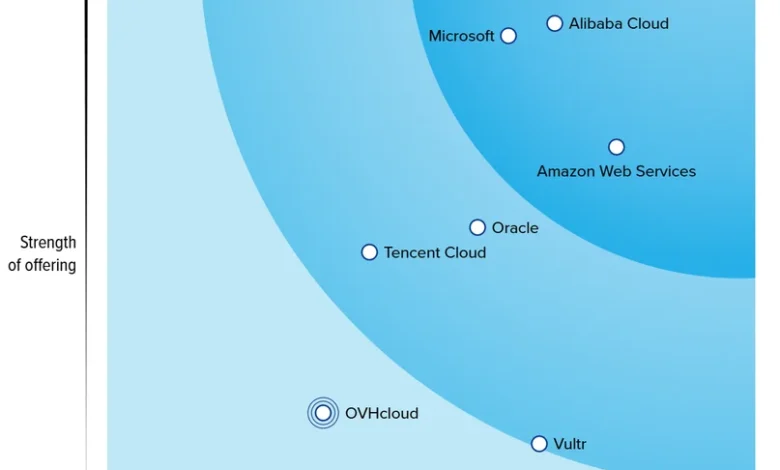
Google Cloud has achieved a significant milestone in the enterprise technology sector, being named a Leader and securing the highest score in the "current offering" category in The Forrester Wave: Public Cloud Platforms, Q3 2026 report. The comprehensive evaluation assesses the ten most significant public cloud providers in the global market, measuring their capabilities across 30 rigorous criteria. According to the published findings, Google Cloud distinguished itself by earning the highest possible score in 23 of the 30 evaluated categories. These top-tier marks span a broad spectrum of critical technological domains, including overarching corporate vision, innovation capacity, artificial intelligence development services, database and analytics capabilities, container and Kubernetes orchestration, modernization tools, and advanced security services.
Industry analysts view this recognition as validation of a multi-year strategy focused on tight integration across the technology stack. In the rapidly evolving landscape of autonomous systems and enterprise intelligence—frequently characterized as the "agentic era"—technology leaders argue that fragmented infrastructure is no longer viable. Instead, organizations require holistic platforms engineered from the silicon layer up to complex machine learning models.
Chronology and Evolution of Co-Designed Infrastructure
The foundation of Google Cloud’s recent market standing is decades in the making, born out of necessity rather than mere market acquisition. For more than ten years, the company’s infrastructure engineers, application developers, and artificial intelligence researchers have operated in close collaboration. This co-design philosophy was initially driven by the massive internal scale required to power consumer-facing products utilized by billions worldwide, including Search, YouTube, Maps, and Gmail.
Faced with computational challenges that commercial off-the-shelf hardware could not resolve, Google pioneered proprietary computing architectures. This journey includes the development of Tensor Processing Units (TPUs), foundational contributions to the Transformer neural network architecture that underpins modern generative AI, the creation of Kubernetes for container orchestration, the rollout of custom Axion processors, and the continuous evolution of the Gemini model family.
Over the past three years, this vertically integrated approach has been aggressively commercialized for external enterprises, startups, and advanced AI research laboratories. The strategic intent has been to deliver predictable scale, low-latency performance, and operational efficiency to organizations seeking to deploy complex workloads without managing the underlying hardware complexities.
Evaluation Highlights and Expert Analysis
The Forrester Wave report provides granular insights into the competitive positioning of major cloud providers, highlighting Google Cloud’s alignment with emerging business needs. The report notes that Google Cloud’s strategic vision centers on enabling the "agentic enterprise," where artificial intelligence is not merely an add-on feature but an intrinsic property permeating the entire platform architecture.
According to the research firm, this deep integration positions Google Cloud advantageously to reach business users and line-of-sight executives who increasingly drive technology adoption decisions within modern enterprises. The report explicitly identifies Google Cloud as a strong fit for organizations pursuing rapid technological innovation alongside a comprehensive, AI-enabled cloud infrastructure.

Furthermore, Forrester’s evaluation awarded Google Cloud maximum scores in technical domains such as Container and Kubernetes services, Serverless and Function-as-a-Service (FaaS) offerings, and operations management. Analysts observed robust execution in containerization and operations management, noting an absence of significant capability gaps in these critical areas. This operational maturity allows enterprises to run modern microservices, transactional databases, and real-time Large Language Model (LLM) inference on a unified, proven foundation rather than maintaining isolated, greenfield environments exclusively for artificial intelligence initiatives.
Unifying the Data Estate for Autonomous Workloads
A central challenge highlighted in the Q3 2026 report is the traditional architectural divide between operational databases and analytical systems. Historically, enterprises relied on fragmented, multi-hop data pipelines that separated transaction processing from business intelligence. In an operational paradigm driven by autonomous agents, this structural separation introduces severe friction, resulting in multi-hop latency, stale contextual information, and governance bottlenecks.
To address these limitations, Google Cloud has advanced its Agentic Data Cloud framework, designed to transform static data repositories into dynamic reasoning systems. By unifying transaction processing and analytical intelligence into a coherent system of action, the platform delivers the real-time context and deterministic responsiveness required by autonomous workflows.
The Forrester evaluation reflected this technical achievement, awarding Google Cloud the maximum score of 5 out of 5 across Database services, Analytics services, Data integration services, and Data Governance services. The report specifically noted that Google Cloud’s traditional strengths in database technology and analytics drive robust performance, bolstered by comprehensive multicloud and hybrid capabilities that bridge transactional and analytical domains seamlessly.
Broader Market Implications and Future Outlook
The recognition of Google Cloud as a Leader in the Q3 2026 Forrester Wave report underscores a broader transition within the global enterprise software market. The era of assembling disparate cloud services from multiple vendors with minimal native integration is yielding to demand for unified, full-stack ecosystems.
For enterprise leadership, the implications of these technological shifts are manifold. Organizations ranging from global financial institutions processing trillions of dollars in daily transactions to life sciences laboratories analyzing massive genomic datasets require infrastructure capable of delivering absolute reliability, stringent security, and extreme computational scale. By providing a platform where autonomous agents can operate securely alongside traditional transactional workloads, cloud providers are redefining the baseline requirements for digital transformation.
As artificial intelligence adoption moves past initial experimentation into deeply embedded operational workflows, the ability to ground agents in real-time enterprise data while maintaining strict governance will determine market leaders. Google Cloud’s sweeping scores across vision, execution, security, and data management suggest that its co-designed infrastructure model has established a new benchmark for what enterprises should expect from a public cloud platform.