Justin Sun Launches Million-Dollar Mathematical Bounty to Define the AI Era of Scientific Discovery

Geneva, Switzerland — September 16, 2026 — The Office of Justin Sun has officially inaugurated the Justin Sun Prize, a decentralized, zero-trust academic bounty mechanism designed to accelerate fundamental scientific breakthroughs. By leveraging machine formal verification and an immutable, blockchain-based prize distribution system, the initiative seeks to bridge the gap between human intuition and artificial intelligence, offering rewards of up to US$1 million for the resolution of historically significant mathematical problems.
This announcement marks a departure from traditional academic award structures, which often rely on peer-review cycles, institutional prestige, and multi-year judging processes. Instead, the Justin Sun Prize establishes a permanent "problem list," where the sole criterion for victory is a rigorous, machine-verifiable proof.
The Inaugural Breakthrough: Solving the Navier-Stokes Equation
In a historic milestone for computational mathematics, the first recipient of the $1 million top prize is the OpenAI research team. The award recognizes their successful resolution and formalized proof of the "Existence and Smoothness of the Three-Dimensional Navier-Stokes Equations."
The Navier-Stokes equations, which underpin the physics of fluid motion, have remained one of the most formidable challenges in mathematics for nearly two centuries. Formulated in the 19th century by Claude-Louis Navier and George Gabriel Stokes, the equations serve as the foundation for modern aerodynamics, meteorology, and oceanography. However, proving that smooth solutions always exist for these equations in three dimensions has been a "Millennium Prize Problem" since 2000, when the Clay Mathematics Institute first offered a $1 million reward for a solution.
According to technical documentation released by OpenAI, the proof was generated through an internal advanced model, while the complex task of formalization and verification—ensuring the proof is logically sound according to computer-readable syntax—was executed by GPT-6 Astra. This achievement represents a fundamental shift in scientific research, demonstrating that artificial intelligence, when paired with formal verification, can overcome obstacles that have stumped human mathematicians for generations.
Mechanics of the Prize: A Decentralized Academic Standard
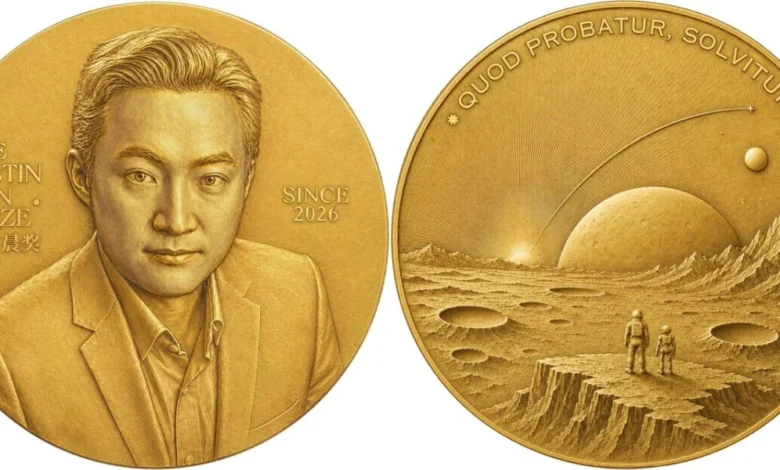
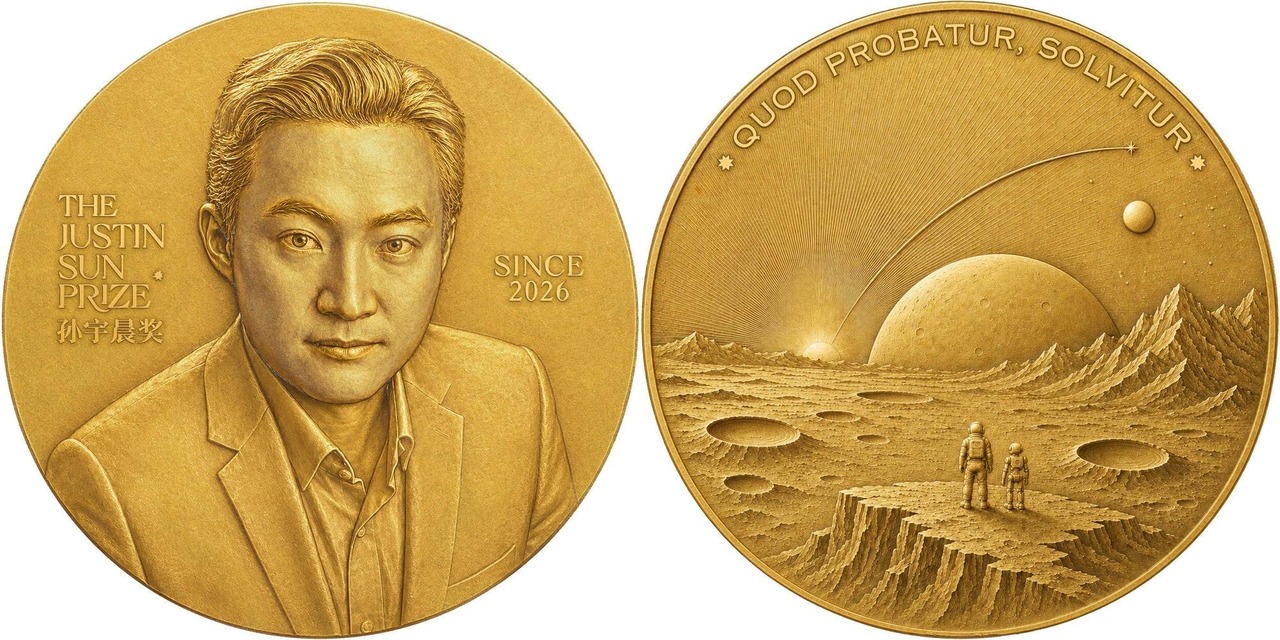
The Justin Sun Prize operates under a "zero-trust" architecture, removing the human-centric biases inherent in traditional academic nominations. The system is designed around the Latin motto inscribed on the prize medal: "Quod probatur, solvitur," or "Proved, then paid."
Key operational pillars of the initiative include:
- The Immutable Problem List: Once a problem is added to the repository, it remains there permanently. The list is open-ended, allowing for the inclusion of new challenges, but prohibits the removal of existing ones.
- Formal Verification: Every submission must be accompanied by code that can be verified by machine-logic systems. This eliminates the need for subjective committee approval.
- Blockchain-Integrated Payouts: Winners receive their funds in USDT (TRC-20) or USDC (ERC-20), ensuring that the transaction is recorded on-chain for permanent transparency and auditability.
- Agnostic Eligibility: The prize makes no distinction between human researchers, collaborative teams, or AI agents. Any entity capable of providing a verified proof is eligible to claim the reward.
Expanding the Frontier: Future Challenges
The current repository of problems targeted by the Justin Sun Prize includes some of the most famous unsolved questions in history. Beyond the Navier-Stokes equations, the list features the Riemann Hypothesis—the Holy Grail of number theory—and the Poincaré Conjecture. Furthermore, the initiative honors the legacy of the late Paul Erdős, the prolific Hungarian mathematician, by including a vast array of unsolved problems he proposed during his lifetime.
By formalizing these challenges, the Office of Justin Sun aims to build a global, public-access library of mathematical knowledge. All submissions, verification materials, and proof codes are hosted on GitHub, ensuring that the scientific community at large can scrutinize and build upon the work.
Implications for AI and Scientific Funding
The launch of this prize signifies a broader trend in the transition of scientific research toward "Machine-Assisted Discovery." In an era where AI models are increasingly capable of complex reasoning, the bottleneck to scientific progress is often no longer the generation of ideas, but the verification of their validity. By incentivizing the development of "formalized" proofs—proofs that computers can understand and confirm—the Justin Sun Prize encourages researchers to focus on rigor.
Analysts suggest that this model could drastically shorten the time it takes for fundamental breakthroughs to reach the public domain. Traditional publication processes can take years, whereas the Justin Sun Prize operates on a "first-to-verify" basis, incentivizing immediate publication and open-source collaboration.
A Commitment to Mathematical Philanthropy
Justin Sun, a prominent figure in the digital asset space and the founder of the TRON network, has framed this initiative as a "return to roots." Having built a global career on the back of mathematical and cryptographic infrastructure, Sun stated, "An award named after a person is the least political thing in the world. My wealth is rooted in mathematics. It came from mathematics, and it will return to mathematics."
To date, Sun has contributed over $45 million to various philanthropic endeavors, spanning disaster relief, environmental protection, and scientific research. The Justin Sun Prize is now expected to become the cornerstone of his long-term philanthropic strategy.
Institutional Background and Context
The Office of Justin Sun oversees a diverse portfolio of interests, including blockchain technology, space exploration, and AI. As a former diplomat for Grenada to the World Trade Organization, Sun has positioned himself at the intersection of international policy and digital asset innovation. His recent activities, including his 2025 spaceflight on the Blue Origin NS-34 mission, reflect an ongoing interest in the frontiers of human endeavor.
The prize is managed with an emphasis on three core principles:
- Openness: Removing barriers based on geography, institutional affiliation, or academic pedigree.
- Public Benefit: Funds are strictly allocated for rewards and the maintenance of the open-source repository, with no profit-seeking motive.
- Open Source: All materials are made available to the public to prevent the privatization of critical mathematical insights.
Looking Ahead
The impact of the Justin Sun Prize will likely be measured by the rate at which long-standing conjectures are cleared from the "problem list." By providing a tangible, high-value financial incentive, the project is expected to draw interest from both academia and the private sector, potentially accelerating the development of specialized AI agents designed for mathematical proof-checking.
As the scientific community digests the implications of the OpenAI team’s victory, the focus now turns to the next set of challenges. With the Riemann Hypothesis and Goldbach’s Conjecture still listed, the prize may serve as the catalyst for the next century of mathematical discovery.
For researchers and organizations interested in participating, the full repository of problems, the technical standards for formal verification, and the rules of engagement are available on the official project portal at www.hejustinsun.com/prize. As the world moves further into the "AI Era," the Justin Sun Prize stands as a bold experiment in merging the rigor of ancient mathematics with the speed of modern machine intelligence.
Related posts: