Microsoft Strategic Shift Toward In-House MAI Models Signals New Era of Cost Efficiency and Enterprise Sovereignty in Artificial Intelligence

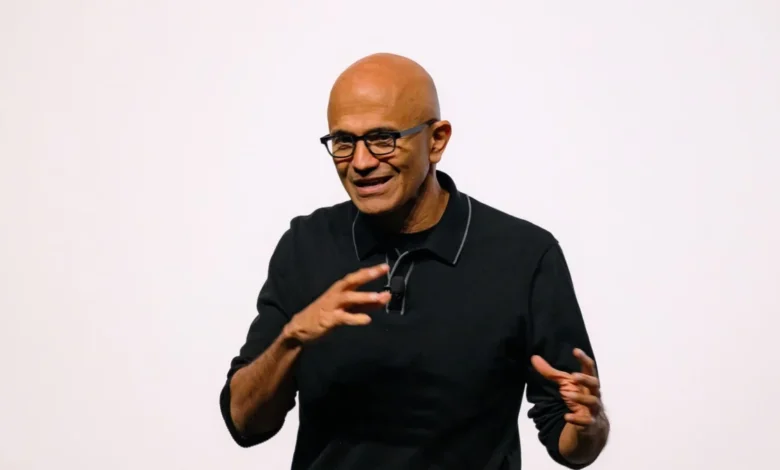
Microsoft Chief Executive Officer Satya Nadella has officially announced an aggressive expansion of the company’s internal MAI model range, a strategic pivot designed to provide enterprise customers with lower-cost artificial intelligence options while reducing the industry’s burgeoning reliance on expensive, high-resource "frontier" models. This initiative, detailed in a comprehensive strategic outline released on July 23, 2024, marks a significant departure from the "one-size-fits-all" approach that has dominated the generative AI landscape since the debut of GPT-4. By emphasizing what Nadella terms "Frontier Diffusion and Control," Microsoft is positioning itself to lead a secondary wave of AI adoption focused on economic sustainability, model independence, and domain-specific optimization.
The expansion of the MAI model family—first unveiled in June—represents a concerted effort to address the "bill shock" many enterprises are currently experiencing as they scale AI proof-of-concepts into full production environments. These in-house models are meticulously engineered for specific enterprise workflows, spanning critical functional areas such as high-fidelity image and voice generation, automated audio transcription, and sophisticated code synthesis. Unlike the massive, general-purpose models developed by partners like OpenAI, the MAI range is built from the ground up with clean data lineage and optimized for "learning transfer," allowing them to move from generalist capabilities to specialized skills within unique enterprise Reinforcement Learning Environments (RLEs).
The Economic Imperative: Addressing the Rising Cost of Intelligence
The shift toward smaller, more efficient models comes at a critical juncture for the technology sector. Over the last six months, industry analysts and Chief Financial Officers have expressed mounting concern over the spiraling costs associated with large-scale AI deployment. The emergence of "tokenmaxxing"—a practice where users or automated agents maximize the use of context windows to improve output quality—has led to a dramatic surge in consumption-based billing. For many organizations, the shift from predictable software-as-a-service (SaaS) subscriptions to variable, token-based pricing has created budgetary volatility that threatens long-term AI integration.
In his strategic commentary, Nadella addressed this fiscal reality directly, noting that for the first time in the history of the digital economy, software carries a significant marginal cost. "In a world where software has real marginal cost for the first time, how do we ensure frontier benefits are diffused across the entire ecosystem?" he wrote. His proposed solution lies in optimizing the "cost-to-outcome frontier" within real-world contexts. This involves a rigorous framework where enterprises utilize the "right model for each task," rather than defaulting to the most powerful and expensive model available. By optimizing the context, skills, tools, and "agent harness" around specific tasks, Microsoft aims to deliver what it calls "frontier capabilities" in a bespoke, cost-effective capacity.
Technical Architecture and the Shift Toward Model Independence
The MAI models are not intended to replace frontier models like OpenAI’s GPT-4o or Anthropic’s Claude 3.5 Sonnet entirely; rather, they are designed to function as specialized components within a broader "orchestration system." This system allows for "model independence," where a task can be routed to the most efficient model based on the required complexity. For instance, a simple email summarization task might be handled by a lightweight MAI model, while a complex strategic analysis requiring deep reasoning might still be escalated to a frontier model.
Nadella highlighted that internal testing has already yielded "promising early results." Microsoft has successfully piloted these models within GitHub Copilot, Outlook, and various Microsoft 365 services. In many instances, the MAI models have been found to outperform general-purpose frontier models in specific use cases while utilizing only a fraction of the tokens. This efficiency is attributed to the specialized training sets and the "clean data lineage" used to develop the MAI range, which reduces the computational overhead required to filter out irrelevant general knowledge during task execution.
The company plans to extend this approach to Copilot Chat, PowerPoint, and other core productivity services in the coming months. To facilitate this transition for its customers, Microsoft is encouraging enterprises to implement "product-specific evaluations" (evals). These processes allow organizations to refine their AI implementations until they reach a precise quality-cost target, essentially giving them a "direct hill to climb" in terms of optimization.
The Reverse Information Paradox and Data Sovereignty
A central pillar of Nadella’s new strategy is the concept of the "reverse information paradox." In mid-July, the Microsoft CEO began warning about the long-term risks of over-reliance on a small handful of frontier AI labs. He argued that under current models, enterprises are essentially "paying twice" for AI services: first through direct subscription or consumption fees, and second by handing over vast amounts of proprietary data and "learning" to the model providers.
This dynamic creates an economic imbalance where the providers of AI infrastructure gain valuable insights into their customers’ internal processes, products, and proprietary knowledge. This data can then be used to refine the provider’s own models, potentially leading to the creation of competing products. Nadella cautioned that if "learning flows in only one direction," economic value will inevitably converge toward the owners of the infrastructure rather than the creators of the knowledge.
To counter this, Microsoft’s Frontier Diffusion strategy emphasizes the distribution of learning infrastructure to every firm. By using in-house MAI models that can be fine-tuned locally or within a private cloud instance, companies can control their own "learning loop." This ensures that the unique knowledge and intellectual property generated through AI use remain the property of the enterprise, rather than becoming "training fodder" for the next generation of general-purpose models.
Chronology of Microsoft’s Strategic Pivot
The path to the MAI expansion has been marked by several key milestones that illustrate Microsoft’s evolving stance on AI partnerships and internal development:
- The OpenAI Foundation (2019–2023): Microsoft established a multi-billion dollar partnership with OpenAI, integrating GPT models across its entire stack. During this period, Microsoft was largely seen as a distribution channel for OpenAI’s frontier research.
- The Rise of Small Language Models (Early 2024): Microsoft introduced the "Phi" family of small language models (SLMs), demonstrating that high-quality performance could be achieved with significantly fewer parameters.
- The Multi-Model Deal with Anthropic (July 2024): In a move that signaled a desire for greater flexibility, Microsoft struck a deal to bring Anthropic’s Claude models to the Azure platform, providing customers with an alternative to OpenAI.
- The MAI Unveiling (June 2024): Microsoft officially introduced the MAI models as specialized, in-house alternatives designed for enterprise efficiency.
- The Frontier Diffusion Manifesto (July 23, 2024): Satya Nadella’s blog post codified the shift toward a diversified, cost-conscious, and sovereign AI strategy.
Industry Context and Analyst Reactions
The strategic shift at Microsoft aligns closely with recent research from Gartner and other leading consultancies regarding the sustainability of AI investment. Gartner recently informed ITPro that enterprises should establish a "use-case-driven decision" framework to combat surging AI costs. The consultancy warned that if current spending trends continue, AI-related expenses could exceed developer salaries in some organizations by 2028.
Analysts suggest that Microsoft’s move is a preemptive strike against a potential "AI winter" or a cooling of enterprise enthusiasm due to high costs. By providing a path to lower-cost implementation, Microsoft is attempting to ensure that AI remains a permanent fixture of the corporate budget rather than a luxury experiment. Furthermore, by championing model independence, Microsoft is hedging its bets. While its relationship with OpenAI remains deep, the expansion of MAI models gives Microsoft leverage and protects it from potential disruptions within its partner labs.
The broader implications for the AI ecosystem are profound. If the world’s largest software company is signaling a move away from the "bigger is better" philosophy of frontier models, it may spark a wider industry trend toward specialized, efficient, and private AI. For OpenAI and Anthropic, this represents a transition from being the "exclusive engines" of AI to becoming part of a more complex and competitive "orchestration layer."
Future Outlook: The Road to 2026
Looking ahead, Microsoft’s strategy suggests a future where the value of AI is measured not by the size of the model, but by the precision of the outcome relative to the cost. The company’s "Future Focus 2026" roadmap indicates that AI investment will increasingly shift toward security, private data integration, and specialized agentic workflows.
As enterprises begin to adopt the MAI range, the industry will be watching closely to see if these models can truly match the performance of frontier giants in specialized tasks. If successful, Microsoft’s "Frontier Diffusion" could redefine the economic landscape of the digital age, making high-performance intelligence a commodity that is accessible, affordable, and, most importantly, under the control of the organizations that create the knowledge. The move underscores a fundamental truth in the evolving AI era: while the frontier represents the limit of what is possible, it is the diffusion of that power into efficient, specialized tools that will ultimately drive global productivity.