Noble FoKus Amadeus Review: Redefining High-Fidelity Audio in the Wireless Earbud Market

The landscape of consumer audio technology has long been dominated by household names like Bose, Sony, and Sennheiser, which prioritize active noise cancellation (ANC) and ecosystem integration. However, a significant shift is occurring as audiophile-grade manufacturers move into the wireless space. Noble Audio, a boutique brand historically revered for its high-end In-Ear Monitors (IEMs), has officially entered the fray with the FoKus Amadeus. Priced at $320, the Amadeus is positioned as a direct competitor to flagship offerings such as the Bose QuietComfort Ultra Gen II and the Sony WF-1000XM6, yet it operates on a fundamentally different design philosophy that emphasizes acoustic performance over mass-market convenience features.

A Departure from Conventional Industrial Design
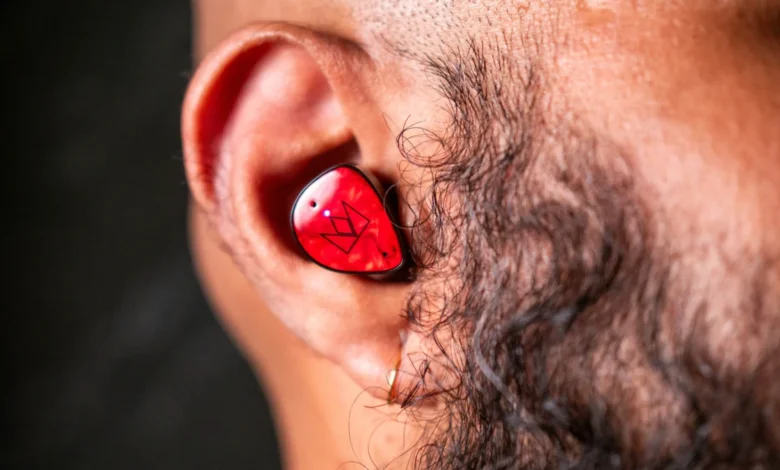
In an era where most true wireless earbuds strive for invisibility through compact, neutral-colored housings, the Noble FoKus Amadeus takes a bold aesthetic stance. The striking red finish is not merely a stylistic choice; according to the manufacturer, it is an intentional homage to the iconic tailcoat of Wolfgang Amadeus Mozart, from whom the product derives its name.
The physical construction of the earbuds is substantially larger than industry standards. While this unconventional size allows for more complex internal driver configurations, it also results in the units protruding further from the ear canal. Despite the visual profile, testing indicates that the 7g weight per earbud is well-distributed, ensuring that comfort is maintained during extended listening sessions. Unlike many of its competitors, the Amadeus lacks an official ingress protection (IP) rating, suggesting that the product is intended for stationary or office use rather than rigorous athletic environments or exposure to inclement weather. The accompanying charging case mirrors this design-forward approach, opting for a square, robust form factor that prioritizes structural integrity over pocket-friendly minimalism.

Technical Specifications and Connectivity Standards
Beneath the exterior, the FoKus Amadeus is equipped with the Qualcomm QCC3091 chipset, which serves as the backbone for its wireless capabilities. This modem facilitates Bluetooth 5.4, providing a stable connection across multiple platforms. The inclusion of a wide array of codecs—SBC, AAC, LDAC, and AptX Adaptive—ensures that the device is compatible with a broad range of high-resolution audio sources, catering to both Android users and high-fidelity enthusiasts who utilize lossless streaming services.
Connectivity testing across diverse hardware, including the Pixel 11 Pro XL, Oppo Find X9 Ultra, and the M4-powered iPad Pro, confirms robust multipoint pairing capabilities. The transition between devices is seamless, a critical requirement for modern professional users who rely on integrated workflows. Furthermore, the implementation of ANC is highly effective; while Noble Audio is primarily known for acoustic engineering, the integrated noise-canceling software demonstrates a sophisticated ability to attenuate ambient environmental frequencies, rivaling the performance of more established consumer electronics giants.

The Science of Sound: Driver Architecture and Customization
The core value proposition of the FoKus Amadeus lies in its 8.3mm dynamic driver configuration. Unlike mass-market earbuds that often employ heavy digital signal processing (DSP) to simulate a "V-shaped" sound profile—characterized by boosted bass and sharp treble—the Amadeus is tuned for musicality and spatial accuracy.
The resulting sound signature offers a nuanced bass response that remains controlled, alongside mids that provide vocal clarity without the recessed quality often found in lower-tier wireless audio products. The soundstage is notably wide, providing a sense of spatial depth that is largely unprecedented in the true wireless category.

To address individual differences in human hearing, Noble Audio has integrated Audiodo technology. This system utilizes a three-minute auditory test to generate a personalized EQ profile, effectively calibrating the output to the listener’s specific frequency sensitivity. This feature, when combined with a manual 10-band equalizer within the Noble FoKus app, allows for a granular level of control that exceeds the typical functionality provided by consumer-facing applications from brands like Sony or Samsung.
Battery Longevity and Charging Efficiency
For high-performance audio devices, power management is frequently a point of failure due to the energy demands of high-quality DACs (Digital-to-Analog Converters) and amplifiers. The Amadeus manages a respectable eight hours of continuous playback per charge, supported by 65mAh batteries within each bud.

The charging case, which houses a 500mAh battery, provides an additional 2.5 charge cycles, totaling approximately 40 hours of operation before needing a wall outlet. The inclusion of fast-charging technology allows for a 10-minute charge to yield two hours of playback, a necessary feature for users who rely on these devices for daily commuting or international travel. A full charge cycle is completed in approximately 90 minutes, consistent with current industry benchmarks for premium TWS (True Wireless Stereo) products.
Market Implications and Competitive Positioning
The release of the FoKus Amadeus represents a wider trend in the audio market: the "premiumization" of wireless hardware. For years, the gap between consumer-grade earbuds and professional IEMs was vast, with audiophiles forced to sacrifice either sound quality for wireless freedom or vice-versa.

At the $320 price point, the Amadeus occupies a high-stakes bracket. While it lacks some of the lifestyle-oriented features found in the Bose or Sony equivalents—such as specialized spatial audio modes or extensive health-tracking sensors—it compensates with an uncompromised focus on acoustic reproduction. The implications for the industry are clear: manufacturers can no longer rely solely on brand loyalty or basic feature sets. As consumers become more discerning regarding audio fidelity, the demand for "audiophile wireless" is expected to grow.
Strategic Summary for Prospective Buyers
The decision to purchase the Noble FoKus Amadeus hinges on a consumer’s specific priorities. For users who view earbuds as an essential accessory for exercise or who prioritize extreme portability, the lack of an IP rating and the larger shell size may be deterrents. However, for the listener who prioritizes the nuances of a recording, the dynamic range of the drivers, and the ability to tailor a sound profile to their own biological hearing, the Amadeus offers a significant upgrade over traditional flagship models.

The success of this product hinges on whether the market is ready to accept a "boutique" approach to a commodity product. By bridging the gap between professional-grade IEMs and wireless convenience, Noble Audio has demonstrated that the technical limitations previously associated with Bluetooth audio are no longer insurmountable. As the company continues to refine its app interface and hardware durability, the FoKus Amadeus stands as a testament to the fact that, in the realm of high-end audio, engineering precision and bold design continue to be the primary drivers of consumer interest. Whether this leads to a broader shift among major competitors remains to be seen, but for now, the Amadeus serves as a high-water mark for what is currently achievable in wireless personal audio.