Noise Secures $5.5M Seed Funding to Democratize Influencer Marketing Through Everyday Content Creators

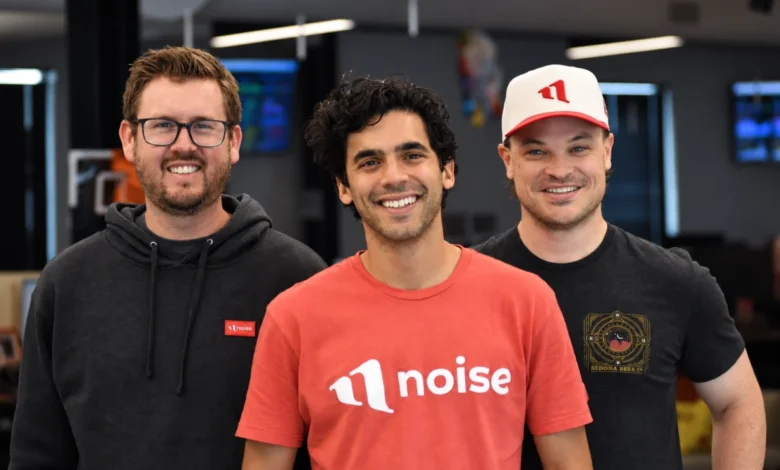
The landscape of digital marketing is undergoing a seismic shift as platforms emerge to bridge the gap between enterprise brands and everyday consumers. Leading this charge is Noise, an innovative marketing platform that connects companies with everyday content creators, offering a cost-effective alternative to traditional influencer partnerships and conventional advertising campaigns. On Wednesday, the startup announced a successful $5.5 million seed funding round led by Capital Midwest, M25, and Grishin Robotics, with additional participation from Capitalize VC and prominent tech operators, including veterans from DoorDash. This latest injection of capital brings Noise’s total fundraising to $7.2 million, positioning the young company for rapid scaling, product expansion, and strategic hiring.
The Rise of Everyday Influencers
Noise operates on a distinctly inclusive premise: anyone with a smartphone can download the application and become a creator, regardless of their current follower count. While legacy influencer marketing often demands steep flat fees for creators boasting hundreds of thousands or millions of followers, Noise introduces a performance-based model. Creators browse available campaigns, produce content tailored for platforms like TikTok, Instagram, Facebook, and YouTube, and receive compensation based on the actual views their content generates.
For brands, the value proposition lies in operational efficiency and massive scalability. Companies submit their content briefs and budgetary parameters directly into the Noise platform. The software then automates the heavy lifting, allowing brands to bypass the labor-intensive processes of individually sourcing creators, negotiating contracts, managing fragmented client relationships, and executing manual payouts. Consequently, businesses can deploy and manage marketing campaigns simultaneously across thousands of independent creators on complete autopilot.
A Natural Evolution from Playbite
The genesis of Noise traces back to the entrepreneurial journey of its co-founders, Diego Kafie, Stu Feldt, and Nic Weber. Prior to launching Noise in 2025, the trio spent two years developing and scaling a mobile gaming application called Playbite. During their tenure with Playbite, the founders experimented with numerous creative marketing strategies in an effort to acquire users efficiently without depleting their venture capital runway.
In their search for scalable growth, the founders began recruiting everyday gamers, teaching them the fundamentals of social media content creation to promote the mobile application. What started as a modest test group of five people quickly expanded to 10, 25, 100, and eventually thousands of participants. As this decentralized army of amateur creators posted engaging daily content across platforms like TikTok, Playbite’s app installs skyrocketed.
Crucially, Kafie and his co-founders realized that this organic, grassroots approach achieved exponential reach at a fraction of the cost associated with traditional marketing playbooks. Engaging established macro-influencers with massive clout proved financially prohibitive for a scrappy startup budget. By teaching ordinary individuals how to produce effective promotional content from scratch, the founders unlocked a repeatable growth engine—and the foundational concept for Noise was born.
Democratizing the Creator Economy
Noise enters the market at a time when the broader creator economy is expanding rapidly, yet becoming increasingly saturated and difficult to break into. Recent industry studies indicate that more than 57% of Generation Z and over 40% of U.S. adults aspire to become influencers. However, the high barriers to entry, algorithm shifts, and financial risks often deter prospective creators.
Noise aims to alleviate these pressures by offering built-in educational infrastructure. When a user first registers on the platform, they complete specialized creator training modules designed to teach the mechanics of effective brand storytelling. New creators are initially granted access to select campaigns, but as they successfully complete assignments and hone their craft, they unlock higher-tier, more lucrative opportunities.
According to Kafie, top-performing creators on the Noise platform currently earn upwards of six figures annually. The platform generates revenue by taking a percentage fee from the budgets allocated by brands once targeted views are successfully delivered.
“By democratizing becoming a creator to literally anyone with a smartphone, we’re bringing costs down for brands, but enabling millions of people to make their first dollar on the internet,” Kafie stated.
Expanding Capabilities: The Organic-to-Ads Initiative
With the infusion of $5.5 million in seed capital, Noise plans to aggressively scale its operations. A primary focus of the new funding will be dedicated to expanding product capabilities and recruiting top-tier engineering and operational talent.
Simultaneously, the startup has officially rolled out its Organic-to-Ads program. This feature bridges the gap between organic social media content and paid performance marketing. Through the program, brands can take high-performing videos generated by Noise creators and deploy them as paid advertisements across platforms like Meta and TikTok, augmenting the creators’ original organic posts.
“The creators still post to platforms,” Kafie explained. “But in addition, the brands can now put paid ad spend behind those creatives to reach even more people.”
Addressing Industry Criticisms and Operational Mechanics
As platforms connecting brands with micro-creators scale, industry observers frequently raise questions regarding fair compensation and potential labor exploitation. Addressing concerns that platforms of this nature might underpay creators compared to direct brand deals, Kafie defended the marketplace mechanics. He emphasized that brands establish their own campaign rates, and creators maintain absolute autonomy to accept or decline offers based on their personal valuation of the work. Furthermore, he reiterated that Noise’s core mission is not to poach established influencers, but to cultivate and empower everyday individuals who are entirely new to the creator ecosystem.
Currently, Noise’s primary customer base consists of mobile application developers and early-stage companies operating under constrained marketing budgets. These entities are particularly drawn to influencer-led strategies but often lack the capital to execute traditional agency-led campaigns. By leveraging Noise, these brands can recruit a distributed network of enthusiastic users who act as brand advocates.
Looking forward, Noise has set its sights on expanding its market share to accommodate companies of all sizes, from agile startups to major global enterprises.
“They are the most interested in reaching a really wide range of potential customers, making them the prime users for something like Noise, where they can easily recruit a small army of people to become their biggest users and advocates,” Kafie noted. “This gives brands an unprecedented level of content diversity and reach at a fraction of the cost of other traditional marketing playbooks.”
Implications for the Future of Digital Advertising
The success of Noise’s funding round highlights a broader maturation within the digital advertising sector. Traditional banner ads and high-production commercials are increasingly yielding lower engagement rates, particularly among younger demographics who favor authentic, user-generated content (UGC). Platforms like Noise, alongside competitors such as Billo and JoinBrands, capitalize on this consumer preference for peer recommendations.
By converting everyday consumers into micro-producers, Noise not only reduces customer acquisition costs for brands but also redefines the socioeconomic boundaries of the digital creator economy. As the platform continues to scale past its current milestone of 1.5 million registered creators, its trajectory will serve as a significant bellwether for the future viability of automated, performance-based influencer marketing.
Related posts: