OpenAI and other defendants push back against Apple in high-stakes trade secret misappropriation lawsuit

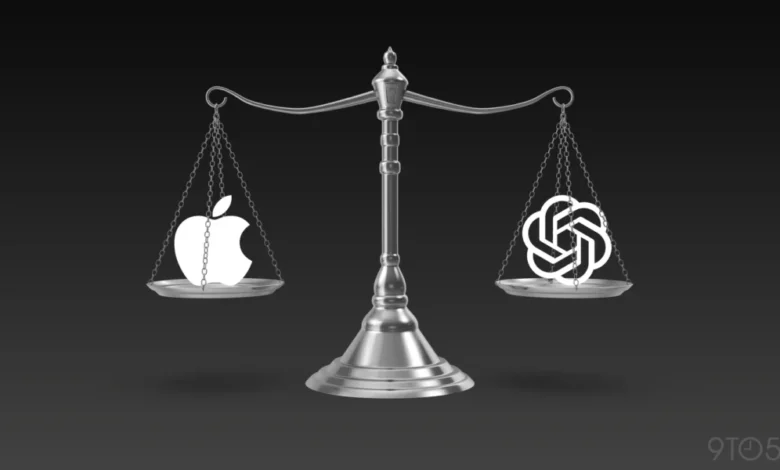
The legal battle between Apple and OpenAI has intensified, with the artificial intelligence powerhouse and its co-defendants—including Jony Ive’s venture, io Products, and former Apple executives Chang Liu and Tang Tan—formally moving to strike a significant portion of evidence recently introduced by the Cupertino-based tech giant. The ongoing litigation, which centers on allegations of intellectual property theft and the misuse of confidential hardware engineering data, has reached a critical juncture as both parties spar over the admissibility of late-stage expert testimony and technical documentation.
At the heart of the dispute is Apple’s request for a preliminary injunction, a legal maneuver intended to halt OpenAI from utilizing what Apple claims are proprietary trade secrets in its burgeoning consumer hardware projects. The defendants, however, contend that Apple is attempting to fundamentally alter the scope of the case by introducing substantial new evidence after the initial briefing period, a move they argue prejudices their ability to mount an effective defense.
A Chronology of the Conflict
The friction between Apple and its former personnel began to surface publicly in mid-2026, culminating in a formal lawsuit filed on July 10, 2026. Apple’s complaint alleges a systematic effort by former employees—specifically Chang Liu and Tang Tan—to funnel sensitive internal knowledge regarding hardware design, power management, and metal-finishing processes toward OpenAI’s hardware division and Jony Ive’s design firm.
According to Apple’s original complaint, Chang Liu is alleged to have maintained unauthorized access to confidential engineering repositories after his departure from the company. Simultaneously, Tang Tan is accused of soliciting proprietary information from current Apple staff members during the recruitment process for positions at his new firm.
The timeline of the dispute accelerated last week when Apple filed a comprehensive reply brief in support of its motion for a preliminary injunction. This filing included 126 pages of expert declarations and 13 supporting exhibits. The expert witnesses identified in the filing—Daniel Roffman, James Pooley, Dr. Ayman Fayed, Dr. Paul Hatch, and Dr. Jude Runge—were tasked with reinforcing the technical and forensic foundations of Apple’s claims.
The Contentious Filing: Apple’s Evidence vs. Defense Pushback
Apple’s recent filing sought to solidify its position by addressing specific technical domains. The expert reports aimed to validate the integrity of Apple’s internal security protocols, provide forensic analysis of devices previously held by Chang Liu, and establish the distinct, proprietary nature of Apple’s power-management architectures and metal-finishing techniques.
The defendants’ reaction was swift and procedural. In their latest motion, OpenAI and the co-defendants argued that Apple’s submission represents an "improper tactical maneuver." The defense filing explicitly states: "Apple submitted with its reply brief five new expert declarations (including one entirely new expert), totaling 126 pages, as well as numerous new exhibits. These declarations go far outside the scope of Apple’s opening brief and Defendants’ opposition."
The defense team highlighted several points of contention:
- Procedural Impropriety: The defendants argue that the evidence provided by experts like Daniel Roffman and Dr. Ayman Fayed could and should have been presented during the initial filing phase, rather than in a reply brief, which is traditionally reserved for rebutting arguments rather than introducing new, substantive evidence.
- Redundancy and New Personnel: They specifically pointed to the introduction of Dr. Jude Runge as a "new" expert, characterizing her testimony as redundant and designed to bolster pre-existing, insufficient arguments rather than to provide new, necessary analysis.
- Post-hoc Investigation: The defense challenged the work of James Pooley, alleging that his investigation was conducted entirely after the original lawsuit was filed, thereby constituting "new" evidence that they have had no fair opportunity to cross-examine or challenge through their own experts.
To rectify this, the defendants have requested that the court strike the declarations of Roffman and other identified experts, asking the judge to disregard the accompanying exhibits. Furthermore, they have submitted a counter-declaration from Chang Liu, intended to provide context for the communications and device activity that Apple has cited as evidence of trade secret theft.

The Role of Trade Secrets in Consumer Hardware
The significance of this case lies in the specific nature of the trade secrets in question. In the consumer electronics industry, the difference between a market-leading device and a failing product often rests on proprietary manufacturing processes.
Apple’s focus on power-management and metal-finishing is not accidental. These are areas where Apple has historically invested billions in R&D to achieve industry-leading efficiency and durability. If, as Apple alleges, these specific "recipes" for manufacturing and power architecture were transferred to OpenAI’s hardware efforts, it could theoretically allow a competitor to bypass years of iterative development and costly failure-testing.
From a data-driven perspective, the scale of this litigation is substantial. The inclusion of 126 pages of expert testimony suggests that Apple is not treating this as a minor internal matter but as an existential threat to its competitive advantage in hardware. Conversely, for OpenAI, a company that has built its reputation on software and AI, the pivot to hardware is a high-risk, high-reward strategy. Successfully defending against these claims is essential for the company to maintain its momentum in the physical device space without the cloud of potential intellectual property litigation looming over its product roadmap.
Implications for the Tech Sector
The outcome of this motion to strike will have long-term implications for how tech giants litigate talent mobility and IP protection. The case serves as a litmus test for the "inevitable disclosure" doctrine and the limits of forensic monitoring in a post-employment context.
If the court allows Apple to introduce the contested evidence, it sets a precedent that will make it easier for large corporations to use late-stage, high-depth expert analysis to pressure defendants during the preliminary injunction phase. If the court strikes the evidence, it reinforces a more rigid, traditional approach to litigation, ensuring that the burden of proof rests heavily on the plaintiff to produce all necessary evidence at the outset of a dispute.

Legal analysts observing the case note that the inclusion of Jony Ive’s involvement adds a layer of complexity to the public narrative. As a legendary figure in Apple’s design history, his transition to a collaborative role with OpenAI and the subsequent legal fallout has captured the attention of the broader industry. The court’s handling of these filings will likely influence future employment contracts and non-compete/non-solicitation clauses within Silicon Valley.
Looking Ahead
As the court weighs the motion to strike, the primary focus remains on the upcoming hearing for the preliminary injunction. If the injunction is granted, OpenAI could be forced to pause its hardware development initiatives, potentially costing the company significant market share and delaying product launches. If denied, the case will likely proceed to a long, discovery-heavy trial process that could take years to resolve.
Both sides have shown a willingness to expend significant resources on this legal battle, signaling that the stakes—both in terms of intellectual property and corporate reputation—are exceptionally high. As the proceedings move forward, the court’s decision on what constitutes admissible evidence will serve as the first major milestone in determining which party holds the upper hand in this high-stakes battle over the future of hardware design.
For now, the legal teams for both Apple and the defendants are preparing for what promises to be a protracted period of discovery and argument, with the tech industry watching closely to see how the judiciary balances the protection of corporate trade secrets against the mobility of talent in the competitive landscape of artificial intelligence and consumer hardware.