Salesforce Deepens Defense Tech Footprint With $375 Million Acquisition of Military AI Startup Rune Technologies


Salesforce has officially agreed to acquire Rune Technologies, an artificial intelligence startup specializing in predictive supply chain software and field logistics for the United States military, in a cash-and-stock transaction valued at $375 million. The deal, which marks a significant strategic pivot for the customer relationship management (CRM) giant, was first reported by Resilience Media and subsequently confirmed through corporate channels.
The acquisition highlights Salesforce’s accelerating expansion into the national security and defense sectors, primarily channeled through Missionforce, a specialized business unit dedicated to serving defense agencies. By incorporating Rune Technologies’ sophisticated frontline logistics platform, Salesforce aims to transition Missionforce from traditional back-office administrative planning into active, real-time battlefield operations support.
The transaction arrives amidst a remarkably aggressive acquisition streak for Salesforce throughout the fiscal year. Alongside the Rune purchase, the CRM titan has committed billions to absorb several high-profile AI and tech startups, reflecting CEO Marc Benioff’s broader vision to embed advanced artificial intelligence across every vertical of enterprise and government software infrastructure.
Strategic Rationale and Missionforce Expansion
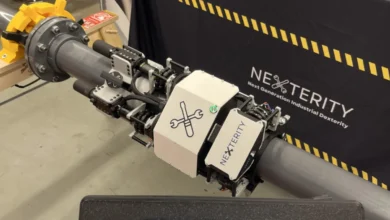
Founded in 2024, Rune Technologies quickly carved out a niche within the defense tech ecosystem by building specialized AI software designed to help military personnel accurately predict supply needs, manage complex inventories, and optimize logistics directly from the field. In modern military engagements, supply chain integrity can determine the success or failure of operations. Rune’s algorithms process vast streams of frontline data to anticipate equipment failures, troop provisioning requirements, and transit vulnerabilities before they impact missions.
This capability dovetails precisely with Salesforce’s ambitions for Missionforce. Launched just last year, the defense-focused unit has already experienced explosive growth, reporting an 80% year-over-year revenue increase. This momentum has been heavily catalyzed by landmark public sector victories, most notably a massive 10-year, $5.6 billion contract secured with the U.S. Army.
Historically, Salesforce has been recognized for commercial software solutions managing customer relationships, sales pipelines, and marketing automation. However, the federal government market represents a lucrative, highly stable frontier for enterprise tech providers. By integrating Rune’s military-grade logistics intelligence into the broader Salesforce ecosystem, the company can offer the Department of Defense a unified operational picture—bridging administrative bureaucracy at headquarters with tactical execution on the ground.
A Rapid Ascent for Rune Technologies
The journey of Rune Technologies from an early-stage concept to a multimillion-dollar acquisition target is indicative of the intense venture capital appetite for defense tech, often referred to as "deftech," in the post-pandemic era.
Since its inception in 2024, Rune raised a cumulative total of $30 million from a prestigious roster of institutional investors. Backers included Andreessen Horowitz, Point72 Ventures, and IQT (formerly known as In-Q-Tel), the non-profit venture capital firm backed by the Central Intelligence Agency that invests in cutting-edge technologies relevant to U.S. national security.
The startup’s valuation experienced a steep upward trajectory. According to data compiled by PitchBook, Rune was last valued at approximately $127 million during its Series A funding round, which was led by Human Capital. The $375 million acquisition price tag represents a substantial return on investment for Rune’s backers, underscoring the premium that strategic buyers are willing to pay for specialized artificial intelligence capabilities tailored to government and defense applications.
A Multi-Billion-Dollar Acquisition Spree
The acquisition of Rune Technologies does not happen in a vacuum; it is part of a broader, aggressive corporate consolidation strategy executed by Salesforce. Throughout the year, the enterprise software titan has systematically targeted market-leading AI startups to fortify its product roadmap.

Earlier in the year, Salesforce shook the tech sector by agreeing to acquire AI agent platform Fin—formerly known as Intercom—for a staggering $3.6 billion. Shortly after, the company completed a $1.2 billion acquisition of Qualified, a conversational marketing and pipeline generation platform. Additionally, Salesforce signed an agreement to acquire Listen Labs, a move that materialized after Listen Labs walked away from a $125 million Series C term sheet that would have valued the startup at $1.5 billion, as detailed in prior reporting by TechCrunch.
This relentless string of multi-million and multi-billion-dollar deals demonstrates that Salesforce is aggressively positioning itself as a dominant consolidator in the enterprise AI space. While commercial CRM remains its core engine, the capital allocation toward specialized niches like defense logistics (Rune) and autonomous customer service agents (Fin) signals a structural diversification of its revenue streams.
Industry Implications and the Rise of Defense Tech
The absorption of Rune Technologies into a commercial tech giant like Salesforce illustrates a broader macroeconomic trend: the convergence of Silicon Valley innovation and national security requirements.
For decades, traditional defense contractors—often referred to as "prime contractors"—dominated military procurement, developing bespoke hardware and software over lengthy, multi-year cycles. However, the rapid evolution of artificial intelligence, machine learning, and cloud computing has created a widening capability gap. Modern military branches increasingly require agile, software-first solutions that can be rapidly updated and deployed to the tactical edge.
Startups like Rune, alongside peers such as Palantir, Anduril, and Shield AI, have successfully bridged this gap by building dual-use or defense-specific software that mirrors the user experience of modern enterprise platforms. By acquiring Rune, Salesforce gains immediate credibility, proprietary technology, and established pathways within the defense establishment, bypassing the years typically required to build institutional trust and security compliance from scratch.
Furthermore, the involvement of intelligence-backed investors like IQT in Rune’s early funding rounds highlights the strategic foresight inherent in the startup’s technology stack. These systems were architected from the ground up to meet the stringent security, reliability, and interoperability standards demanded by the U.S. military and intelligence communities.
Corporate Silence and Regulatory Outlook
Despite the monumental nature of the transaction, official communication from corporate headquarters has been measured. Salesforce declined to respond to repeated requests for comment regarding the definitive agreement, integration timelines, or the future operational structure of Rune Technologies within the Missionforce division.
From a regulatory standpoint, the $375 million deal is expected to clear standard antitrust reviews without substantial friction. Unlike Salesforce’s multi-billion-dollar mega-deals, which naturally invite intense regulatory scrutiny from antitrust authorities in the United States and the European Union, a sub-$400 million acquisition focused on a niche defense tech startup falls well below the thresholds typically triggering protracted federal investigations.
Integration and Future Outlook
As the transaction moves toward final closure, industry analysts will closely monitor how Salesforce absorbs Rune’s engineering talent and intellectual property. Integrating military-grade software into a commercial CRM infrastructure requires navigating complex compliance frameworks, including strict federal data security clearances, FedRAMP certifications, and specialized cybersecurity protocols.
For Rune Technologies, joining forces with a global technology leader provides the balance sheet, sales infrastructure, and international reach necessary to scale its predictive logistics software across broader allied defense networks. For Salesforce, the deal cements Missionforce as a formidable player in defense tech, ensuring that the company captures a lucrative share of the Pentagon’s expanding digital modernization budget.
Ultimately, the acquisition of Rune Technologies serves as a bellwether for the modern enterprise software landscape. As commercial growth rates in traditional software markets normalize, major technology conglomerates are increasingly looking toward government contracting, national security, and specialized AI verticals to unlock the next generation of enterprise expansion.