Manus 2.0 adds a new agent harness, persistent execution environment, and workflow automation tools aimed at developers and enterprise use cases.

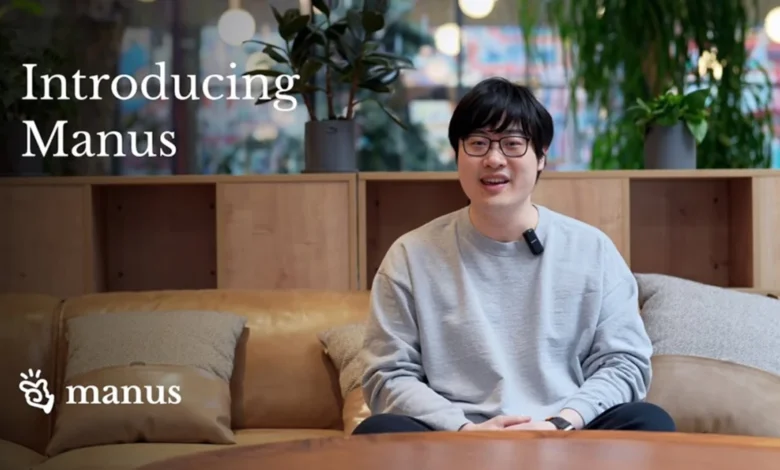
The release of Manus 2.0 marks a significant pivot for the startup, which has transitioned from a high-profile acquisition target to an aggressive competitor in the rapidly evolving landscape of agentic AI. Following the collapse of its merger with Meta, Manus has emerged with a revamped architecture that seeks to address the growing enterprise demand for autonomous, persistent, and highly efficient AI agents. This new iteration is not merely a software update but a comprehensive overhaul of how AI agents are built, deployed, and managed across web, desktop, and mobile platforms.
A Chronology of Independence and Innovation
The trajectory of Manus has been defined by its turbulent relationship with Meta. In December 2025, Meta announced a definitive agreement to acquire the high-profile AI startup, a move that promised to bolster the social media giant’s competitive stance against OpenAI and Anthropic. However, the regulatory environment proved insurmountable. In April 2026, China’s National Development and Reform Commission (NDRC) officially blocked the transaction, citing concerns related to cross-border data security and the strategic importance of the startup’s underlying AI infrastructure.
By August 2026, the two companies confirmed the termination of the acquisition, leaving Manus to operate as an independent entity once again. This period of uncertainty forced the Manus team to focus on its own product roadmap, resulting in the accelerated development of Manus 2.0. Since the dissolution of the deal, both companies have adopted increasingly divergent strategies. While Meta has focused on integrating Muse into its broader social and business ecosystems, Manus has prioritized the development of specialized "agent harnesses" and "Cloud Computers"—tools designed to provide high-level control and persistence for enterprise users.
The New Architecture: Cascade and Cloud Computer
At the core of Manus 2.0 is "Cascade," a sophisticated agent harness designed to optimize the coordination and invocation of AI agents. In the enterprise world, token consumption and latency remain the primary bottlenecks for scaling AI deployments. Cascade addresses these issues by adopting a modular approach, activating specialized capabilities only when necessary rather than relying on bloated, generalized prompts.
Internal testing released by Manus suggests that this architecture is highly efficient. In controlled benchmarks, Cascade demonstrated a 23.2% reduction in token usage and a 28.2% improvement in task completion speed, while simultaneously lowering operational costs by 32%. While these figures reflect internal testing environments, the shift toward "selectively active" agents is a trend currently favored by industry analysts.
Complementing this efficiency is the "Cloud Computer," a persistent execution environment. Unlike traditional, stateless AI interactions that reset upon the completion of a prompt, the Cloud Computer provides a permanent, dedicated space for automation. This allows enterprises to host agents that require continuous operation, such as monitoring market shifts, managing long-term logistics, or maintaining active services that must respond to external triggers in real-time.
Entering on Cue: Personalization at Scale
Parallel to its enterprise offerings, Manus has launched "Cue," a standalone application that serves as a direct competitor to consumer-facing AI agents like Meta’s Muse. Cue is built upon the same foundational infrastructure as the broader Manus platform, ensuring parity in performance and security.
What distinguishes Cue is its focus on individual agent identity. Each agent within the Cue ecosystem is provisioned with its own unique resources, including independent email addresses, phone numbers, and digital wallets. This granular level of separation allows agents to act as genuine proxies for their human users, capable of engaging in external communications, transacting within pre-defined financial limits, and executing multi-step tasks without human intervention. Furthermore, the platform supports multi-agent collaboration; users can instantiate a group chat consisting of several agents with distinct roles, allowing them to delegate complex objectives to a team of AI peers.
Workflow Automation and the Role of Manus Studio
Manus 2.0 also introduces a robust suite of event-driven automation tools. Moving beyond simple scheduled tasks, the platform can now react to external stimuli—such as a new Slack message, a calendar update, or a significant change in advertising performance metrics. This reactive capability is housed within the newly redesigned Manus Studio, an integrated workspace that acts as the primary interface for human-AI interaction.
Manus Studio serves as a centralized hub for document management, code generation, and media creation. It supports a wide array of formats, including spreadsheets, PDFs, slides, and video files. The inclusion of dedicated modules for Game Development and Video Editing signals an intent to move beyond text-based automation into the realm of creative and technical production, potentially appealing to a wider professional demographic.
The Governance Challenge: Security in an Autonomous Era
As AI agents gain the ability to operate within authorized computing environments—accessing files, browsers, and applications—the question of enterprise governance becomes paramount. Manus 2.0’s "remote control" capabilities, which allow the system to operate in a visible workspace on the user’s computer, provide transparency, yet they also introduce significant security risks.
Industry analysts have cautioned that while these capabilities are highly desirable, they risk outstripping existing enterprise security frameworks. Anushree Verma, a Senior Director Analyst at Gartner, emphasizes that the orchestration layer is now the primary battleground for enterprise adoption. "The strongest systems," Verma notes, "will combine a capable model with an efficient runtime that uses that model selectively rather than indiscriminately."
From a cybersecurity perspective, the risks are substantial. Sakshi Grover, research director for Asia/Pacific Cybersecurity Services at IDC, suggests that organizations must rethink their approach to agentic AI. "An export button alone does not establish that an agent’s operating state is portable," Grover warns. She advises enterprises to treat these systems as "untrusted or semi-trusted automation," mandating the use of short-lived credentials, external audit logging, and strict approval gates for any action that could result in permanent data loss or financial transaction.
Market Implications and Future Outlook
The launch of Manus 2.0 places the company in direct competition with the "Big Four" AI providers—OpenAI, Google, Anthropic, and Meta. While the giants rely on massive ecosystem integration, Manus is banking on the "portability" and "control" of its agentic architecture. The enterprise market is currently in a state of flux, with CIOs increasingly wary of "vendor lock-in" regarding their AI infrastructure.
The success of Manus 2.0 will likely hinge on whether the company can prove that its agents are not only efficient but also fully portable. Enterprises are beginning to scrutinize how and where "intermediate task states," logs, and connector credentials are stored. If Manus can demonstrate that its workflows are robust enough to be rebuilt or transferred outside of its proprietary ecosystem, it may secure a significant foothold among organizations looking for modular, rather than monolithic, AI solutions.
As the industry moves toward 2027, the focus is expected to shift from the raw capability of Large Language Models (LLMs) to the sophistication of the "agent harness." With its new architecture, Manus has signaled that it is no longer content to be a niche player. By balancing the consumer-facing appeal of Cue with the high-performance requirements of the enterprise-grade Cascade, Manus is positioning itself to be a key player in the next phase of the AI revolution—one where agents are not just tools to be prompted, but persistent employees in the digital workforce.
Whether these systems can navigate the complex regulatory and security landscapes remains to be seen, but the release of Manus 2.0 serves as a clear indication that the race for agentic autonomy has entered a new, more industrial, and highly competitive chapter.