Microsoft Azure Databricks Delivers Unprecedented Return on Investment, According to Forrester Study

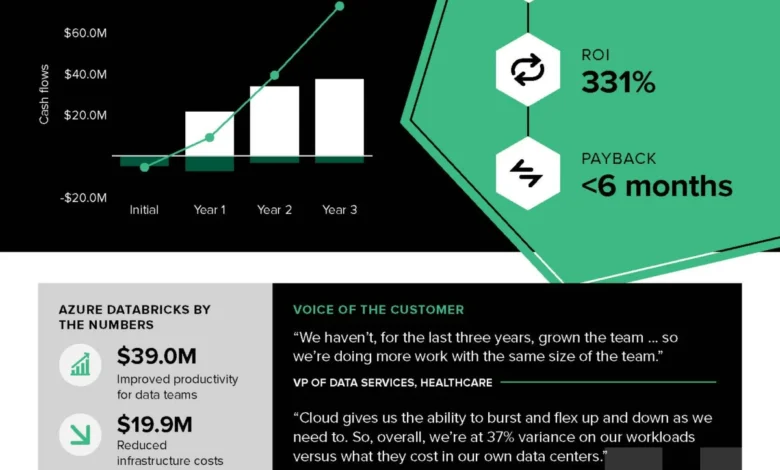
Microsoft Azure Databricks, the native integration of the Databricks Lakehouse Platform within the Microsoft Azure cloud ecosystem, is demonstrating significant tangible value for organizations, according to a comprehensive Total Economic Impact™ (TEI) study commissioned by Microsoft and conducted by Forrester Consulting. The report, released in June 2026, reveals that a composite organization leveraging Azure Databricks achieved a remarkable three-year return on investment (ROI) of 331%, a net present value (NPV) of $58.1 million, and an impressive payback period of less than six months. These metrics underscore the platform’s ability to drive substantial financial and operational benefits for businesses grappling with complex data and artificial intelligence challenges.
The foundational advantage of Azure Databricks lies in its "first-party" status within the Azure environment. This means it is not an add-on or a loosely integrated solution, but rather a service co-engineered by Microsoft and Databricks. This deep collaboration ensures seamless integration with existing Microsoft tools, identity management systems, and governance frameworks that many organizations already utilize. This inherent alignment translates into a more unified and efficient data strategy, eliminating the complexities and costs associated with integrating disparate technologies.
For technical teams, the co-engineered nature of Azure Databricks results in enhanced native integration and superior performance. This deep connectivity allows for more robust data pipelines, faster processing times, and a more streamlined development lifecycle. For the business side, these technical efficiencies translate directly into reduced costs, mitigated risks, and a significantly accelerated time-to-value for data-driven initiatives. The shared integration roadmap between Microsoft and Databricks ensures continuous optimization and the rapid adoption of new advancements across the Microsoft data and AI stack.
The strategic partnership between Microsoft and Databricks is designed to foster an accelerated integration roadmap and ongoing performance enhancements. However, decision-makers often require concrete proof of business value to justify such investments. The Forrester TEI study was specifically commissioned to address this critical question by quantifying the economic impact of Azure Databricks.
Forrester’s Findings: Quantifiable Business Value
The Forrester TEI study meticulously analyzed the experiences of Azure Databricks customers. To model the economic impact, Forrester constructed a composite organization based on interviewed participants. This hypothetical entity represented a $6 billion company operating within a regulated industry, managing approximately 10 petabytes of data.
Prior to implementing Azure Databricks, this composite organization faced a fragmented and costly data landscape. Its existing data infrastructure was characterized by unreliability at scale and significant governance challenges. The adoption of Azure Databricks fundamentally transformed this situation. Over a three-year period, the composite organization realized a total of $75.6 million in benefits, while incurring $17.5 million in costs, resulting in a net present value of $58.1 million.
The study identified four key areas where the substantial financial benefits were derived:
- Increased Productivity: The unified platform and seamless integration with existing tools significantly boosted the productivity of data engineers, data scientists, and business analysts. This allowed them to complete projects faster, derive insights more quickly, and reduce the time spent on manual data management and integration tasks.
- Cost Savings through Consolidation and Efficiency: By consolidating data workloads onto a single, highly optimized platform, organizations were able to reduce infrastructure costs, eliminate redundant data copies, and streamline operational processes. The native Azure integration further minimized the need for costly third-party tools and custom integration efforts.
- Accelerated Time to Market for Data-Driven Products and Services: The enhanced agility and performance of Azure Databricks enabled organizations to develop and deploy new data-driven products and services at a much faster pace. This competitive advantage translated into increased revenue and market share.
- Improved Decision-Making and Business Outcomes: The ability to access, process, and analyze larger and more complex datasets with greater speed and reliability empowered organizations to make more informed business decisions, leading to improved operational efficiency, enhanced customer experiences, and better risk management.
Beyond the quantifiable benefits, Forrester also highlighted several qualitative advantages that contribute to the overall value proposition of Azure Databricks. These include the deep native integration with other Azure services, which simplifies data ingestion and processing; faster generation of insights, allowing businesses to react more quickly to market changes; wider access to data across the organization, fostering a more data-driven culture; and robust governance through features like Unity Catalog, which ensures data security and compliance.
The Genesis of Value: A True First-Party Service
The substantial returns documented in the Forrester study can be directly attributed to Azure Databricks being a genuine first-party Azure service. The co-engineering effort between Microsoft and Databricks ensures that the platform is not merely compatible with Azure but intrinsically built for it. This deep integration eliminates the overhead typically associated with integrating external services, such as managing extra data copies, acquiring and maintaining separate tooling, and expending significant engineering resources on integration work.
A prime illustration of this seamless integration is the Azure Databricks Genie integration with Microsoft Copilot Cowork. This feature allows users to imbue AI models with the context of their specific business data, enhancing the intelligence and relevance of AI-powered tools that teams already use. Genie enables individuals to query their lakehouse using natural language, now directly within familiar applications like Microsoft Teams and Microsoft 365 Copilot. Recently expanded into Copilot Cowork, it grounds tasks in trusted data through Genie Ontology. Crucially, every response is meticulously scoped by Unity Catalog, ensuring that users only see the data they are authorized to access. This approach allows for the widespread dissemination of actionable intelligence without compromising data governance and security protocols.
This depth of integration extends across the entire Azure Databricks platform and its surrounding Azure services:
- Unified Data Governance and Security: Unity Catalog provides a centralized metadata layer, enabling fine-grained access control and auditing across all data assets. This ensures compliance and builds trust in the data.
- Seamless Integration with Azure AI Services: Azure Databricks integrates effortlessly with Azure Machine Learning, Azure Cognitive Services, and other Azure AI offerings, allowing organizations to build, train, and deploy sophisticated AI models at scale.
- Optimized Performance for Large-Scale Analytics: The platform is engineered for high performance on massive datasets, leveraging Databricks’ Delta Lake technology and Azure’s robust infrastructure to deliver fast and reliable analytics.
- Simplified Data Engineering and ETL: Tools and connectors for various data sources, coupled with a collaborative workspace, streamline the entire data engineering process, from ingestion to transformation.
- Cost Optimization Features: Azure Databricks offers features like auto-scaling and intelligent workload management to help organizations optimize their cloud spend and ensure they are only paying for the resources they consume.
These integrations, while not always directly monetized in studies like Forrester’s, are fundamental drivers of the productivity and cost efficiencies that were quantified. They represent the intangible but critical benefits that contribute to a superior user experience and a more effective data strategy.
Independent Benchmarks Validate Performance
Beyond the economic impact, the performance of Azure Databricks has also been rigorously tested by independent third parties. Principled Technologies, a respected industry research firm, conducted a decision-support benchmark, similar to the industry-standard TPC-DS, on a 10-terabyte dataset. The results demonstrated a clear performance advantage for Azure Databricks. In a single query stream scenario, Azure Databricks completed queries up to 21.1% faster than Databricks on AWS (when autoscale was disabled). Furthermore, when running four concurrent query streams, Azure Databricks outperformed its AWS counterpart by more than nine minutes, highlighting its superior ability to handle complex, concurrent workloads efficiently. These benchmarks provide objective validation of the platform’s speed and scalability.
Implications for Businesses
The decision to adopt a data and AI platform is a strategic, long-term commitment. Azure Databricks offers a compelling proposition where its various components work in synergy to reinforce each other. The deep integration fosters the cost savings identified by Forrester, while the consistently high performance ensures that these gains are sustained even as data volumes and usage patterns grow. This robust foundation is built upon a unique first-party partnership, meaning that both Microsoft and Databricks engineering expertise, product roadmaps, and support structures are aligned behind the customer’s data estate.
The measured value – a 331% three-year ROI with a payback period of under six months – is not merely a marketing claim but a quantifiable outcome. This compelling economic case is a primary driver for the growing number of teams choosing to build and manage their lakehouse environments on Azure Databricks. In an era where data is a critical business asset, the ability to leverage it effectively, efficiently, and securely is paramount. Azure Databricks provides a pathway to achieve these objectives, empowering organizations to unlock the full potential of their data and drive innovation.
Looking Ahead: Continued Innovation and Partnership
The ongoing collaboration between Microsoft and Databricks signifies a commitment to continuous innovation. As the landscape of data analytics and artificial intelligence evolves, organizations can expect further advancements in areas such as real-time analytics, generative AI capabilities, and enhanced data governance. The tight integration within the Azure ecosystem ensures that these innovations will be readily accessible and seamlessly incorporated into existing workflows, further amplifying the value proposition for businesses.
For organizations seeking to modernize their data infrastructure, accelerate their AI initiatives, and achieve significant financial returns, the evidence presented by the Forrester TEI study and independent benchmarks makes a strong case for Azure Databricks. It represents a strategic investment in a platform designed for the future of data and AI, backed by the combined strength of two industry leaders.
Explore Further:
- Download the full Forrester Total Economic Impact™ study: [Link to study]
- Learn more about Microsoft Azure Databricks: [Link to Azure Databricks product page]
- Discover Databricks’ capabilities on Azure: [Link to Databricks on Azure page]
- Explore Azure data and AI services: [Link to Azure data and AI overview]
- Read customer success stories: [Link to Azure Databricks customer stories]
Related posts: