Amazon Web Services Announces Public Preview of Managed Agents Powered by OpenAI Integration within AWS Infrastructure

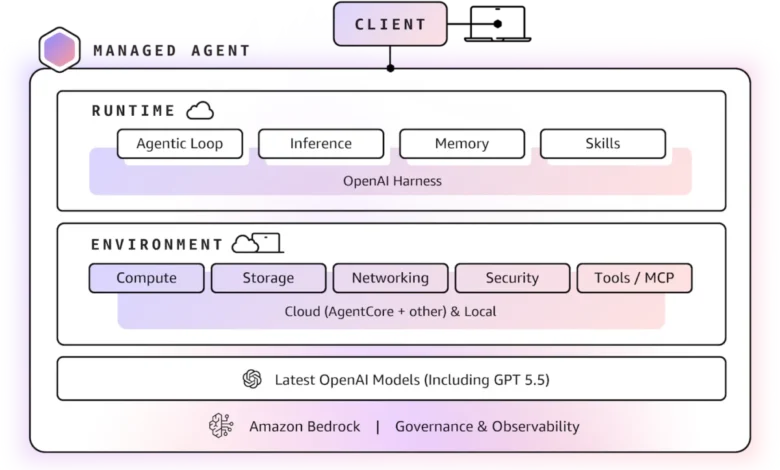
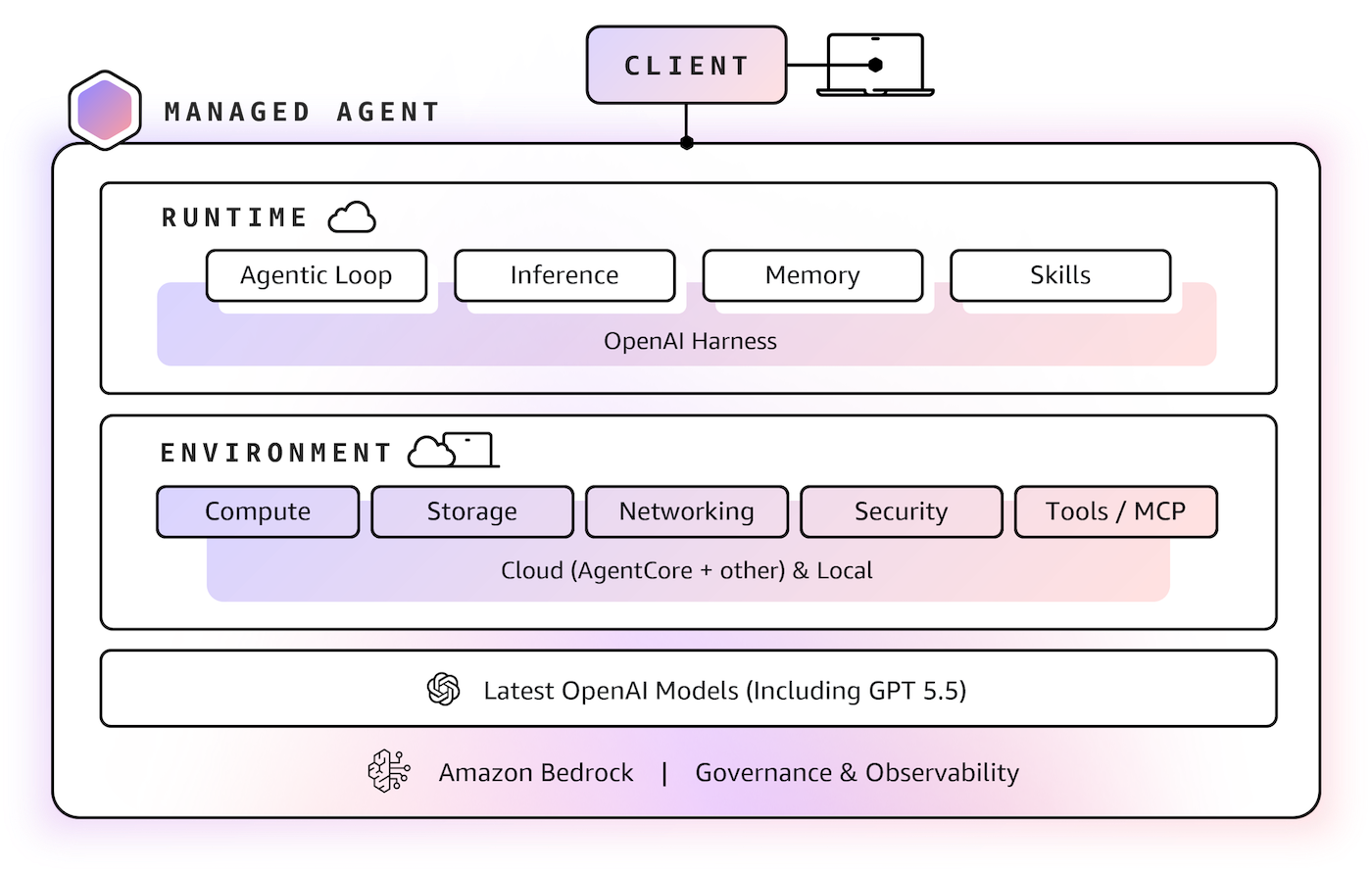
Amazon Web Services has officially announced the public preview of Amazon Bedrock Managed Agents powered by OpenAI, marking a significant milestone in cloud-native artificial intelligence development. Built upon a custom adaptation of OpenAI’s advanced Agents API, this new offering is engineered to be natively integrated with Amazon Web Services resources. The initiative is designed to allow developers and enterprises to construct, deploy, and manage sophisticated AI agents optimized specifically for OpenAI models while operating entirely within the secure boundaries of their existing AWS environments. By leveraging established AWS identity and access management systems, permission structures, and enterprise governance controls, organizations can now combine the generative capabilities of frontier models with rigorous cloud security compliance frameworks.
Background Context and Technological Integration
The introduction of Amazon Bedrock Managed Agents reflects the rapidly evolving landscape of enterprise artificial intelligence, where organizations increasingly demand seamless interoperability between leading foundational models and existing corporate IT infrastructure. Historically, deploying third-party AI models and agentic workflows required complex custom integration work, often necessitating fragmented API management, independent security protocols, and external data handling pipelines that complicated regulatory compliance.
The new integration bridges this gap by embedding OpenAI’s agentic capabilities directly into the Amazon Bedrock ecosystem. This approach enables AI agents to interact with underlying AWS services—such as databases, storage volumes, and serverless compute functions—using native IAM (Identity and Access Management) roles and data governance guardrails. Consequently, enterprises can deploy autonomous agents capable of executing multi-step business logic, interacting with enterprise APIs, and processing unstructured data without exposing sensitive corporate data to external, unmonitored processing loops.
Execution Environments and Deployment Flexibility
To accommodate diverse architectural requirements and development workflows, Amazon Web Services provides two distinct execution environments for Bedrock Managed Agents. Developers can choose between self-hosted compute configurations and fully managed runtime sessions, depending on their operational preferences and security posture.
The self-hosted compute option allows engineering teams to utilize existing development environments, local containers, or custom on-premises and cloud compute infrastructure to test and run their agentic applications. This provides maximum flexibility during the early stages of development and debugging.
Alternatively, organizations seeking fully managed scalability can utilize the Amazon Bedrock AgentCore Runtime. This environment provides managed runtime sessions alongside configurable storage options hosted directly within the user’s AWS account. By shifting the burden of infrastructure scaling, session state management, and high-availability orchestration to AWS, enterprises can focus exclusively on agent design, prompt engineering, and business logic implementation.
Model Choice Expansion and Frontier AI Capabilities
Alongside the managed agents preview, Amazon Web Services continues to broaden its model catalog on Amazon Bedrock, ensuring that customers retain the flexibility to choose from a diverse array of frontier artificial intelligence models. The expansion of model choices on Bedrock allows architects to match specific workloads with the most appropriate underlying architecture, whether optimized for speed, reasoning depth, multilingual proficiency, or specialized coding tasks.
This multi-model strategy has been a cornerstone of Amazon Bedrock’s value proposition since its inception. By decoupling applications from any single model provider, AWS mitigates vendor lock-in and allows enterprises to dynamically upgrade their underlying AI engines as new advancements emerge in the broader artificial intelligence research community.

AWS Product Lifecycle Changes and Service Availability Updates
In conjunction with its feature announcements, Amazon Web Services has issued comprehensive updates regarding product lifecycle changes and service availability. These updates are intended to provide enterprise customers with advanced notice regarding upcoming architectural shifts, helping organizations minimize operational disruptions and plan necessary migrations well in advance.
According to the official AWS Product Lifecycle Changes documentation, several services and features are scheduled to transition through various phases of deprecation. Services entering the Maintenance phase will no longer be accessible to new customers, prompting existing users to evaluate available alternatives and formulate migration strategies. Furthermore, select legacy services are officially entering the Sunset phase, while others have reached their formal End of Support designation.
Cloud architects and operations teams managing legacy workloads are advised to consult the relevant technical documentation and engage with AWS Support to identify modern, recommended replacements. AWS maintains a structured migration support framework to assist organizations in transitioning away from legacy tools without compromising system reliability or data integrity.
Ecosystem Events, Builder Communities, and Developer Engagement
As part of its ongoing commitment to developer education and community building, Amazon Web Services has outlined a robust calendar of upcoming virtual and in-person events. These initiatives are designed to connect cloud architects, startup founders, and enterprise technologists with engineering leaders and product experts.
Upcoming gatherings include specialized startup events, developer-focused workshops, and regional AWS Community Days, all leading up to the flagship annual conference, AWS re:Invent. Participation in these events offers builders opportunities to explore architectural best practices, share open-source solutions, and gain hands-on experience with emerging tools such as Amazon Bedrock Managed Agents.
Additionally, the AWS Builder Center continues to serve as a centralized hub for technical collaboration, enabling practitioners to access documentation, reference architectures, and community-driven content designed to accelerate cloud adoption and AI implementation.
Implications for Enterprise AI Strategy
The integration of OpenAI-powered managed agents within the Amazon Web Services ecosystem carries profound implications for enterprise technology strategy. As artificial intelligence transitions from conversational text generation to autonomous, action-oriented agentic workflows, the primary challenge for corporate buyers has shifted from algorithmic capability to governance, security, and operational control.
By providing a native framework where OpenAI models operate within secure AWS boundaries, Amazon Web Services addresses core enterprise anxieties regarding data privacy, compliance audits, and access control. Organizations no longer need to choose between leveraging industry-leading foundational models and maintaining strict internal governance standards. Instead, they can harness advanced reasoning engines while retaining full visibility into data flows, API invocations, and storage access through familiar cloud management tools.
As the public preview period progresses, industry analysts anticipate that early adopters will utilize these managed agents to automate complex internal operations, streamline customer service pipelines, and build intelligent data retrieval systems. The success of this rollout will likely serve as a benchmark for how cloud providers and foundational model developers collaborate to deliver secure, enterprise-grade artificial intelligence solutions in an increasingly competitive marketplace.
Related posts: