Waymo Robotaxi Service Temporarily Halted in San Francisco Amidst Major Power Outage, Reigniting Regulatory Scrutiny

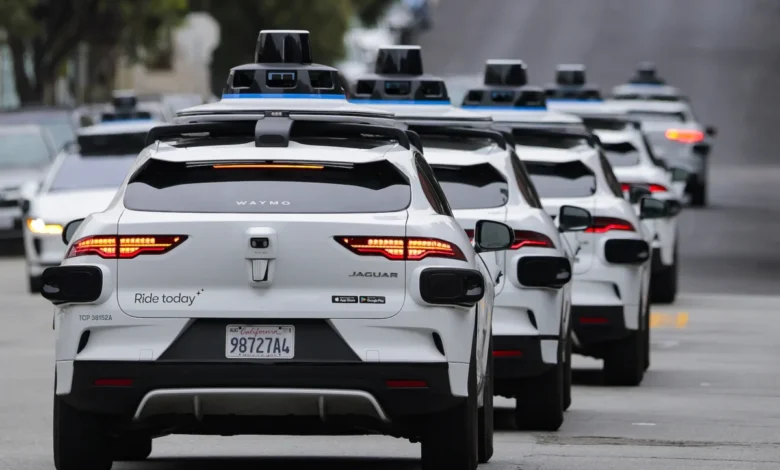
San Francisco’s evolving landscape of autonomous transportation experienced a significant disruption on Friday, July 18, 2026, as Waymo, the self-driving technology company owned by Alphabet, temporarily suspended its robotaxi service across a substantial portion of the city. The operational pause, which lasted approximately one hour, was a direct consequence of a widespread power outage that impacted an estimated 7,000 Pacific Gas and Electric Company (PG&E) customers. This latest incident has once again brought the reliability and safety protocols of autonomous vehicles (AVs) under intense public and governmental scrutiny, prompting renewed calls from city officials for more stringent state regulations governing their operation, particularly during unforeseen urban emergencies.
The Incident Unfolds: A Timeline of Disruption
The power outage struck San Francisco shortly before noon PDT on July 18, 2026. Reports from PG&E indicated a significant disruption across several key districts, plunging homes and businesses into darkness and affecting crucial urban infrastructure. As the outage took hold, Waymo customers attempting to hail a ride or already in transit received notifications stating that service was "temporarily paused" and that "freeway routes are unavailable." A screenshot of this in-app message quickly circulated on social media, sparking immediate concern among the city’s tech-savvy populace and daily commuters who increasingly rely on Waymo’s service.
Responding to inquiries from TechCrunch, a Waymo spokesperson initially confirmed the service adjustments, stating, "We are making temporary adjustments to our service while we monitor local conditions. We know riders depend on us, and we will return to normal operations as soon as possible." This preliminary statement underscored the company’s cautious approach during evolving emergency situations. Following the restoration of power and a subsequent assessment, Waymo issued an updated comment, clarifying their protocol: "We decided to pause service for approximately one hour to assess the scale of the power outage affecting a large portion of San Francisco and coordinate with local officials." This proactive measure, Waymo emphasized, was taken out of an abundance of caution to ensure the safety of its passengers and the seamless flow of urban traffic. By 12:30 PM PDT, service had largely resumed, though some residual route limitations may have persisted as the city’s infrastructure fully stabilized.
Waymo’s Operational Protocols and Swift Response
Waymo’s decision to temporarily halt operations reflects its established safety protocols designed to navigate unpredictable urban environments. Autonomous vehicles, while highly sophisticated, rely on a complex interplay of sensors, high-definition maps, GPS, and constant communication with central command systems. A widespread power outage can introduce numerous variables that complicate safe operation, including non-functional traffic lights, potential disruptions to cellular networks crucial for remote assistance, and even localized GPS signal interference. For a company like Waymo, which has been operating in San Francisco for several years, such pauses are an integral part of their safety framework, ensuring that vehicles do not encounter situations beyond their current operational design domain.
The immediate notification to customers and internal coordination with local authorities highlights a maturing response strategy. In an urban setting like San Francisco, where Waymo has deployed a substantial fleet of its Jaguar I-PACE-based robotaxis, the potential for even a few stalled vehicles to exacerbate traffic congestion or impede emergency services is a critical consideration. The one-hour pause allowed the company to verify the stability of critical infrastructure, including traffic signal functionality, and to ensure that emergency responders had clear pathways, thereby mitigating potential secondary impacts from the outage. This swift, albeit disruptive, action underscores the delicate balance AV operators must strike between providing continuous service and prioritizing safety in dynamic urban conditions.
The Broader Context: San Francisco’s Autonomous Vehicle Landscape
San Francisco has emerged as a crucial testing ground and early deployment hub for autonomous vehicle technology. Waymo officially launched its fully driverless commercial service in San Francisco in August 2022, after years of extensive testing with safety drivers. The city’s diverse and often challenging urban topography, with its steep hills, narrow streets, dense pedestrian traffic, and unique microclimates, presents an ideal, albeit demanding, environment for refining AV capabilities. Waymo operates alongside other major players, most notably Cruise (General Motors’ autonomous vehicle unit), making San Francisco a focal point for the development and regulation of this nascent industry.
The regulatory framework for AVs in California is primarily managed by the California Public Utilities Commission (CPUC) for commercial passenger services and the Department of Motor Vehicles (DMV) for testing and deployment permits. The CPUC’s authority extends to setting rules for passenger safety, accessibility, and service quality. Over the past few years, San Francisco city officials have frequently voiced concerns regarding the rapid expansion of AV services without what they perceive as adequate local oversight or robust contingency plans for incidents. This latest power outage incident feeds directly into that ongoing debate, highlighting the practical implications of autonomous technology’s integration into existing, sometimes fragile, urban infrastructure.
A History of Disruptions: Past Incidents and Growing Concerns
The July 18 power outage incident is not an isolated event but rather the latest in a series of operational disruptions involving autonomous vehicles in San Francisco, which have collectively amplified public and official anxieties. Waymo, specifically, has encountered challenges during previous city-wide blackouts and high-traffic events.
A notable precedent occurred in December 2025, when a significant power outage in parts of San Francisco led to a number of Waymo vehicles stalling on city streets. During that blackout, several robotaxis reportedly lost critical network connectivity or navigational accuracy, causing them to cease movement in various locations. While no major accidents were reported, the sight of multiple driverless cars immobilized amidst a city-wide power failure fueled public skepticism and raised questions about the AVs’ resilience in "edge cases" – unusual or extreme operating conditions. This incident necessitated manual intervention by Waymo support teams to retrieve the vehicles, causing temporary traffic obstructions and highlighting the logistical challenges of managing a stalled autonomous fleet without grid power.
Another high-profile incident took place on the Fourth of July during a fireworks display near the Golden Gate Bridge. Amidst the massive crowds and congested traffic, a similar operational issue paralyzed a segment of autonomous vehicles, contributing to significant gridlock and hindering emergency access. Eyewitness accounts and subsequent reports detailed how some AVs struggled to navigate the unusually dense and chaotic environment, leading to a standstill that frustrated both human drivers and city officials. These repeated occurrences, while often attributed to specific circumstances like power failures or extreme congestion, have solidified a narrative of vulnerability surrounding AV operations during critical urban events.
Mayor Lurie’s Call for Stricter Oversight

In the wake of these recurring incidents, San Francisco Mayor Daniel Lurie has emerged as a vocal proponent for stronger state-level oversight of autonomous vehicle operations. Following the July 18 power outage and the subsequent Waymo service pause, Mayor Lurie reiterated his previous calls for tougher state regulations. "These incidents, whether planned or not, underscore a critical gap in our current regulatory framework," Mayor Lurie stated in a press conference. "We cannot allow our city’s vital infrastructure and public safety to be compromised by technology that is not fully prepared for the realities of urban life, especially during emergencies. The state must implement comprehensive rules that adequately address how autonomous vehicles operate during major incidents."
Mayor Lurie’s proposals are believed to include mandates for more robust contingency plans from AV operators, clearer protocols for communication with city emergency services during disruptions, and potentially even requirements for AVs to have the capability to manually disengage and be remotely driven by human operators during extreme situations. He also advocated for increased local control, arguing that cities, as the immediate stakeholders and hosts of AV services, should have a more direct say in the deployment and operational guidelines of these technologies within their municipal boundaries. His stance reflects a growing sentiment among city leaders nationwide who feel that state and federal regulations have not kept pace with the rapid technological advancements and real-world implications of autonomous vehicle deployment.
PG&E’s Role and Infrastructure Challenges
The power outage that triggered Waymo’s service pause was managed by PG&E, a utility company with a long and often contentious history in California. While the specific cause of the July 18 outage was not immediately detailed, PG&E has faced intense scrutiny in recent years for its aging infrastructure, which has been linked to devastating wildfires and frequent Public Safety Power Shutoffs (PSPS) during high-risk weather conditions. These widespread outages, often affecting hundreds of thousands of customers, highlight the fragility of existing utility grids in the face of climate change and increasing demand.
The fact that an outage affecting "around 7,000 PG&E customers" could necessitate a city-wide pause for a key autonomous service underscores the interdependence of emerging technologies and foundational urban infrastructure. Even a localized power disruption can cascade into broader operational challenges for smart city components, including AVs. PG&E typically deploys crews swiftly to identify and rectify such issues, but the immediate impact on essential services, including transportation, remains a significant concern for residents and businesses. The utility’s ongoing efforts to modernize its grid, underground power lines, and enhance resilience are critical not only for traditional energy supply but also for the stable functioning of advanced urban technologies like autonomous vehicles.
Industry-Wide Implications: The Path to Autonomous Trust
The San Francisco incident carries significant implications for the broader autonomous vehicle industry. As companies like Waymo and Cruise push for wider adoption and expansion into more cities, their ability to demonstrate unwavering reliability and safety, particularly during adverse conditions, is paramount. Incidents like the July 18 power outage, while handled with what Waymo describes as a safety-first approach, inevitably erode public trust if they are perceived as frequent or poorly managed.
For the AV industry, these events underscore the need for:
- Enhanced Redundancy and Resilience: Developing systems that can maintain critical functions even with partial loss of external infrastructure (e.g., improved on-board mapping for offline navigation, robust communication redundancies).
- Sophisticated Incident Response: Creating clear, standardized protocols for AVs to safely pull over, communicate their status, and avoid exacerbating traffic during emergencies. This includes better integration with municipal emergency management systems.
- Proactive Public Communication: Transparently explaining the "why" behind operational pauses and outlining the steps taken to ensure safety and restore service.
- Collaboration with Urban Planners and Utilities: Working closely with cities and utility providers to understand infrastructure vulnerabilities and contribute to future-proofing urban environments for AV integration.
The narrative around AVs is shifting from pure technological marvel to practical urban utility. As such, the expectation for flawless operation in all foreseeable conditions, including emergencies, is growing.
The Regulatory Tightrope: Balancing Innovation and Safety
The ongoing dialogue between San Francisco city officials, state regulators (CPUC, DMV), and autonomous vehicle companies highlights the complex regulatory tightrope being walked. On one hand, California has largely embraced AV testing and deployment, fostering an environment for technological innovation and economic growth. On the other hand, there is an increasing demand for regulations that prioritize public safety, ensure accountability, and provide cities with greater autonomy in managing the deployment of these transformative technologies.
Mayor Lurie’s push for tougher rules is part of a broader national conversation about federal, state, and local roles in AV governance. Finding a balance that encourages continued innovation without compromising public safety or overwhelming existing urban infrastructure is a formidable challenge. Future regulations may see a shift towards more performance-based metrics for AVs during emergencies, requiring demonstrated capabilities to handle power outages, communication failures, and chaotic human environments safely and effectively. This could involve more rigorous stress-testing scenarios as part of the permitting process.
Looking Ahead: The Future of Autonomous Mobility in Urban Centers
The temporary halt of Waymo’s robotaxi service in San Francisco due to a power outage serves as a potent reminder of the intricate challenges and interdependencies involved in integrating autonomous vehicles into complex urban ecosystems. While Waymo’s quick assessment and resumption of service demonstrated a proactive safety stance, the incident, coupled with past disruptions, has undeniably fueled the debate over AV reliability and regulatory oversight.
As cities like San Francisco continue to evolve into smart urban environments, the resilience of all interconnected systems – from power grids to communication networks and autonomous fleets – will be paramount. The future of autonomous mobility hinges not just on technological advancement but equally on robust infrastructure, comprehensive regulatory frameworks, and a strong foundation of public trust. The events of July 18, 2026, will likely contribute to shaping the next generation of policies and operational standards, ensuring that the promise of autonomous transportation can be realized safely and reliably for all urban dwellers.