Putin Confirms Close Contact with Elon Musk Regarding Russia’s Rassvet Satellite Project Amid Rising Geopolitical Tensions

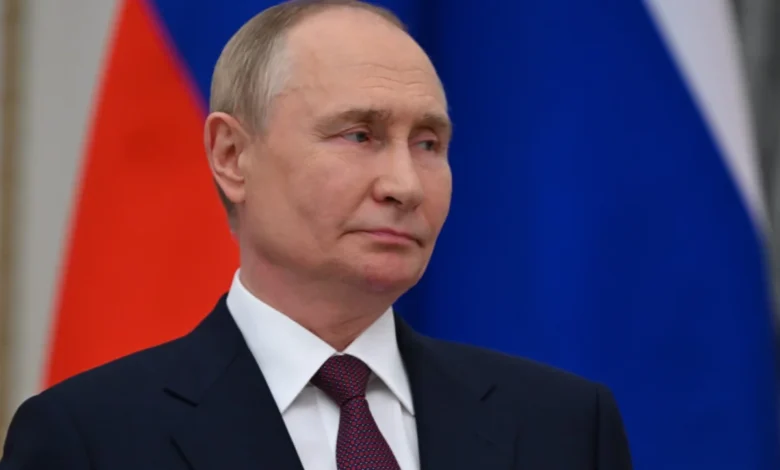
Russian President Vladimir Putin revealed during the Russia-Africa Summit that he and SpaceX Chief Executive Officer Elon Musk are maintaining close communications concerning "Rassvet," Russia’s domestic answer to the Starlink satellite internet constellation. Speaking to international delegates and press members, Putin offered high praise for the billionaire entrepreneur, explicitly labeling him a genius and acknowledging the massive technological gap between SpaceX’s commercial accomplishments and Russia’s nascent low-Earth orbit (LEO) satellite initiatives.
The disclosure of an ongoing dialogue between the Kremlin and the world’s most prominent aerospace executive has amplified anxieties in Washington and Kyiv. The revelation comes at a precarious juncture in the ongoing war in Ukraine, where digital communications, satellite internet, and battlefield drone operations heavily rely on Musk’s infrastructure. As geopolitical alignments shift and economic sanctions face potential revisions, the intersection of private commercial space technology, sovereign foreign policy, and military strategy has become a central focal point of international security discourse.
The Emergence of Rassvet and Russia’s LEO Ambitions
Russia’s "Rassvet" project represents Moscow’s strategic endeavor to counter the dominance of Western LEO megaconstellations, most notably SpaceX’s Starlink and OneWeb. For years, the Russian space agency Roscosmos lagged behind private American firms in deploying large-scale networks of small satellites capable of delivering high-speed, low-latency broadband coverage to remote regions.
During his address, President Putin did not shy away from contrasting the scale of American achievements with Russia’s current standing in the aerospace sector. "Elon Musk is a genius, truly a genius," Putin remarked. "He has already had more than 5,000 such satellites in orbit, while we are only taking the first steps."
The acknowledgment of "close contact" between the Russian leadership and Musk underscores Moscow’s persistent desire to acquire, study, or collaborate on advanced orbital technologies despite sweeping international sanctions. While details regarding the specific nature of the discussions remain closely guarded, industry analysts suggest that the dialogue could range from commercial regulatory frameworks and spectrum allocation to orbital management and technological cooperation on satellite manufacturing. However, any technical exchanges involving dual-use space technology would run directly into severe Western export controls and sanctions regimes designed to restrict Russia’s military-industrial complex.
Chronology of Escalating Tensions Over Starlink in Ukraine
The relationship between Elon Musk and the conflict in Ukraine has long been a subject of intense geopolitical friction. Since Russia launched its full-scale invasion in February 2022, Starlink terminals have served as the digital backbone for the Ukrainian armed forces, facilitating secure communications, artillery targeting, and real-time drone surveillance.

The fragility of this reliance was violently thrust into the spotlight following a series of recent events:
- Early October 2026: The United States government eases select economic and trade sanctions on Russia, sparking immediate apprehension among Ukrainian defense officials that diplomatic shifts in Washington could alter U.S. policy toward Kyiv.
- Mid-October 2026: Ukrainian military units experience a sudden, widespread disruption in battlefield connectivity. Frontline drone operators report frequent and inexplicable losses of signal.
- October 15, 2026: Reports surface detailing conflicting accounts of the connectivity blackout. While Wall Street Journal investigations indicate that Musk ordered SpaceX to restrict Starlink access in certain contested zones, separate intelligence leaks and official sources suggest the directive to throttle Starshield—the dedicated military variant of the network—originated from within the White House.
- Late October 2026: Musk takes to X (formerly Twitter) to defend his actions, stating that Ukraine violated the platform’s terms of service by deploying the technology for "offensive drone strikes to kill people."
- Days Later: Normal operations for Starlink and Starshield across Ukrainian territory resume following intense diplomatic consultations between Western allies and SpaceX representatives.
Despite the restoration of service, the episode demonstrated how a private entity holds the literal power to dictate the operational tempo of a sovereign nation’s military defense. Musk underscored this reality bluntly on social media, writing: "Were Starlink to be turned off, the Ukrainian front line would collapse immediately. This is NOT a threat, it is simply a statement of fact."
Geopolitical Implications and the Privatization of Warfare
Putin’s public overtures toward Musk highlight a broader, systemic transformation in modern geopolitics: the privatization of war and critical infrastructure. Historically, sovereign states held a monopoly on the satellite assets, intelligence networks, and logistical pipelines required to wage modern industrial warfare. Today, private corporations command capabilities that rival or exceed those of traditional nation-states.
For Ukraine, the situation exposes a terrifying strategic vulnerability. Relying on a commercial service provider whose leadership frequently voices frustration with Kyiv’s leadership and maintains direct or indirect dialogues with adversary heads of state introduces an unsustainable element of volatility. Ukrainian President Volodymyr Zelensky’s administration has repeatedly sought guarantees from international partners to ensure that critical communication channels cannot be abruptly severed by executive whim or commercial policy shifts.
From the perspective of the United States and NATO, the cozy rhetoric between Putin and Musk presents a complex national security dilemma. SpaceX is a vital contractor for the Pentagon, NASA, and the U.S. Intelligence Community, launching classified national security payloads and providing indispensable defense communications. If the world’s leading aerospace entrepreneur is simultaneously maintaining channels with the leader of the Western world’s primary geopolitical adversary, it complicates counterintelligence assessments, export compliance monitoring, and the security of sensitive military architectures.
Fact-Based Analysis of Future Trajectories
As the conflict in Ukraine grinds on and the technological arms race in low-Earth orbit accelerates, several key implications emerge from Putin’s recent statements:
- Space as a Diplomatic Lever: Foreign powers are increasingly using private technology barons as alternative diplomatic channels, bypassing traditional state departments and bureaucratic diplomatic apparatuses.
- The Fragility of Commercial Defense Infrastructure: Military planners worldwide are re-evaluating their reliance on commercial-off-the-shelf (COTS) technology for frontline combat operations. The risk of service termination—whether driven by corporate policy, regulatory pressure, or executive intervention—creates unacceptable strategic liabilities.
- Russia’s Race for Orbital Parity: While Russia’s Rassvet initiative remains in its infancy, Moscow recognizes that establishing LEO networks is paramount for both economic competitiveness and military command-and-control. Engaging with global technology leaders, even rhetorically, serves to bolster domestic morale and signal to international partners that Russia is not entirely isolated from cutting-edge tech dialogues.
Ultimately, Vladimir Putin’s public praise for Elon Musk and the confirmation of ongoing communication serve as a stark reminder that the boundaries between private enterprise, technological genius, and global statecraft have fundamentally dissolved. As space becomes an increasingly congested and contested domain, the decisions made in corporate boardrooms in Silicon Valley will continue to shape the contours of war and peace across the globe.