The Collapse of the Clarity Act and the Shift of Crypto Regulation to Federal Agencies

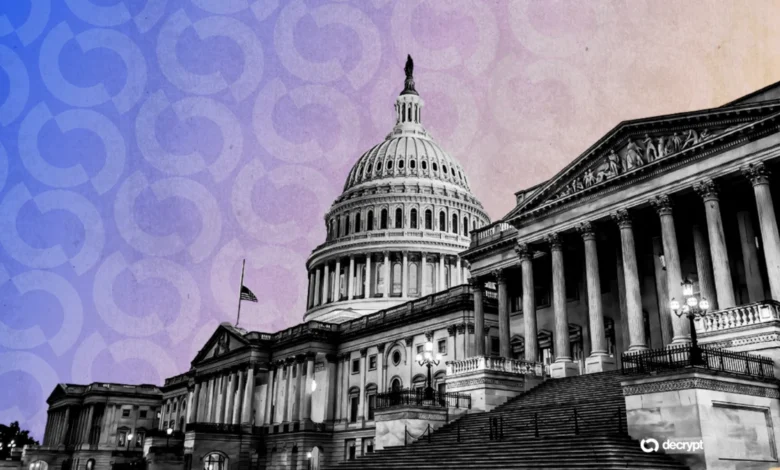
Washington found itself at a profound regulatory crossroads this week following a dramatic and bruising failure in the United States Senate to advance landmark market structure legislation for the digital asset industry. The defeat of the widely anticipated Clarity Act has effectively altered the legislative landscape, shifting the center of gravity for crypto policymaking away from a gridlocked Congress and directly into the hands of federal financial regulators.
For more than a year, lawmakers, industry advocates, and administration officials engaged in intense, grueling negotiations to craft a comprehensive bipartisan framework designed to establish definitive rules of the road for digital assets. However, deep political polarization, compounded by heightened scrutiny surrounding executive-branch entanglements in the cryptocurrency sector, ultimately derailed the measure on the Senate floor. As the dust settles on Capitol Hill, both the digital asset industry and federal agencies are recalibrating their strategies, opening a new chapter where regulatory guidance will likely be forged through administrative action rather than statutory law.
The Senate Showdown and Procedural Breakdown
The legislative momentum came to an abrupt halt on Tuesday when the Senate failed to muster the necessary votes to advance the Clarity Act through a crucial procedural hurdle. The final recorded tally of 49-50 fell well short of the 60-vote threshold required to break a filibuster and move the market structure bill toward a final vote.
The vote laid bare a hardening partisan divide. Senate Democrats voted as a unified bloc against advancing the legislation. They were joined by a handful of Republican dissenters, including Senators Susan Collins of Maine, Josh Hawley of Missouri, and Jerry Moran of Kansas. Meanwhile, Senator Thom Tillis of North Carolina initially registered a yes vote before strategically switching to a no. This procedural maneuver preserved his prerogative to motion for reconsideration, keeping a microscopic window open for the legislation to be revived at a later date.
Behind the scenes, the atmosphere in the Capitol basement was tense as frantic eleventh-hour negotiations stretched right up to the moment the roll call began. According to congressional staffers close to the discussions, a compromise appeared within reach, with Senator Tillis reportedly open to delaying the vote to allow further refinement of contentious provisions. However, those efforts were abruptly upended when a staffer for Senate Banking Committee Chairman Tim Scott, a Republican from South Carolina, cut off the talks without offering a public explanation.
The sudden breakdown immediately triggered a wave of finger-pointing across party lines. Proponents of the bill accused Democrats of negotiating in bad faith and ultimately abandoning consumer protection efforts for partisan gain. Conversely, Democratic aides alleged that Republican leadership deliberately forced a premature vote on the floor before negotiations were mature, characterizing the push as an effort to shield executive-branch crypto ventures from rigorous oversight.
The Political Fallout and Reactions from Capitol Hill
Chief architect of the legislation, Senator Cynthia Lummis of Wyoming, expressed profound frustration following the procedural defeat. Lummis argued that Senate Democrats demonstrated an unwillingness to secure American leadership in financial technology or establish meaningful safeguards for everyday retail participants.
"Senate Democrats proved they were never truly serious about protecting consumers and preserving American leadership," Senator Lummis stated immediately following the vote. "I sat at the table with Senate Democrats working in good faith to get this done while they played games."
Despite the defeat, a faction of Democratic lawmakers who had actively participated in the months-long negotiations insisted that the legislative effort remains viable. Senator Angela Alsobrooks of Maryland emphasized that the underlying market reality—millions of American citizens participating in an active, yet entirely under-regulated, financial ecosystem—demands a legislative response.
"It’s not going to die," Senator Alsobrooks remarked to reporters outside the chamber. "You know why it’s not going to die? Because over 70 million Americans are engaging in an industry that is unregulated, and we have a responsibility to regulate."
Alsobrooks was joined by a coalition of Democratic negotiators, including Senators Kirsten Gillibrand of New York, Mark Warner of Virginia, Cory Booker of New Jersey, Catherine Cortez Masto of Nevada, Ruben Gallego of Arizona, and Raphael Warnock of Georgia. In a joint post-vote statement, the group characterized the outcome as a temporary setback rather than a fatal blow, reiterating their continued commitment to pursuing a bipartisan path forward on market structure reform. Sources familiar with congressional dynamics indicate that preliminary, informal conversations have already begun to gauge whether appetite exists to restart negotiations in the upcoming legislative cycle.
Industry Fatigue and the Pivot to Federal Regulators
Yet, within the broader digital asset sector, a palpable sense of legislative fatigue has set in. Years of stalled bills, shifting political winds, and protracted congressional hearings have left many industry leaders questioning whether Capitol Hill possesses the sustained political will required to enact comprehensive statutory reform. Consequently, market participants are increasingly looking past Congress, directing their attention toward federal regulatory bodies to establish functional rules of the road.
Kristin Smith, President of the Solana Policy Institute, encapsulated the shifting sentiment among institutional and decentralized stakeholders alike. "Congress passed the GENIUS Act and pushed hard on the Clarity Act, but the political will to get it across the finish line wasn’t there," Smith noted. "Congress had its chance and didn’t rise to it. We’re now looking to regulators for guidance, and that’s the more viable path forward right now."
This transition from legislative debate to executive execution became immediately apparent in the days following the Senate vote, as key financial regulators moved swiftly to assert their jurisdiction and provide long-awaited clarity through administrative rulemaking.
Regulatory Action Accelerates at the SEC and CFTC
Capitalizing on the legislative vacuum, Securities and Exchange Commission (SEC) Chairman Paul Atkins explicitly tied his agency’s newly unveiled innovation exemption directly to the failure of the Clarity Act in the Senate. Released on Thursday, the highly anticipated SEC measure establishes a formalized pathway for tokenized U.S. equities to trade on-chain. This administrative breakthrough injected fresh optimism into the digital asset markets, signaling that financial regulators are prepared to take the initiative in modernizing market infrastructure.
Simultaneously, the Commodity Futures Trading Commission (CFTC) has ramped up its own regulatory agenda. CFTC staff recently issued a vital no-action position tailored for passive software providers, offering legal breathing room to developers operating within decentralized finance ecosystems. Furthermore, the agency submitted a broader, comprehensive crypto markets rulemaking proposal to the White House for interagency review, though specific details of the text remain confidential ahead of formal publication.
Broader Implications for the Future of U.S. Finance
The events of this week mark a definitive turning point in the governance of digital assets within the United States. While the failure of the Clarity Act represents a significant missed opportunity for Congress to codify uniform definitions and jurisdictional boundaries between the SEC and CFTC, it has simultaneously unleashed a wave of proactive agency-level rulemaking.
For market participants, innovators, and legal experts, clarity will indeed arrive—though it will temporarily materialize through administrative edicts and regulatory guidance rather than statutory law passed by Capitol Hill. As federal agencies step into the void left by a gridlocked legislature, the United States financial sector is poised to navigate a decentralized future guided by the stroke of regulatory pens rather than the gavel of the Senate.
Related posts: