The challenge of maintaining state consistency across massive, geographically dispersed networks has long been a primary hurdle for systems architects. In a distributed environment, where components are separated by unreliable networks and are subject to intermittent hardware failures, the traditional method of relying on a centralized authority—such as a master database or a coordination service like Apache ZooKeeper—often creates a performance bottleneck. As systems scale to encompass thousands of nodes, these centralized points of failure become the primary inhibitor to uptime and responsiveness. The industry has increasingly turned to decentralized communication models, most notably the Gossip Protocol, to ensure high availability and eventual consistency.
Often referred to as an "epidemic protocol," the Gossip Protocol mimics the organic, uncontrolled spread of information in a biological population or the rapid dissemination of rumors in a social setting. By delegating the responsibility of state management to the individual nodes themselves rather than a central server, architects can create systems that are remarkably resilient to localized failures.
The Mechanics of Peer-to-Peer State Management
At the heart of the Gossip Protocol is the concept of local interactions driving global outcomes. Instead of broadcasting updates to every node in a cluster—a practice that would lead to network congestion and latency spikes—nodes periodically select a small, random subset of peers to exchange information. This "fanout" mechanism ensures that updates ripple through the cluster in logarithmic time.
In practical implementation, a node might transmit its local membership list, heartbeat counters, or application-level data to three or four randomly chosen neighbors. These neighbors, in turn, repeat the process. Because the protocol relies on randomness and periodic repetition, the probability of any given node remaining unaware of a system-wide update decreases exponentially with every cycle. This mechanism is inherently "eventually consistent," meaning that while all nodes may not hold the same data at the exact same millisecond, they will converge on a uniform state within a predictable, short timeframe.
Chronology and Historical Context
The theoretical foundations of gossip-based algorithms date back to the late 1980s, when researchers at Xerox PARC, including Alan Demers, sought to solve the problem of database replication in distributed systems. Their seminal 1987 paper, "Epidemic Algorithms for Replicated Database Maintenance," provided the mathematical framework for what would eventually become the backbone of modern cloud infrastructure.
For years, these concepts remained largely in the realm of academic research. However, the rise of cloud-native computing and the push toward massive scale in the early 2010s forced a shift in industry standards. Systems like Apache Cassandra and Amazon Dynamo popularized the use of gossip protocols for failure detection and membership management. By 2011, the industry-wide consensus—as highlighted in early architectural reviews by HighScalability and other technical forums—was that the Gossip Protocol offered the only viable path forward for systems requiring "five nines" of availability in the face of unpredictable hardware instability.
Comparative Broadcast Techniques
To understand why the Gossip Protocol is the preferred choice for large-scale deployments, it is necessary to compare it against other broadcast techniques:
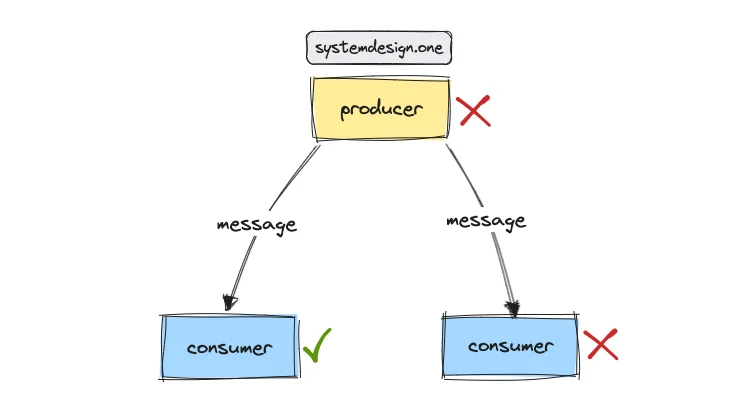
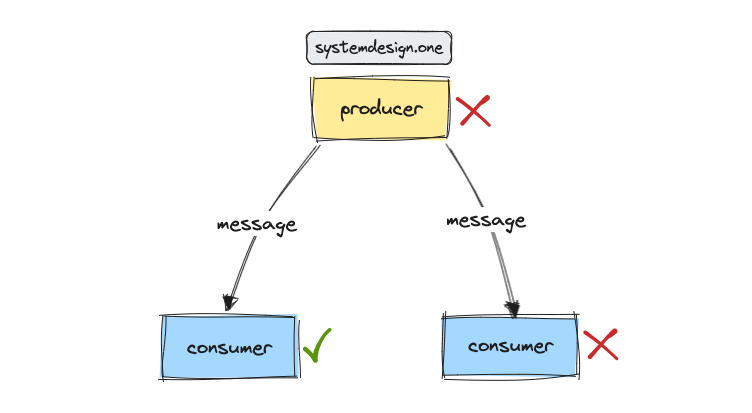
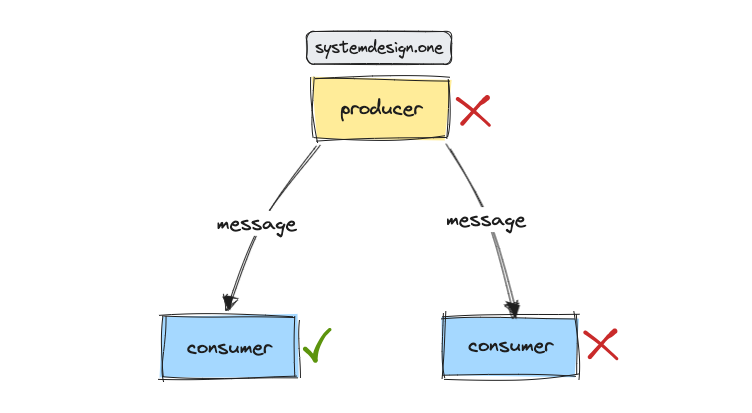
- Point-to-Point Broadcasting: While simple, this method is highly fragile. If a producer fails or a specific network link is severed, the message is lost. It lacks the redundancy necessary for enterprise-grade distributed systems.
- Eager Reliable Broadcasting: In this model, every node acts as a repeater, forwarding messages to every other node. While highly fault-tolerant, this approach suffers from a "broadcast storm" problem. In a cluster of 1,000 nodes, the sheer volume of duplicate packets can saturate network bandwidth, causing the very system it intends to manage to crash under the weight of its own communication overhead.
- Gossip-Based Broadcasting: This strikes the balance between the two. By using a randomized, bounded fanout, the protocol avoids the congestion of eager broadcasting while providing a level of redundancy that point-to-point systems cannot match.
Performance Data and Scalability Metrics
The efficiency of the Gossip Protocol is largely dictated by the relationship between the fanout (the number of peers contacted) and the cycle time (the frequency of the gossip). In a controlled simulation, a system consisting of 25,000 nodes can reach near-total convergence within approximately 15 gossip rounds. When the gossip interval is set to 10 milliseconds, the entire cluster can propagate a piece of critical metadata in under three seconds.
Crucially, the CPU and bandwidth overhead remain remarkably low. Case studies involving 128-node clusters have demonstrated that the protocol consumes less than 2% of total CPU resources and roughly 60 KBps of bandwidth. These metrics confirm that the protocol’s load is strictly bounded; as the system grows, the individual node’s burden does not increase linearly, allowing for near-infinite horizontal scalability.
Strategic Models: Push, Pull, and Push-Pull
Architects typically categorize the implementation of gossip strategies into three distinct models, each suited to different operational needs:
- The Push Model: Highly efficient for low-traffic scenarios, this model involves a node pushing updates to peers as soon as they occur. It is fast but can be inefficient if updates are frequent, as it leads to redundant transmissions.
- The Pull Model: Nodes actively poll their neighbors for new data. This is superior in high-update environments, as it ensures nodes are only pulling the latest data they currently lack.
- The Push-Pull Model: This is considered the industry gold standard. It combines both approaches to provide rapid dissemination during the initial phase of an update, while leveraging the pull mechanism to "clean up" and ensure consistency during the final convergence phase.
Broader Implications and Industry Impact
The adoption of the Gossip Protocol has profound implications for how we build modern software. It shifts the burden of system health away from a "God-mode" master server to a collective, self-healing mesh. This decentralization is essential for cloud-native environments where "node death" is an expected, daily occurrence rather than a rare exception.
Furthermore, the integration of "tombstones"—a mechanism to invalidate data entries without immediate deletion—allows for consistent state management even in asynchronous environments. By marking a record with a tombstone, the system effectively communicates the deletion across the network, ensuring that stale data does not "resurrect" itself due to a lagging node.
Challenges and Limitations
Despite its robustness, the Gossip Protocol is not a panacea. The inherent non-determinism makes debugging and testing notoriously difficult. In a centralized system, one can inspect the master node to determine the state of the cluster. In a gossip-based system, the state is distributed; tracing why a particular node holds outdated information requires sophisticated telemetry, logging, and visualization tools.
Additionally, the protocol’s "network partition unawareness" can lead to split-brain scenarios if not managed correctly. If a large-scale network outage splits a cluster into two, both sides will continue to gossip internally, potentially leading to diverging states. While the protocol will eventually reconcile these differences once the network heals, the interim period requires careful handling by the application layer, often through vector clocks or other versioning mechanisms to resolve conflicts.
Conclusion: The Future of Distributed Coordination
The Gossip Protocol stands as a testament to the effectiveness of probabilistic algorithms in engineering. By accepting that absolute, real-time consistency is often unattainable in large-scale systems, architects have embraced a model that prioritizes availability and reliability. As distributed systems continue to grow in complexity—from global content delivery networks to decentralized finance ledgers—the principles of the Gossip Protocol remain as relevant today as they were when they were first conceived in the late 1980s. The ability to build global-scale systems that are self-organizing, fault-tolerant, and computationally efficient is no longer a luxury; it is the fundamental requirement of the modern digital landscape. Through the careful tuning of fanout rates, cycle intervals, and peer-selection logic, engineers continue to push the boundaries of what is possible in distributed computing, ensuring that the "gossip" of our machines remains the heartbeat of our global infrastructure.