Coder announces general availability of Coder Agents to provide self-hosted AI coding solutions for regulated industries

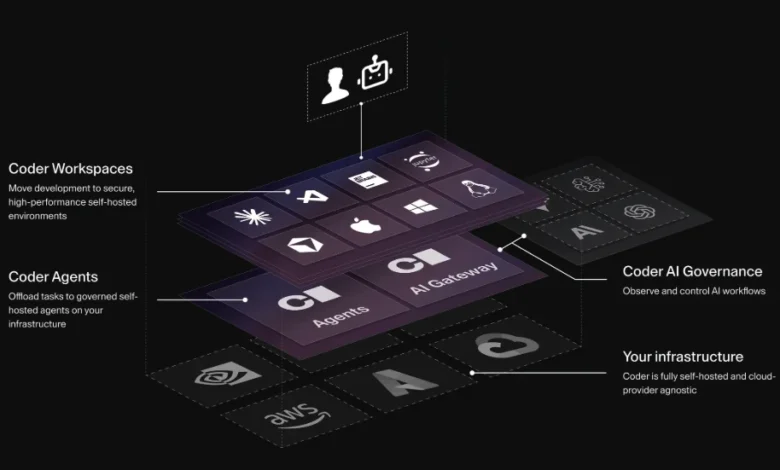
Austin, Texas — Coder, a prominent player in the software development infrastructure space, has officially announced the general availability of Coder Agents, a platform designed to enable regulated enterprises and government organizations to deploy AI-powered coding assistants entirely within their own infrastructure. This launch marks a significant shift in the software development lifecycle (SDLC), addressing critical security and compliance concerns that have previously hindered the adoption of AI-driven coding tools in sensitive environments. By offering a fully self-hosted, air-gap-capable solution, Coder is providing a pathway for organizations to leverage generative AI without compromising data sovereignty or security posture.
The Evolution of AI in the Software Development Lifecycle
The integration of artificial intelligence into software development has transitioned from an experimental novelty to a foundational requirement for engineering teams. Tools such as GitHub Copilot, Cursor, and various Large Language Model (LLM) interfaces have demonstrated significant productivity gains. However, these tools often rely on cloud-based infrastructure, where sensitive proprietary code, intellectual property, and internal documentation are transmitted to third-party vendors for processing.
For organizations in highly regulated sectors—such as defense, intelligence, healthcare, and financial services—this reliance on cloud-hosted AI presents a substantial barrier to entry. Strict regulatory frameworks, such as HIPAA, FedRAMP, and various international data protection mandates, often prohibit the transit of sensitive codebases to public cloud environments. Coder Agents was designed specifically to bridge this gap, allowing teams to utilize advanced AI models locally, ensuring that no sensitive data leaves the organization’s secure network.
Chronology and Development Roadmap
The journey to general availability for Coder Agents reflects a strategic approach to product development that emphasizes stability and enterprise-grade reliability.
- Initial Concept Phase: Coder identified a growing demand for secure, local-first AI development environments as early as 2023. The internal engineering team focused on creating a framework that allowed for modular model integration.
- Beta Phase Launch: In the months preceding the general availability, Coder released the platform to a select group of beta partners. This phase was critical for refining the agent’s durability and ensuring it could handle complex, long-running background tasks without failing.
- Refinement and Optimization: During the beta period, user feedback indicated that developers were increasingly using agents for more than just real-time pair programming. Approximately 70% of the workloads observed during the beta were triggered via API, suggesting that the platform was becoming a core component of automated CI/CD pipelines.
- General Availability (GA) Announcement: Following the successful completion of the beta program, the company reached the current milestone, providing a stable, fully supported, and enterprise-ready version of the technology.
Core Technical Features and Infrastructure Security
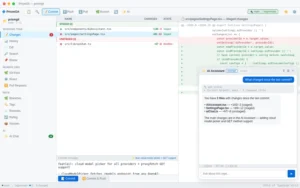
At its core, Coder Agents extends the established Coder development platform by introducing a self-hosted execution environment. Unlike standard AI assistants that function as browser-based or IDE-bound plugins with limited internal access, Coder Agents operate as part of the infrastructure itself.
Key technical highlights of the GA release include:
- Full Self-Hosting: Both the agent’s logic and the execution environment reside within the customer’s infrastructure. This includes support for air-gapped environments, where there is zero connectivity to the public internet.
- Model Flexibility: Organizations are not locked into a single AI provider. Coder allows enterprises to select and swap the models that best suit their security and performance requirements, whether those models are proprietary or open-source.
- Governance and Auditing: The platform includes deep role-based access controls (RBAC) and comprehensive auditing capabilities. This allows platform and security teams to monitor exactly what an agent is accessing and ensure that it adheres to internal compliance policies.
- Extensibility: By supporting Model Context Protocol (MCP) servers and various development tools, Coder Agents can be customized to fit into existing workflows, allowing the AI to interact with specific internal databases, APIs, and proprietary codebases.
Data-Driven Insights and Enterprise Utility
The transition from the beta phase to general availability was driven by significant data points gathered from early adopters. The most striking metric revealed during the development process was the dominance of programmatic access. By observing that nearly 70% of Coder Agents workloads were invoked through the API, the team at Coder confirmed a shift in how enterprises view AI. It is no longer just a "chat-based" helper; it is becoming a piece of automated infrastructure.
This shift suggests that enterprises are looking to automate repetitive, complex, or high-security-risk development tasks, such as automated patching, large-scale codebase migrations, or security regression testing. By moving these tasks into a self-hosted agent framework, companies can ensure that the AI remains within the perimeter of their security controls while simultaneously scaling their engineering velocity.

Strategic Deployment Models: Relay vs. Self-Hosted
Coder currently supports two distinct deployment models to accommodate the varying needs of modern enterprise IT departments.
The first model, known as Agent Relay, is designed for organizations that may want to use cloud-hosted AI agents (such as Cursor) but require them to operate within a secure, self-hosted Coder workspace. This provides a balance between the convenience of cloud-based AI tools and the necessity of keeping the underlying development environment isolated and secure.
The second model, Coder Agents, represents the full-stack, "on-premises" approach. In this configuration, both the agent and the execution environment are hosted entirely by the organization. This is the optimal configuration for environments with the highest security requirements, such as government agencies or organizations handling top-secret IP, where no external connectivity—even for relay purposes—is permitted.
Implications for the Broader Industry
The general availability of Coder Agents is likely to have several ripple effects across the technology sector. First, it sets a new standard for what constitutes "AI-ready" infrastructure. As enterprises become increasingly wary of data exfiltration and the risks of proprietary model training on internal code, the "self-hosted" requirement will likely become a baseline expectation for any enterprise-grade developer tool.
Second, the success of this platform may encourage other infrastructure providers to shift their focus toward private, air-gap-capable AI. The current market is heavily skewed toward cloud-dependent AI; however, the enterprise demand for control is creating a lucrative opening for vendors who can provide security without sacrificing the productivity gains associated with modern AI.
Third, for the developer experience (DevEx) community, this represents a move toward "AI-as-Infrastructure." Instead of treating AI as a third-party service, Coder is treating it as an internal utility. This allows for more granular management, predictable performance, and, most importantly, the ability to define exactly what data the AI can "see" and "do."
Conclusion and Future Outlook
As Coder moves forward with this GA release, the company has signaled that it will continue to prioritize four main pillars: safe deployment, operational simplicity, model flexibility, and a high-quality developer experience. By ensuring that their platform remains compatible with the rapidly evolving landscape of LLMs and open-source models, Coder is positioning itself as an essential layer in the future of secure enterprise software development.
While the adoption of AI in coding has faced scrutiny due to security concerns, the release of tools like Coder Agents demonstrates that the industry is finding ways to reconcile the desire for innovation with the necessity of rigorous risk management. For organizations that have been waiting on the sidelines to adopt AI-assisted coding, the availability of a self-hosted, air-gap-capable solution may provide the final justification required to integrate these transformative technologies into their production environments.