Valve Enters the Next Era of Immersive Computing with the Launch of the Steam Frame VR Headset

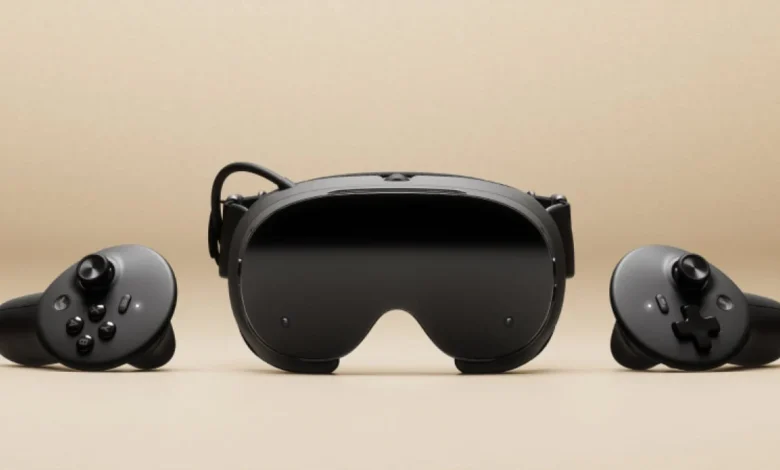
The consumer virtual reality landscape has experienced significant ebbs and flows over the past decade, characterized by waves of immense hype followed by prolonged periods of market stagnation. Following years of persistent industry speculation, Valve Corporation—the parent company behind the dominant Steam digital distribution platform—officially entered the standalone hardware market with the release of the Steam Frame. Initially announced in November 2025 after a lengthy gestation period shadowed by industry rumors, the Steam Frame officially launched to the public on September 18, 2026. Priced at a premium tier starting north of $1,000, the device has ignited rigorous debate across the gaming and technology sectors. Reviewers have generally lauded its engineering triumphs, hardware polish, and seamless integration with the existing Steam ecosystem, while simultaneously questioning its market viability against the backdrop of a cooling virtual reality sector and tightening consumer budgets.
Chronology of Development and Market Entry
The trajectory of Valve’s hardware division has been closely watched ever since the 2019 release of the Valve Index, a tethered PC VR headset that set high standards for tracking fidelity and audio quality but required a powerful desktop computer and a complex external base-station setup. As the industry shifted toward standalone, untethered ecosystems popularized by competitors like Meta, consumer demand grew for a device that could combine Valve’s software library with the freedom of wireless operation.
Rumors regarding a standalone device codenamed internally circulated for years among hardware enthusiasts. In November 2025, Valve formally unveiled the Steam Frame, positioning it not merely as a successor to the Index, but as a holistic bridge between traditional desktop gaming and immersive spatial computing. Following nearly a year of developer kit distributions and fine-tuning, the device hit the global market on September 18, 2026. The launch placed Valve in direct competition with established standalone ecosystems while leveraging its unique advantage: native access to the world’s largest repository of PC games.
Hardware Design and Standout Performance Features
Early critical reception indicates that Valve has succeeded in solving several traditional friction points associated with virtual reality headsets. Industry analysts and gaming journalists alike have emphasized the ergonomic comfort and streamlined user experience as primary selling points.
Jacob Ridley of PC Gamer highlighted the device’s operational simplicity, noting that the Steam Frame effectively eliminates the setup barriers that historically deterred casual users. Similarly, Zack Zwiezen of Kotaku focused on the headset’s wireless PC streaming capabilities, describing the latency-free performance as a breakthrough achievement. According to Zwiezen, the untethered connection functioned so reliably that it successfully replicated the fidelity of a wired connection without any perceptible lag or compression artifacts, representing a major engineering victory for Valve’s wireless protocols.
Beyond dedicated virtual reality applications, the Steam Frame functions as a versatile virtual monitor. Jacqueline Thomas of IGN reported spending a significant portion of her evaluation period playing traditional, non-VR titles on a massive virtual screen projected within the headset interface. This dual-purpose utility allows users to access their complete Steam library, transforming the headset into a portable, personal display that can be utilized anywhere within a home network environment.
Chris Person of Aftermath characterized the hardware as one of the most exciting innovations in the sector in recent years, praising its ambition to unify disparate gaming use cases—traditional desktop gaming, portable flat-screen viewing, and immersive VR—into a single open platform architecture.
Criticisms, Technical Hurdles, and Launch Limitations
Despite widespread acclaim for its industrial design and software integration, the Steam Frame has faced substantial scrutiny regarding its technical limitations and stability at launch. Scott Stein of CNET outlined several critical areas of friction, pointing to persistent battery life constraints, occasional software bugs within the operating system, and a relatively sparse catalog of optimized software available on day one.
These performance inconsistencies have led reviewers to advise caution among prospective buyers. Rather than presenting an essential purchase for the general gaming public, critics have frequently framed the device as an experimental platform suited primarily for early adopters and hardware enthusiasts willing to navigate a maturing software ecosystem.
Economic Realities and Pricing Structure
The primary barrier to widespread adoption, however, centers on economics. The Steam Frame is offered in multiple storage configurations, with the entry-level 256GB model starting at $1,059, while the higher-capacity 1TB version commands a price tag of $1,299. James Archer of Rock Paper Shotgun emphasized that this high price point fundamentally alters the consumer calculus, placing the device out of reach for the average gamer and restricting its market footprint to dedicated hobbyists.
Compounding the financial hurdle is the current macroeconomic and cultural appetite for virtual reality hardware. Industry observers have noted that the broader push for VR adoption over the previous decade failed to sustain long-term mainstream momentum, resulting in a distinct slowdown in the production of high-budget, original virtual reality software titles.
Devindra Hardawar of Engadget captured the sentiment of many industry analysts, arguing that while the Steam Frame delivers a technically proficient standalone experience, its high cost and late arrival to the market limit its ability to revitalize a cooling sector. As Hardawar observed, the hardware arrives at a peculiar juncture where the supply of new virtual reality games has dwindled to a trickle, raising questions about long-term software support from third-party developers.
Broader Industry Implications and Future Outlook
The launch of the Steam Frame serves as a crucial bellwether for the state of immersive technology. By opting for an open platform approach rather than a walled garden, Valve continues to champion user freedom and software interoperability—principles that have long defined the Steam ecosystem on personal computers.
However, the juxtaposition between Valve’s engineering excellence and the market’s current indifference toward virtual reality highlights a fundamental tension in modern hardware development. As consumers increasingly scrutinize high-ticket tech purchases amid broader economic pressures, niche categories like standalone VR face an uphill battle to justify premium pricing without a robust pipeline of system-selling software.
Whether Valve can leverage software updates, developer incentives, and community-driven adoption to overcome these initial hurdles remains to be seen. For now, the Steam Frame stands as an impressive technological achievement—a testament to what is possible when advanced spatial computing meets mature software design—operating within a market that may not yet be fully prepared to embrace it.