Why governance, observability and accountability matter more than reach when enterprises deploy AI agents

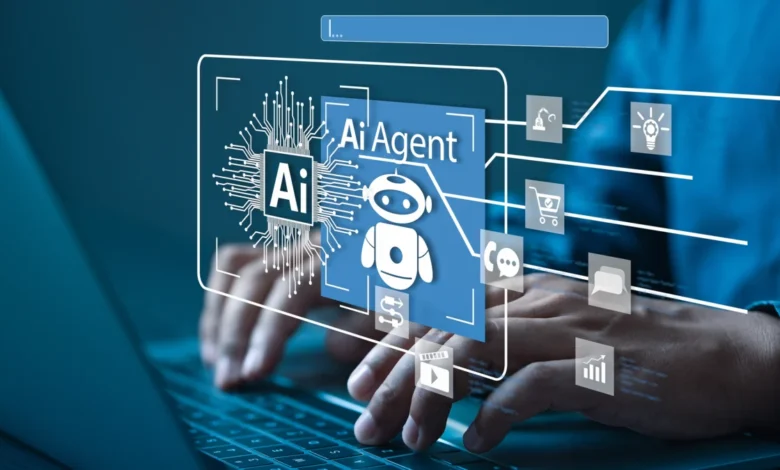
The integration of autonomous artificial intelligence agents into enterprise workflows has moved beyond experimental pilot programs to a critical stage of operational deployment. As businesses scramble to automate customer service, procurement, and administrative tasks, a central debate has emerged among technologists and corporate stakeholders: should an enterprise prioritize the wide-reaching, autonomous capabilities of external AI agents, or should they focus on building tightly controlled, on-site agents that prioritize governance and accountability?
For years, the industry’s focus was primarily on perception—how an AI agent interprets a webpage, whether through screen-scraping, Document Object Model (DOM) analysis, or accessibility trees. While understanding the mechanics of how an agent "sees" a digital environment is a prerequisite for deployment, it masks a more significant architectural concern: the location and governance of the agent itself.
The Evolution of the AI Interface: From Browsers to APIs
The history of enterprise software offers a clear roadmap for how companies handle new interaction models. In the early 2000s, organizations initially feared exposing internal databases to the public web. The solution was not to grant direct access but to develop Application Programming Interfaces (APIs). APIs introduced standardized contracts, authentication protocols, and rigorous audit trails.
Current AI agent deployment is undergoing a similar maturation. Much of the industry’s current investment is flowing toward "off-browser" agents—autonomous systems operating in the cloud that crawl the web, scrape data, and interact with business APIs—or "in-browser" extensions that co-browse alongside users. While these models offer immediate reach, they often lack the institutional guardrails required for regulated industries like finance, healthcare, and retail.
According to recent data from the OWASP Foundation, AI agents represent a new attack surface. The OWASP AI Agent Security Cheat Sheet highlights that these systems are susceptible to prompt injection, memory poisoning, and unauthorized tool abuse. Unlike traditional software, agents interact with untrusted content by design, making them inherently more difficult to secure when they operate outside of an organization’s direct infrastructure.
The Three Architectures of AI Deployment
To understand the risks associated with current AI strategies, it is necessary to categorize the "three homes" where agents typically reside:
- Off-browser agents: These operate independently in the cloud. They are highly scalable and can function autonomously, but they often function as "black boxes" that follow proprietary, external guardrails. They pose the highest risk to brand integrity, as the business has little visibility into the decision-making process of the model.
- In-browser agents: These function as extensions on a user’s local machine. They offer a middle ground, as a human user can theoretically supervise the agent’s actions in real-time. However, the underlying logic, tone, and decision-making framework remain outside of the enterprise’s control.
- On-site agents: These reside directly within the enterprise’s own digital environment. They are the only category that allows for full governance, enabling businesses to define exact parameters, escalation paths, and tone.
The Case for On-Site Governance
For enterprises, the "on-site" model is increasingly viewed as the standard for high-stakes environments. By building an agent that lives on their own infrastructure, organizations retain control over the Large Language Model (LLM) selection, the specific domain knowledge provided to the system, and the policy enforcement layer.
The emergence of protocols like WebMCP (Web Model Context Protocol) is providing the technical scaffolding for this transition. WebMCP allows websites to publish specific, verifiable actions that an agent can invoke, rather than forcing an agent to "guess" how to interact with a standard user interface. This shift transforms an opaque, automated click into an observable, policy-governed transaction.
Industry experts have noted that when enterprises treat AI agents as "first-class citizens" of their internal infrastructure—rather than third-party gadgets—they create an auditable trail. For instance, the Chrome team’s "WebMCP Sports" demonstration showcased how an assistant could call internal tools with every action logged in a chat window. This level of transparency is not merely a technical preference; it is a regulatory requirement for sectors that must account for every customer interaction and transactional change.
Chronology of AI Agent Adoption
- 2022–2023: The "Perception Era." Development focus centered on how agents interpret visual interfaces, leading to the adoption of accessibility trees as a preferred data source for AI interaction.
- Early 2024: The "Reach Era." Rapid adoption of cloud-based, autonomous agents capable of scraping competitor prices and automating complex web-based workflows.
- Late 2024: The "Governance Era." A pivot toward secure, on-site, and API-first agent architectures, driven by high-profile security incidents and the need for regulatory compliance.
- 2025 (Projected): The "Interoperability Era." The maturation of the Agent2Agent (A2A) protocol, allowing on-site enterprise agents to safely negotiate and coordinate with third-party user agents.
The Role of A2A Protocol and Future Integration
The tension between reach and control is likely to be mitigated by emerging communication standards. The Agent2Agent (A2A) protocol is currently under development to facilitate structured communication between independent agents.
In this proposed ecosystem, the user’s agent—which carries the user’s personal context and intent—would communicate directly with the enterprise’s on-site agent, which carries the organization’s domain knowledge and operational policies. This "agent-to-agent" handshake eliminates the need for one agent to reverse-engineer the other’s interface, thereby reducing error rates and security risks.
Implications for Enterprise Strategy
The strategic takeaway for CTOs and enterprise architects is that reach should not be the primary metric of success for a first-generation AI deployment. Instead, the focus must be on three pillars:
- Authoritative Integration: The agent should interact with the same APIs as the internal support and sales teams, ensuring it has access to a "single source of truth" rather than a scraped version of the frontend.
- Comprehensive Instrumentation: Every tool call, inventory check, or policy application must be logged and replayable. This is not just for debugging; it is for legal and compliance auditing.
- Human-in-the-Loop Design: High-stakes decisions must be routed to human operators. An agent that cannot gracefully hand off to a human is a liability, not an asset.
As enterprises navigate the shift toward AI-driven customer interaction, the lesson from the early days of the web remains salient: platforms built on robust, governed architectures ultimately outlast those built on temporary hacks. The allure of wide-reaching autonomous agents is significant, but for any organization with a brand to protect and a regulatory environment to respect, control is the only foundation that can support long-term growth.
The future of the internet will not be a web of pages navigated by mindless bots, but a network of governed agents exchanging intent and capability. By building for governance today, enterprises are not limiting their future reach; they are preparing their infrastructure to participate in the next generation of digital commerce.
Related posts: