Google Expands Gemini Spark Personal AI Agent to AI Pro Subscribers Enabling Advanced Workflow Automation

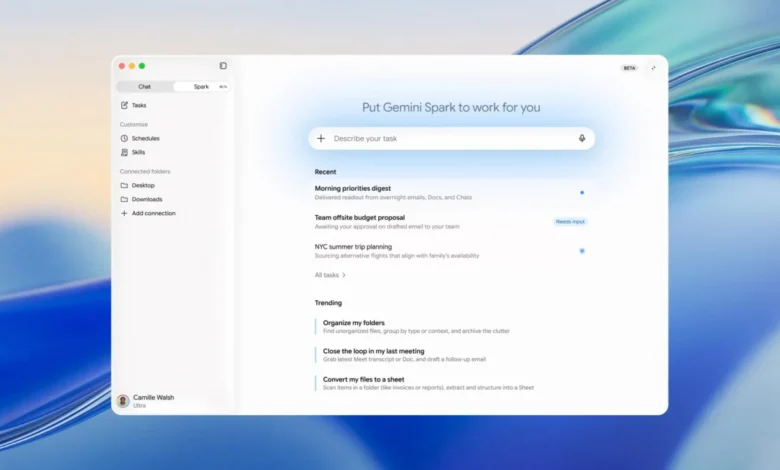
In a significant expansion of its artificial intelligence ecosystem, Google has officially begun rolling out Gemini Spark to Google AI Pro subscribers within the United States. This move marks a critical transition for Google’s AI strategy, moving beyond simple conversational interfaces toward "agentic" AI—systems capable of executing complex, multi-step workflows with minimal human intervention. Originally debuted in May alongside the high-tier Gemini AI Ultra, Gemini Spark is now becoming accessible to a broader segment of the professional market, with Google promising a global rollout to AI Pro members in other regions in the near future.
Gemini Spark is positioned as a sophisticated personal AI agent designed to automate intricate digital tasks that previously required manual navigation across multiple applications. Unlike standard chatbots that primarily generate text or images, Spark is architected to "act" on behalf of the user. It leverages a deep integration with the Google Workspace suite, including Gmail, Drive, Docs, and Calendar, while utilizing advanced capabilities such as remote web browsing, code execution, and real-time location data. This deployment signifies Google’s intent to lead the emerging "AI agent" sector, competing directly with offerings from OpenAI and Microsoft’s Copilot.
The Architecture of Gemini Spark: Tasks, Skills, and Schedules
To facilitate complex automation, Google has introduced a specific structural framework within Gemini Spark, centered around three core concepts: Tasks, Skills, and Schedules. This hierarchy is designed to provide users with both the flexibility of custom instructions and the reliability of automated triggers.
A "Task" represents the high-level objective a user wishes to accomplish. This could range from "Plan a business trip to San Francisco including flight comparisons and calendar invites" to "Monitor a specific set of spreadsheets for budget overruns and alert the finance team." Users can have up to 15 of these tasks running concurrently, a limit designed to balance high-level productivity with the underlying compute-based usage limits shared by the broader Gemini platform.

"Skills" serve as the reusable building blocks of these tasks. They are essentially saved sets of instructions enriched with additional context that the AI can draw upon repeatedly. For instance, a user might create a "Skill" that defines their preferred tone for professional emails or a "Skill" that explains a specific data-formatting protocol used by their company. By modularizing these instructions, Spark allows for more consistent outputs across different tasks.
"Schedules" represent the temporal or conditional logic applied to tasks. This allows the AI agent to operate autonomously based on specific triggers, such as a time of day, the arrival of a specific email, or a change in a document. The introduction of schedules moves the AI from a reactive tool to a proactive assistant, capable of performing "check-ins" and updates without the user needing to initiate a prompt every time.
Deep Integration with Google Workspace and Cross-Platform Functionality
The primary value proposition of Gemini Spark lies in its seamless connection to the Google Workspace ecosystem. This integration allows the agent to read, synthesize, and edit data across various Google services, provided the user has granted the necessary permissions.
In Gmail and Calendar, Spark can manage schedules, draft responses based on previous threads, and cross-reference availability across multiple calendars. For productivity suites like Docs, Sheets, and Slides, the agent can perform sophisticated data analysis and content generation. However, Google has implemented specific guardrails for collaborative environments. For example, when Spark is tasked with editing shared documents or spreadsheets, it requires the user to review and confirm the planned edits before they are applied. This "human-in-the-loop" requirement is a critical safety measure to prevent unintended changes in collaborative workspaces.
Conversely, for private environments like Google Tasks, the AI is granted more autonomy. Google has noted that Gemini Spark can perform bulk actions on private tasks without explicit confirmation, though users are encouraged to review these actions periodically. This distinction highlights Google’s attempt to balance user efficiency with data integrity.
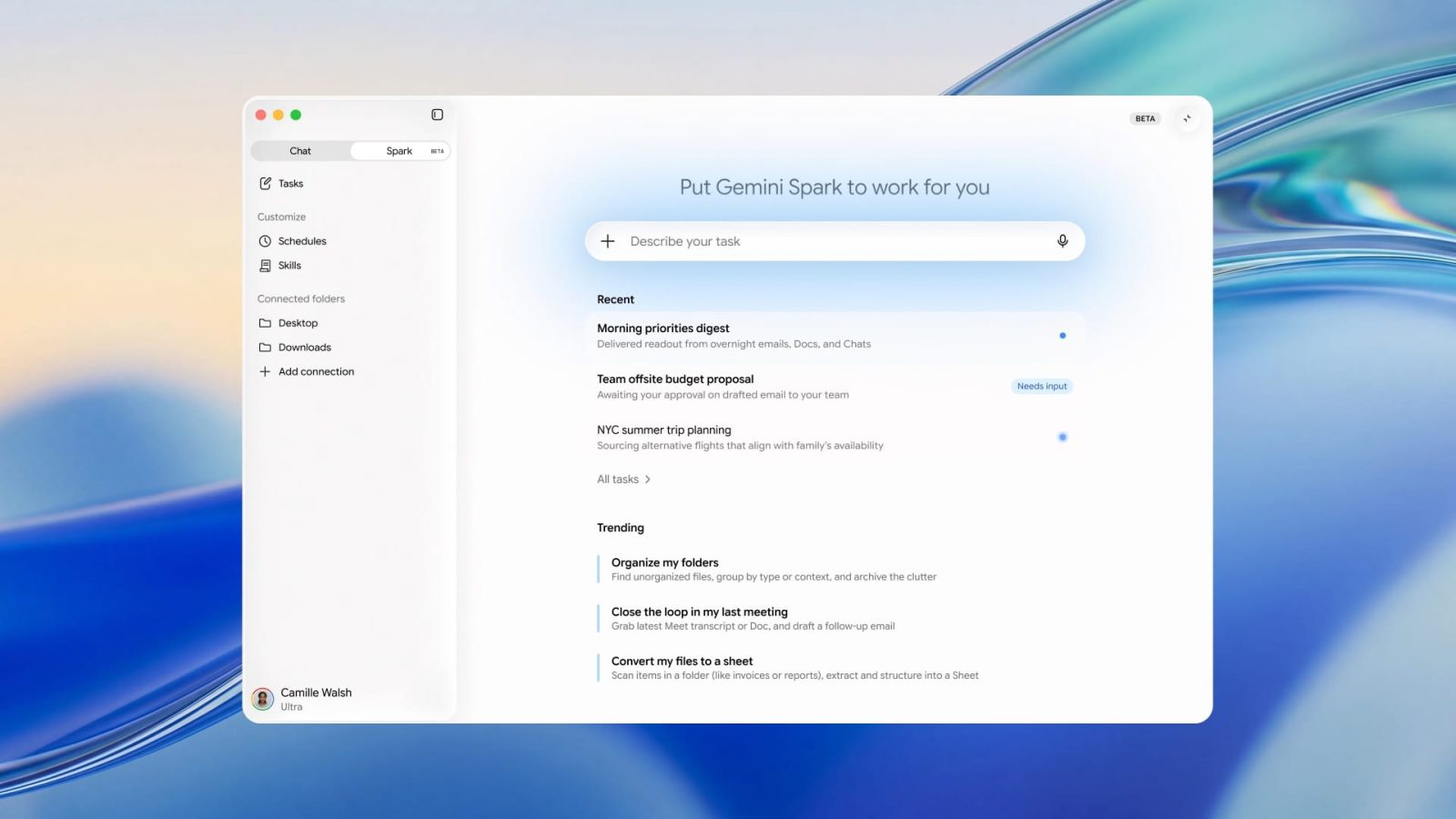
The rollout also emphasizes cross-platform synergy. The recently updated Gemini macOS app allows users to initiate complex tasks from their mobile devices that are then executed or managed through their desktop environment. This includes "remote" capabilities where the AI can browse files or execute code on a linked computer, effectively turning the smartphone into a remote control for a much more powerful, AI-driven workstation.
Chronology of Google’s Agentic AI Evolution
The path to the current rollout of Gemini Spark reflects the rapid acceleration of Google’s AI development cycle over the past year.
- February 2024: Google rebrands its AI efforts under the "Gemini" umbrella, replacing the Bard moniker and consolidating its Large Language Model (LLM) research.
- May 2024: During its annual developer conference and subsequent launches, Google introduces Gemini Spark as an exclusive feature for Gemini AI Ultra subscribers. This initial phase served as a "proving ground" for the agent’s more autonomous capabilities.
- June 2024: Google releases the Gemini app for macOS, integrating deeper system-level access and allowing the AI to interact with local files and desktop-based workflows.
- July 2024: The official rollout to Google AI Pro subscribers in the United States begins. This transition from "Ultra-only" to "Pro" indicates that Google has optimized the infrastructure to handle a significantly larger user base.
Supporting Data and Market Context
The expansion of Gemini Spark comes at a time when the "AI Agent" market is expected to see exponential growth. According to industry analysts, the shift from generative AI (writing text) to agentic AI (performing tasks) could increase the economic impact of AI by a factor of ten. Google’s Workspace platform currently boasts over 3 billion users, and while only a fraction are "AI Pro" subscribers, the potential for up-selling is immense.
By limiting concurrent tasks to 15 per user, Google is managing the massive computational costs associated with "agentic" behavior. Unlike a simple search query, an agentic task may involve dozens of sub-queries, code executions, and API calls to different Workspace services. This resource-intensive nature is why Spark remains behind a subscription paywall, currently priced at approximately $20 per month for the AI Pro tier.
Official Responses and Strategic Implications
While Google has kept its official statements focused on the technical rollout, the company’s messaging on social media and support pages emphasizes "Personal Intelligence." A spokesperson for the Gemini team noted that the goal of Spark is to "reduce the cognitive load" of managing digital lives.

Industry experts suggest that this rollout is a direct response to Microsoft’s aggressive integration of Copilot into the Office 365 suite. However, Google’s advantage lies in the ubiquity of its Android ecosystem and the deep, native integration of Search. By allowing Spark to use Search as a "Connected App," Google ensures its agent has more up-to-date and comprehensive web-access capabilities than many of its competitors.
The implications for the future of work are profound. As Spark becomes more capable, the role of the knowledge worker may shift from "doer" to "editor." Instead of manually organizing a project tracker, a worker will define the "Skill" for tracking, set the "Schedule" for updates, and then "confirm" the AI’s suggested edits once a week.
Security, Privacy, and Ethical Considerations
The deployment of an agent that can browse the web, execute code, and access private emails necessitates rigorous security protocols. Google has addressed this by ensuring that Spark operates within the existing security framework of Google Workspace. Data used by Spark for AI Pro users is generally not used to train Google’s underlying foundation models without explicit consent, a key requirement for enterprise and professional users.
However, the "remote web browser" and "code execution" features introduce new vectors for potential concern. To mitigate risks, these actions are performed in sandboxed environments. Furthermore, the requirement for manual confirmation on shared documents serves as a "soft" safeguard against the AI hallucinating or misinterpreting complex instructions in a way that could damage professional reputations or business data.
As Gemini Spark continues its global rollout, the tech industry will be watching closely to see how users adapt to "delegating" their tasks to an AI. If successful, Spark could redefine the relationship between humans and their computers, moving the PC from a tool that we use to a partner that works alongside us. For now, US-based AI Pro subscribers are the first to experience this new frontier of automated productivity.