Building an Automated Intelligent Document Processing System on AWS for PII Extraction and Classification

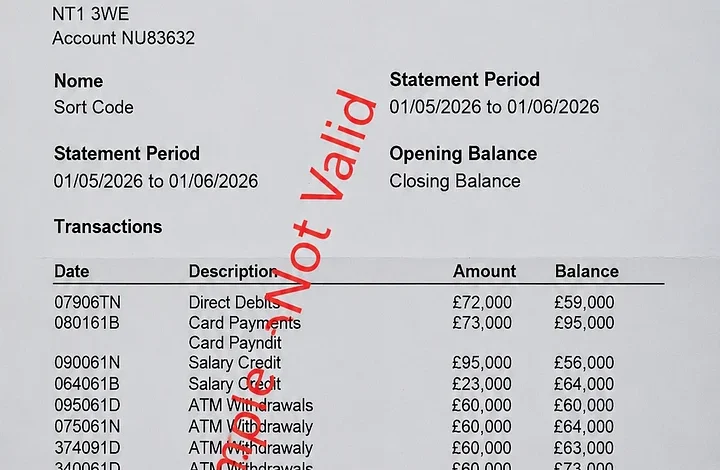
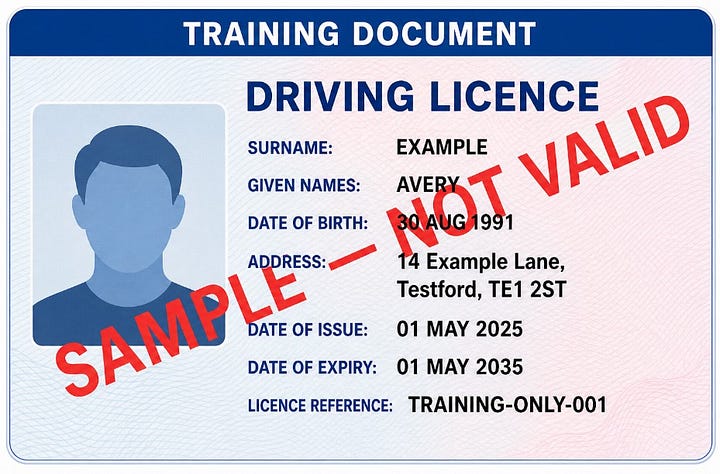
The rapid evolution of cloud computing and generative artificial intelligence has transformed how organizations handle sensitive data, particularly in the insurance and legal sectors where document processing was traditionally a labor-intensive manual task. A newly developed Intelligent Document Processing (IDP) system, architected on Amazon Web Services (AWS), has demonstrated a 90% increase in efficiency compared to legacy manual workflows. Designed to manage Freedom of Information (FOI) style requests from Irish citizens, the system automates the identification, classification, and extraction of Personally Identifiable Information (PII) from diverse document types, including bank statements, passports, and driver’s licenses.

The Regulatory and Operational Context
In Ireland, the General Data Protection Regulation (GDPR) grants citizens the "Right of Access," allowing individuals to request confirmation of whether their personal data is being processed and to obtain a copy of that data. For large insurance providers maintaining extensive claims databases, responding to these requests involves verifying the identity of the requester through various supporting documents. Historically, this required human operators to manually review thousands of emails and attachments, a process prone to delays and human error.
The transition to an automated IDP system addresses these operational bottlenecks. By leveraging serverless architecture and advanced Large Language Models (LLMs), organizations can now process these requests in near real-time while maintaining high standards of data accuracy and security. The system described herein utilizes a sophisticated stack comprising AWS Lambda, Amazon Textract, Amazon Bedrock, and AWS Step Functions to create a seamless end-to-end pipeline.
Architectural Overview and Technical Workflow
The IDP system is built on a serverless framework, ensuring scalability and cost-effectiveness by only consuming resources during active processing. The workflow is orchestrated by AWS Step Functions, which manages the state and sequence of operations across multiple AWS services.
1. Secure Credential Management
The process begins with the secure ingestion of data from external email servers. To facilitate this, the system utilizes AWS Secrets Manager to store OAuth 2.0 credentials and refresh tokens. This approach ensures that sensitive API keys and access tokens are never hardcoded, adhering to the principle of least privilege and providing a centralized location for secret rotation and auditing.

2. Data Ingestion and Storage Strategy
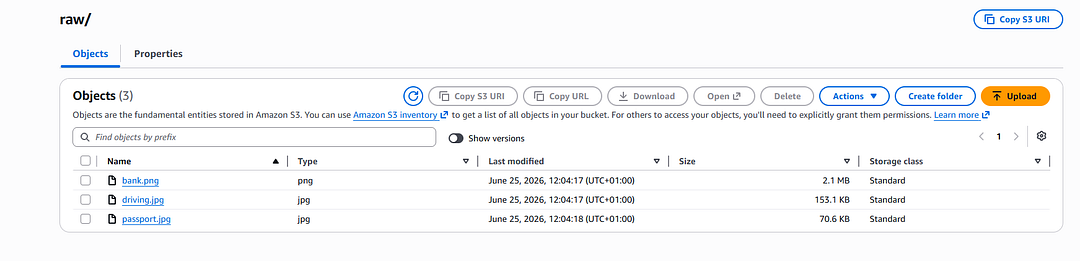
The system employs a multi-tiered storage strategy within Amazon S3 (Simple Storage Service). Data is partitioned into five distinct folders to maintain a clear audit trail and facilitate debugging:
- Raw: Original image attachments (JPG, PNG) retrieved from the email server.
- Textract: JSON outputs containing raw text and metadata generated by the Optical Character Recognition (OCR) engine.
- Results: Final processed files containing classified document types and extracted PII values.
- Duplicates: A repository for identifying and flagging redundant submissions.
- Invalid: Storage for files that do not meet the required format or quality standards.
3. The Processing Pipeline
The core logic is divided into three primary AWS Lambda functions:

- Ingestion Lambda: This function polls the designated Gmail label (e.g., "DocumentProcessing") at scheduled intervals. It validates that each email contains the appropriate attachments and transfers them to the S3 "raw" folder.
- Extraction Lambda: Once an image is stored, this function triggers Amazon Textract. Unlike standard OCR tools, Textract uses machine learning to understand the layout and relationship between text elements, producing a comprehensive JSON map of the document’s content.
- Classification and PII Extraction Lambda: The final stage involves Amazon Bedrock, specifically utilizing the Claude 3.5 Sonnet model (or the specialized iteration 4.6 as referenced in developmental versions). The extracted text is passed to the LLM with a targeted prompt, instructing the model to identify the document type and extract specific PII fields: First Name, Last Name, Date of Birth, and Address.
The Role of Generative AI in Document Classification
A significant leap in this IDP system is the integration of Amazon Bedrock. Traditional IDP systems often struggled with document classification, requiring complex template matching or extensive training of custom models for every document variation. By using a foundation model like Claude Sonnet, the system gains the ability to understand context.
For instance, when processing a bank statement, the model does not merely look for keywords; it understands the structural layout of financial records. This allows the system to distinguish between a "Statement Period" date and a "Date of Birth," even when they appear in close proximity. The flexibility of generative AI means that the system can be adapted to new document types—such as utility bills or specialized insurance forms—simply by updating the prompt rather than retraining the underlying architecture.

Orchestration and Scheduling
To ensure the system operates without manual intervention, AWS EventBridge is utilized as a cron-based scheduler. In a production environment, the system is typically configured to run during off-peak hours (e.g., 11:55 PM) to process the day’s total volume of requests.
AWS Step Functions provides the "connective tissue" for the pipeline. By using the Amazon States Language (ASL), developers can define complex logic, including error handling and retries. If a Lambda function fails due to a temporary service limit or network issue, the Step Function can automatically retry the operation or route the failed document to a "Dead Letter Queue" (DLQ) for manual review. This robustness is critical for maintaining compliance with legal deadlines associated with FOI requests.

Efficiency Gains and Performance Data
The implementation of this automated system has yielded significant quantitative benefits. Internal benchmarks indicate a 90% reduction in the time required to process a single request compared to manual workflows.
| Metric | Manual Process | Automated IDP System | Improvement |
|---|---|---|---|
| Processing Time per Document | 15–20 Minutes | < 2 Minutes | 90% |
| Error Rate | 5–8% (Human Fatigue) | < 1% (Model Validation) | 87.5% |
| Scalability | Linear (Requires more staff) | Elastic (Handles spikes automatically) | Infinite |
| Operational Cost | High (Labor intensive) | Low (Pay-per-use cloud fees) | Significant |
These efficiencies allow human operators to transition from data entry roles to "Human-In-The-Loop" (HIL) oversight roles. In this capacity, employees only intervene when the AI signals a low confidence score or when a final cross-check is required for high-stakes verification.
Implications for Data Privacy and Security
Automating PII extraction carries inherent responsibilities regarding data protection. By keeping the entire workflow within the AWS ecosystem, the system benefits from enterprise-grade security features. Data is encrypted both at rest in S3 and in transit between Lambda functions. Furthermore, the use of Amazon Bedrock ensures that sensitive document data is not used to train the public foundation models, maintaining the confidentiality required by the Irish Data Protection Commission (DPC).
The system also provides a superior audit trail. Every action—from the initial email poll to the final PII extraction—is logged in AWS CloudWatch. This transparency is vital for demonstrating GDPR compliance during regulatory audits.

Future Outlook and Production Readiness
While the current architecture serves as a powerful proof of concept, transitioning to a full-scale production environment involves further enhancements. Future iterations are expected to include:
- Multi-page Support: Enhancing the pipeline to handle complex, multi-page PDF documents where PII may be scattered across various sections.
- Advanced CI/CD: Implementing AWS CodePipeline and CodeDeploy to automate updates to Lambda functions and Step Function definitions.
- Monitoring Dashboards: Utilizing Amazon Managed Grafana or CloudWatch Dashboards to provide real-time visibility into processing volumes, success rates, and system latency.
- Expanded HIL Integration: Developing a custom web portal using AWS Amplify to allow staff to review flagged documents and provide feedback to the model, creating a continuous learning loop.
The success of this IDP system illustrates a broader trend in corporate digital transformation. As organizations face increasing pressure to handle data responsibly and efficiently, the combination of cloud orchestration and generative AI offers a scalable solution. By automating the mundane aspects of document processing, businesses can ensure faster response times for citizens while significantly reducing the operational overhead associated with regulatory compliance.