OpenAI Launches GPT-5.6 Featuring Hierarchical Model Sizes and Advanced Reasoning Capabilities to Challenge Industry Benchmarks

The artificial intelligence sector has reached a new milestone with the official release of GPT-5.6, the latest iteration of OpenAI’s flagship large language model (LLM) series. Arriving only months after the deployment of GPT-5.5, this new release signals an aggressive acceleration in OpenAI’s development cycle. GPT-5.6 introduces a refined architecture designed to compete directly with Anthropic’s high-performing Claude series, specifically the Opus 4.8 and Fable 5 models. Early technical evaluations and developer feedback suggest that while GPT-5.6 represents an incremental rather than revolutionary upgrade over its predecessor, its specialized reasoning modes and tiered model sizes provide a new level of granularity for enterprise and individual workflows.
The Celestial Architecture: Sol, Terra, and Luna
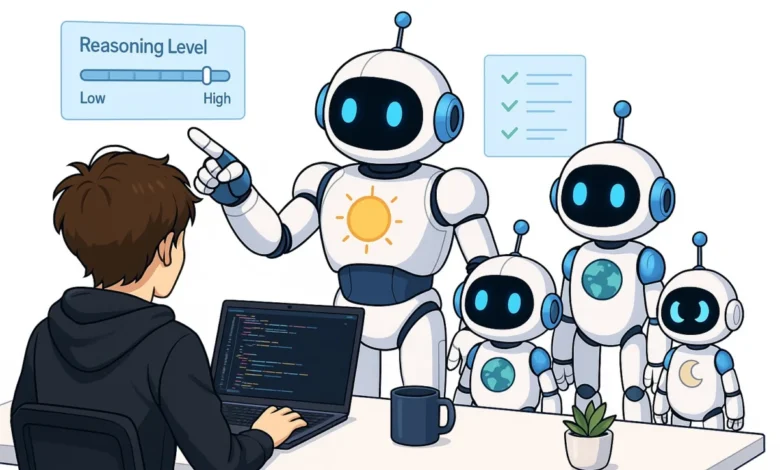
In a departure from previous naming conventions, OpenAI has categorized GPT-5.6 into three distinct sizes, utilizing astronomical metaphors to indicate their scale and compute requirements. This "Celestial" architecture is designed to allow users to balance performance against latency and cost.
The "Sol" model serves as the frontier-class flagship, representing the full weight of OpenAI’s current training breakthroughs. It is designed for the most complex cognitive tasks, including deep architectural planning, multi-step logical reasoning, and comprehensive code review. Below it sits "Terra," a mid-range model optimized for a balance of speed and intelligence, which analysts suggest is aimed at the high-volume professional market. Finally, "Luna" represents the most efficient, low-latency version of the model, intended for simpler tasks, real-time interactions, and mobile applications.
Crucially, GPT-5.6 introduces a "Reasoning Effort" selector, allowing users to toggle between levels such as Medium, Extra High, and Ultra. This feature utilizes inference-time compute—a process where the model "thinks" longer before generating a response—to improve the quality of outputs for difficult queries. While this significantly enhances accuracy, it introduces a notable trade-off in speed and resource consumption.
Performance Benchmarks in Software Engineering
Initial industry data indicates that GPT-5.6 has established a new gold standard in automated code review. In comparative testing against GPT-5.5 and Anthropic’s Opus 4.8, GPT-5.6 demonstrated superior precision and recall in identifying logic flaws and security vulnerabilities. Precision, the accuracy of reported bugs, and recall, the ability to find all existing bugs, have both seen measurable percentage increases.
For developers, the model’s ability to maintain context over long-form implementations is a key highlight. However, market sentiment remains divided regarding its utility in direct code generation compared to its competitors. While GPT-5.6 is noted for its thoroughness, some engineering teams continue to utilize a multi-model "stack." In this workflow, Anthropic’s Claude Fable 5 is frequently used for the initial planning phase, while Claude Opus 4.8 is favored for execution, leaving GPT-5.6 to perform the final, critical code review. This "best-of-breed" approach highlights that while GPT-5.6 is a formidable generalist, it faces stiff competition in specialized implementation tasks.
Resource Management and the "Banked Reset" System
One of the most significant changes accompanying the release of GPT-5.6 is the restructuring of usage limits. The model’s high-reasoning modes, particularly "Extra High" and "Ultra," require substantial computational power, leading to rapid depletion of user quotas.
To mitigate the friction caused by these limits, OpenAI has adjusted its subscription tiers. While the standard five-hour usage window has been temporarily suspended in favor of weekly limits, the company has introduced a "Banked Reset" mechanism. This system allows high-tier subscribers to trigger a manual reset of their usage limits at their discretion. This feature is particularly valuable for developers facing intense "crunch" periods where token consumption spikes. However, analysts note that these resets also push back the date of the next scheduled automatic reset, meaning users must still exercise strategic resource management.
Chronology of the GPT-5 Series Development
The release of GPT-5.6 follows a rapid succession of updates within the OpenAI ecosystem. To understand the current state of the model, it is necessary to look at the timeline of the last twelve months:

- Q4 Previous Year: OpenAI releases GPT-5.0, marking the transition to the next generation of LLMs with expanded context windows.
- Q1 Current Year: The launch of GPT-5.5 introduces enhanced multimodal capabilities and improved spatial reasoning.
- Q2 Current Year: Competition intensifies as Anthropic releases Opus 4.8 and Fable 5, which outperform GPT-5.5 in creative coding and long-form planning.
- Last Week: OpenAI shadows-drops GPT-5.6, specifically targeting the weaknesses identified in GPT-5.5, such as bug-detection recall and browser-based navigation.
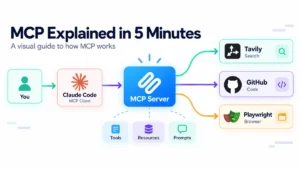
- Present: Early adopters integrate GPT-5.6 into Model Context Protocol (MCP) workflows, connecting the AI to internal tools like Slack, Google Calendar, and GitHub.
Advanced Browser and Computer Use Capabilities
A significant area of enrichment in GPT-5.6 is its "Computer Use" and browser navigation capability. This feature allows the model to interact with a web browser in a manner similar to a human user—navigating menus, clicking buttons, and verifying end-to-end code deployments.
In testing environments, GPT-5.6 has shown a high degree of reliability when navigating complex web architectures. This is increasingly used for automated QA (Quality Assurance) testing. By setting the model to a "Medium" reasoning level, it can navigate browsers with sufficient speed to be practical for real-time verification tasks. When integrated with MCP, the model can effectively bridge the gap between code generation and live environment testing, a feat that was previously prone to high failure rates in the GPT-5.5 era.
Industry Implications and Expert Analysis
The release of GPT-5.6 has sparked a broader conversation about the future of the software engineering profession. With the model’s proficiency in code review reaching a point where human intervention is becoming less frequent for non-critical infrastructure, the role of the "Junior Developer" is undergoing a fundamental shift.
"We are seeing a transition from ‘writing code’ to ‘orchestrating intelligence,’" says one industry analyst. "The fact that GPT-5.6 can catch bugs that senior engineers occasionally miss suggests that the AI is no longer just a ‘copilot’ but a ‘supervisor’ in the development lifecycle."
However, the high cost and latency of the "Ultra" reasoning mode suggest that we are approaching a plateau in how much intelligence can be squeezed out of current transformer architectures without significant hardware breakthroughs. The reliance on inference-time compute indicates that OpenAI is leaning heavily into "thinking time" to achieve gains, rather than just increasing the size of the training dataset.
Comparative Market Position
When compared to its primary rival, Anthropic, OpenAI appears to be focusing on the "Review and Verify" segment of the market. While Anthropic’s Claude Fable 5 is praised for its "intuitive" planning and Claude Opus 4.8 for its "fluid" implementation, GPT-5.6 is positioned as the "analytical auditor."
Data from developer surveys suggest the following performance breakdown:
- Code Planning: Claude Fable 5 (Preferred for architectural logic).
- Code Implementation: Claude Opus 4.8 (Preferred for syntax accuracy and style).
- Code Review: GPT-5.6 (Preferred for bug detection and precision).
- Browser Automation: GPT-5.6 (Preferred for speed and tool integration).
Conclusion and Future Outlook
GPT-5.6 represents OpenAI’s commitment to maintaining its lead in an increasingly crowded frontier model market. By offering a tiered model structure (Sol, Terra, Luna) and variable reasoning efforts, the company is attempting to cater to a diverse range of needs, from low-latency mobile apps to high-stakes enterprise engineering.
While the "incremental" nature of the update may disappoint those looking for a "GPT-6" level leap, the improvements in precision, recall, and browser interaction are practically significant for professional workflows. The introduction of the Banked Reset system also signals OpenAI’s awareness of the "token anxiety" prevalent among its power users. As the AI landscape continues to evolve, the ability of these models to not only generate content but to critically review and interact with the physical and digital world through browser use will likely be the next major battleground for OpenAI and its competitors. For now, GPT-5.6 stands as a powerful, albeit resource-intensive, tool that further automates the traditional boundaries of software development.