Clichmont Rethinks the AI Compute Stack by Prioritizing Physical Infrastructure Over GPU Leasing

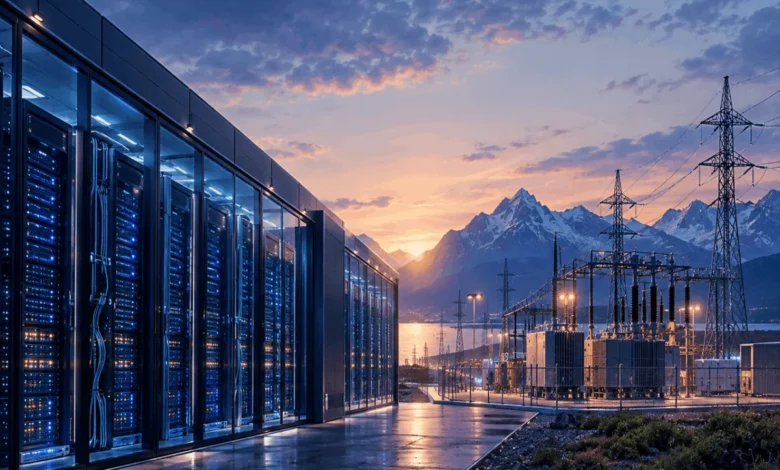
The global race to dominate artificial intelligence has shifted from a battle for software supremacy to a frantic scramble for physical hardware. As hyperscalers like Microsoft, Amazon, and Google commit hundreds of billions of dollars to data center expansion, a new breed of infrastructure firms is emerging to challenge the prevailing model of chip-dependency. Among these is Clichmont, an infrastructure-first company led by CEO Alexis Cathalifaud, which argues that the true bottleneck for AI development is no longer the silicon itself, but the energy, cooling, and grid connectivity required to support it.
The Strategic Pivot: Ownership Over Access
In the current landscape, the majority of AI compute providers—including industry heavyweights like CoreWeave, Lambda, and Crusoe—operate primarily as high-performance compute (HPC) clouds. Their business models are largely built on securing massive tranches of NVIDIA H100 and Blackwell GPUs from manufacturers and renting that capacity to developers. While this model has proven lucrative, it leaves the provider vulnerable to the volatile supply chains of hardware manufacturers and the pricing power of hyperscalers.
Clichmont’s thesis diverges significantly. By shifting focus from "renting the chip" to "owning the house," the company seeks to control the economics of compute. Cathalifaud posits that GPUs are transient assets—depreciating in performance and value within 24 to 36 months—whereas a well-engineered data center with robust power and fiber connectivity is a multi-decade asset. By controlling the site, the cooling architecture, and the grid connection, Clichmont maintains the ability to pivot between GPU generations without being locked into a specific hardware vendor’s deployment schedule or cost structure.
The Energy Bottleneck: A Global Reality
The transition toward high-density computing has fundamentally changed the requirements for data center site selection. According to recent reports from the International Energy Agency (IEA), global electricity consumption from data centers, AI, and the cryptocurrency sector could double by 2026, reaching over 1,000 terawatt-hours. This surge in demand has turned energy, not silicon, into the ultimate currency of the AI era.
Clichmont’s operational strategy is built around this reality. Rather than selecting sites based on proximity to major metropolitan areas or established tech hubs, the firm evaluates potential locations based on "time-to-power" and grid resilience. This methodology has led the company to pursue diverse geographic projects, such as a solar-powered facility in Alicante, Spain, and a high-efficiency build in Bodo, Norway.
The rationale is clear: chips are portable, but massive power loads are not. By locating facilities in regions with abundant renewable energy or favorable climate conditions for natural cooling, Clichmont aims to lower the total cost of ownership (TCO) for AI compute. This geographic diversification acts as a hedge against energy price volatility, which remains the single largest operating expense for any large-scale AI cluster.
Navigating the Complexity of Physical Scaling
The shift from software-defined scaling to physical infrastructure development is fraught with risks that software-native startups often underestimate. In the software world, capacity is a matter of provisioning virtual machines or containers, a process that takes seconds. In the infrastructure world, capacity is a matter of electrical switchgear, transformer lead times, and municipal permitting—a process that can take years.
Industry analysts note that the "infrastructure gap" is widening. A project initiated today may face an 18 to 24-month wait for a grid interconnection agreement. Clichmont’s leadership emphasizes that the hardest part of their business is not the technology, but the sequencing of capital and construction. Coordinating the arrival of specialized cooling systems, the hardening of power distribution units (PDUs), and the procurement of hardware requires a level of project management that mirrors large-scale civil engineering more than it does typical Silicon Valley software development.
The Role of Digital Assets: The $CLAI Token
One of the more controversial aspects of Clichmont’s model is the integration of the $CLAI token. While the crypto-infrastructure space has seen its share of failed projects, Cathalifaud argues that the token serves a distinct purpose beyond simple financing. The vision for $CLAI is to function as a digital economic layer that facilitates governance and treasury management, allowing for a level of transparency and community participation that traditional corporate equity structures often lack.
However, the company faces an uphill battle in convincing traditional institutional investors of this model’s utility. Critics argue that adding a token layer to a capital-intensive physical asset business introduces unnecessary volatility and regulatory scrutiny. Clichmont’s response is a "proof-of-utility" approach: the infrastructure must be profitable and functional independently of the token’s market value. If the physical assets do not generate sustainable, high-margin compute capacity, the token is effectively irrelevant.
Implications for the Competitive Landscape
Looking ahead, the market for AI compute will likely undergo a period of bifurcation. On one side are the hyperscale clouds that offer convenience and immediate, massive scale. On the other are specialized infrastructure operators like Clichmont, which offer long-term efficiency and strategic control.
By the end of the decade, the industry will likely be defined by "compute sovereignty," where companies prioritize the resilience of their infrastructure as much as the performance of their models. Clichmont does not intend to match the sheer size of the major cloud providers. Instead, the goal is to become the premier provider of "compute-ready" infrastructure—sites that are modular, energy-efficient, and capable of hosting whatever the next generation of AI accelerators may require.
The risks remain significant. A miscalculation in site selection or an over-commitment of capital before demand materializes could jeopardize the company’s stability. Yet, the underlying bet remains compelling: as the AI boom matures, the companies that own the "plumbing" of the internet will likely be the ones to capture the most durable value. By positioning itself as a steward of the physical grid, Clichmont is betting that the most profitable move in an AI-dominated world is to ensure that when the lights turn on, the hardware is ready to run.
Fact-Based Summary of Core Objectives
- Infrastructure Priority: Shifting from capital-light GPU rentals to capital-intensive data center ownership.
- Energy-First Design: Prioritizing grid connectivity and power scalability over traditional data center metrics.
- Decentralized Governance: Utilizing the $CLAI token to manage the ecosystem, with a focus on long-term utility over short-term speculation.
- Operational Discipline: Focusing on long-term asset life-cycles to survive multiple generations of AI hardware, rather than tethering the business to a single GPU cycle.
As Clichmont continues its rollout in Europe, the industry will be watching closely to see if their disciplined approach to physical infrastructure can provide a sustainable competitive advantage in a market currently obsessed with the rapid procurement of chips. The success of this model will ultimately be measured not by the speed of their software deployments, but by their ability to keep the power running when the rest of the market faces the looming threat of energy scarcity.
Related posts: